THIS BLOG HAS MOVED


This blog has moved to a new location.


You can now read it on BKWine Magazine.


Please change your bookmarks and RSS feeds accordingly.


And do subscribe to our free wine newsletter, the BKWine Brief!


All info on our wine and food tours are now on BKWineTours.com.


Bordeaux prices continue up for 2009s?

>> Saturday, June 05, 2010

More and more “release prices” have been announced from the chateaux in Bordeaux, for the wines that were tasted a couple of months ago at the “primeurs”. The tendency seems to be upwards, sometimes a lot. However, it is a little bit early to judge the total picture. But from what has been seen so far, prices will generally be above both 2008 and 2005. 2009 is considered a magnificent vintage by virtually everyone. 2008 was on the contrary a very difficult year with wines that were not awarded top points. 2009 is much compared to 2005 which was also one of the “vintages of the century” (with good reason), which is the reason for the 2009-2005 price comparisons. Some chateaux have raised their prices compared to 2008 with 50% or even 75%, whereas others only raise the price with 5-15%. A few, very few, have actually lowered prices. The development is interesting in particular in light of 2009 export figures. In most markets sales of Bordeaux wines fell. Total exports fell with 23%! Many markets (e.g. the US) were much harder hit. China was almost the only market where sales increased (and with a lot), as we have written about previously in the Brief. So, a sharp drop in exports and prices go up. Where’s the logic? Of course, sales statistics only talk about total numbers and the primeurs market is only a tiny, tiny portion of that. Only some 150 chateau are on this market, out of some 10,000 in total. Perhaps one should say that the classified growths (and the likes – the primeurs market essentially) is a market all by itself, quite unrelated to the rest of Bordeaux, and a market that less and less sell to the average wine lover or wine consumer but mostly to well-off collectors or ‘buveurs d’etiquettes’ (to borrow a French expression). On the other hand, for the average wine lover that is in a way of no real importance. There are so many other excellent and affordable wines available on the market today! Read more e.g. on decanter.com and on drvino.com

Read more...

France falling behind on traditional markets, but winning in Asia?

>> Friday, June 04, 2010

What do buyers, retailers and other trade people think about the evolution of the wine market? Wine Trade Monitor (WTM) by Sopexa tries to answer that question. Sopexa is a French marketing consultancy that has for the second year running made this ambitious survey of the wine trade. They focus on the 14 biggest markets (representing more than 85% of French wine exports). They have sent out questionnaires to people all over the world and received some 1500 answers to the 14 questions asked. So, what does the trade think about the wine market in 2010 and forward?:

- Sales will increase! Certainly in the long run. People are very optimistic: 72% of respondents think that sales will increase in 2011. A bit more caution for 2010: 58% believes in an increase. This is still much better than what people thought in last year’s survey about 2009, with 47% positive. So, clearly a growing optimism for the future.

- Asia, Russia, USA most positive: More than 90% of respondents in China and Hong Kong believe in increased sales in 2011. In Russia and the USA the number was just over 80%. But already in 2010 these countries are very positive. Most other markets are more cautious with no or only a slight increase in 2010, but all then expecting better in 2011.

- French wine sales expected to grow too, but less: 44% thought that sales of French wines would increase in 2010, and 56% in 2011. That compares less favourably with the numbers for the overall market that were 58% and 72%.

- Asia come to France’s rescue: the markets that look most positively on growing French sales are China (90% believe in growth both for 2010 and 2011), Hong Kong (70%+ and 80%+), and Russia (60% and 75%)

- New markets want appellation wines, established markets go for grape varietals: The markets that look most positively on appellation wines (AOP/IGP) are China and Hong Kong; those that are most positive for growing sales for varietals are the USA and the UK. Looking at the tendencies the biggest growths in demand for AOP/IGP wines are in China, Taiwan, and Russia. The biggest growth for varietals are in China, Taiwan, USA, Switzerland, and Japan.

- Demand for cheap wines fall, but grow for expensive wines: 57% think there will be big or quite big demand for entry level wines in 2010, which is down substantially from the 71% who thought so for 2009. The markets where cheap wines are most in demand are Belgium, the Netherlands, and the USA. Premium wines seem to be in vogue though: 43% think there will be strong or quite strong demand for premium wine in 2010, up from only 25% for 2009. The strongest demand for premium is in Asia.

- Image: France on top in Asia: French wines have a very good image in Asia and in Russia, where they are well ahead of other countries on an image scale. In Europe and in North America French wines have a less good reputation: e.g. they are in 3rd place in Denmark, 4th place in the USA and Canada, and 5th place in Switzerland…

The report is based on a survey made earlier this year. The full report with all details can be ordered from Sopexa: www.Sopexa.com

Read more...

Jazz and wine in the Languedoc

>> Thursday, June 03, 2010

Each year in August there is the Jazz à l’Hospitalet festival in the Languedoc. It is the dynamic winemaker Gerard Bertrand (and ex-rugby star) that since several years arranges the festival at his vineyard at Château l’Hospitalet. This year the jazz festival takes place on August 5 to 9. And it’s an impressive list of musicians that will play: Liz Mc Comb, Maceo Parker, Maurane Ô Nougaro, JFX, Nathalie Dessay & Michel Legrand, Garou… And the venue is not bad: on a hill in the La Clape region, not far from the sea, in one of France’s sunniest regions, with a very nice hotel available at the chateau itself. www.gerard-bertrand.com

Read more...

Which wine sites do you like best?

>> Wednesday, June 02, 2010

Which wine sites do you like the best?


From the point of view of:

  • Design / site architecture
  • User interface
  • Usefulness
  • or anything else
It's nice if you give a reason, but you don't have to.

I'm really looking for WELL DESIGNED sites. It's not a question of which sites have the best contents.

A site can be a blog or a "real" site (=one that is not chronologically organised).

Thanks for your suggestions!

You can nominate more than one, of course.

(This is not a competition, and there's no winner. It's just an effort to collect well-made sites - for inspirational purposes. Your input is MUCH appreciated!)

Read more...

Binge drinking leads to risky sex – perhaps

Does binge drinking lead to risky sex among college students? The answer seems to be, yes, perhaps. The American Association of Wine Economists usually publishes papers on less sexy subjects (as e.g. Measuring the Economic Effect of Global Warming on Viticulture Using Auction, Retail and Wholesale Prices), but Jeff DeSimone has just published a paper called Binge Drinking and Risky Sex Among College Students.The paper concludes that binge drinking is above all linked to having sex with multiple partners (no, not at the same time), and perhaps also to having unprotected sex. DeSimone adds that it is not easy to control for other factors (or to have a good control group) and thus the conclusions are not very certain. We may add that understanding what the author wants to say is not easy either (try for example this: “Promiscuity is unrelated with non-binge drinking but even more strongly related with binge drinking on multiple occasions. Results from a rudimentary instrumental variables strategy and accounting for whether sex is immediately preceded by alcohol use suggest that binge drinking directly leads to risky sex.”).

Are you surprised?

Read more...

Bordeaux Facts

>> Tuesday, June 01, 2010

- There are 60 different appellations(AOC / AOP) in total in the Bordeaux region
- 118,000 hectares of vines in total (2009)
- 5.7 million hl wine produced, which is +20 compared to 2008 but identical to 2007
- The average size of a vineyard: 14.6 ha

- Main red grape varieties, account for 89% of the area (!):
-- Merlot: 63% (yes, merlot is the by far most planted variety)
-- Cabernet sauvignon 25%
-- Cabernet franc 11%
-- Others, malbec, petit verdot etc: 1% (even though e.g. both petit verdot and malbec have attracted a lot of attention in the press recently as trendy grapes they still represent less than one percent of plantings)

- White grape varieties, account for only 11% of plantations down from almost 50% some decades ago (such a pity, dry white Bordeaux can be so delicious, wouldn’t you agree?):
-- Sémillon: 53%
-- Sauvignon: 38%
-- Muscadelle: 6%
-- Others, colombard, ugni blanc, merlot blanc, folle blance etc: 3%

(source : CIVB)

Read more...

BKWine Pick: Restaurant Gabriel, Bordeaux

>> Monday, May 31, 2010

Restaurant Gabriel, Bordeaux

Place de la Bourse is one of the gems of architecture in Bordeaux. As if it needed added attractions there is now, since a year back, a restaurant called Gabriel (after the architect of La Place) that adds one more reason to go there. Located in the most beautiful of the buildings on La Place it is split in three levels. On the ground floor there’s a bar with outside seating (lovely). One floor up there’s the bistro and on the second floor there’s the gourmet restaurant that already, after only 8 months, has been given one star by the Michelin guide. In the bar, called Les Dix, you can also have a sandwich or a salad. In the bistro you can get a three course menu for 28 euro – must be one of the best value for money in Bordeaux, so go there before prices go up! The starter can be for example foie gras (duck’s liver), carpaccio of daurade (sea bream) or a very tasty leek in vinaigrette (a classic French bistro starter) and parmesan. For main course we’ve tried the filet de bar (sea bass) with saffron rice and almonds, a grilled steak with red wine sauce, or a leg of chicken with green peas and lemon. And to finish of perhaps a tiramisu, a strawberry soup, or a grape fruit gratin? All is excellent! We have not yet tried the second floor but we don’t doubt that it will be excellent. Don’t forget to book in advance!

Click here for address and more recommendations.

Read more...

BKWine Pick: Big Easy Restaurant & Wine Bar, Stellenbosch

>> Sunday, May 30, 2010

Big Easy Restaurant & Wine Bar, Stellenbosch

The Big Easy is owned by Ernie Els, golf player and wine producer. It opened in 2008 in an old Cape Dutch style house in central Stellenbosch, actually on the second oldest street in South Africa, according to what is said. It is elegant, relaxed and cozy, almost a bit clubby. There are several different rooms with different styles so you can choose something that goes with your mood. The food is excellent, a bit French inspired, but with classic South African raw material. Excellent wine list, as should be expected.

Click here for address and more recommendations.

Read more...

BKWine Pick: Champagne Eric Rodez, Ambonnay

>> Saturday, May 29, 2010

Ambonnay is a Grand Cru village in Champagne known for its excellent pinot noirs. Eric Rodez owns 8 hectares that he manages according to the biodynamic principles. One of the most important elements to make a quality champagne is the base wine (the still wine before the second fermentation), says Eric. In his blends he often uses wines that have been aged for a few years on small oak barrels and often from five different vintages. Sometimes even 10 or 12 different wines goes into his blend for a champagne. He keeps the dosage to a minimum. The champagnes are elegant with a very nice minerality. Try for example Cuvée des Crayères with 20% of the wine in the blend having been aged in oak and with 6 grams of dosage. It is 50% pinot noir and 50% chardonnay. Lots of fruit and with already some maturity, hints of flower and a nice creamy mousse (17.90 euro from the winery). His Cuvée Blanc de Blanc is also very delicious. It comes from vineyards with very poor soil that give a powerful wine. Half has been fermented and aged in small oak barrels and 40% has done the malolactic fermentation. Fresh acidity and a long, full-bodied taste with citrus and peach aromas (20 euro).

Click here for address and more recommendations.

Read more...

BKWine pick: Château Tournefeuille, Lalande de Pomerol

>> Friday, May 28, 2010

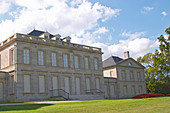
This beautiful chateau is in the Petit family since the 18th century. The chateau is surrounded by 17 hectares of vineyards in the appellation Lalande de Pomerol. It has a beautiful view over the region – you can see the church in Pomerol, Chateau Cheval Blanc, Vieux Chateau Certan, Petrus (if you look closely)… Emeric petit is the current generation of owner/winemaker and he explains that in Lalande (as opposed to Pomerol) the chateaux are usually inhabited by the owners. “The appellation covers 1100 ha in total and there are 180 growers. So on average, each one has 7 ha.”

Even though the vineyard is in one single plot the soil is very varied, Eric explains. There is clay that gives wines with intense colour and power with pronounced tannins, there is gravel that gives more elegance and lighter colour and tannins. There is 70% merlot and the rest is cabernet franc.

Rosalcy 2008, Lalande de Pomerol, is a delicious wine very much on the fruit, with both raspberries and cherries, elegant and round tannins (approx 9-12 euro). Chateau Tournefeuille 2006 has been aged in oak barrels for 12 months, a third of which were new. The bouquet has complexity and already some maturity characters (secondary aromas), mushrooms and truffles. It’s a classic Bordeaux/Pomerol style which is exactly what Emeric is aiming for (~15-23 euro). In 2004 the Petit family bought three hectares in Pomerol. the result is a wine they call L’Ecuyer. The 2005 is made from 90% merlot and is starting to develop some maturity and has a lot of elegance. “Delicate, as a Pomerol should be”, says Emeric.

Click here for address and more recommendations.

Read more...

The new issue of the BKWine Brief is out, #82, May 2010

>> Thursday, May 27, 2010

Welcome to the BKWine Brief nr 82, May 2010

It’s been a busy spring for us – if finally spring has really arrived, and even summer it seems. We have been travelling quite a lot. We haven’t counted the air (and rail & road) miles but it would add up to quite a few.

Our first destination was South Africa, the very first wine tour we have organised to this interesting wine country (that also is the biggest supplier of wines to Sweden!). For those who wanted there was an option to combine the tour with a safari (we wanted!). Very interesting wines to discover in this young-old wine country (they celebrated 350 years of winemaking last year!). Very interesting animals too! The tour was a big success and we are already planning the South Africa Wine Tour 2.0 for next March.

After that we headed off on one of our “three classics” tours. Spring was still not showing its nice face so we had a few cold days in the vineyards. But since we spent most of the time in the wine cellars it wasn’t all that bad. First to Champagne, where we tasted a lot of well chilled wines (thank you, absent spring). One of the persons we met was a bio-dynamic wine grower who presented an extensive tasting of his wines in his winery, and in particular an interesting overview of some of his “base wines”, i.e. the still wines before the second fermentation that gives the bubbles (more about that further down). We continued to Chablis where we enjoyed a nice dinner in a Michelin starred restaurant (and many wines in the wine cellars of course), to finish the tour in Beaune in the heart of Burgundy. Finally the sun showed up, just in time to enjoy some aperitifs on the outside terraces.

Bordeaux was the next destination where we all enjoyed a lunch served with sauternes all through the meal, plus numerous vineyard visits of course. The day the Bordeaux trip started with a bang. Literary. It was they same day the volcano on Iceland erupted. Luckily everyone had arrived OK in Bordeaux, but the more the trip went on, and the more the volcano continued its dirty business, the more we became worried. In the end it turned out good though. Almost everyone on the trip had come by car, and that’s never happened on one of our trips before! The one couple who were flying managed to arrange a car-swap deal with someone travelling in the other direction!

We went home by train to Paris, still worried about the volcano. The following week we were scheduled to fly to Palermo (Sicily) to take part in the jury at the Concours Mondial wine competition (we were the only Swedes in the 250-headed panel). What was going to happen? Just a few days before we were to travel we still did not know if the competition was going to be cancelled or not. And the volcano was still spewing its ash. In the end, the competition went ahead (big gamble from the organisers!) and we got on a flight to Italy the very first day the air traffic was (relatively) normal. We combined the wine judging with a few extra days travelling around the island to discover its various wine regions. We travelled some 1200 km over 3 days. On Sicilian roads… Sicilian roads are not like any other roads, I can assure you! But it was worth it. A very fascinating wine region, with steely wines from Etna (a volcano that thankfully kept quiet) to sweet marsala, and innumerable Greek temples on the way. You will read more about Sicily in coming Briefs!

After that Per headed to Tuscany. A wine tasting and cooking class tour (has anyone who was there tried to make home made pasta again?). All the winegrowers we met were very concerned about the sun, or rather the lack thereof. But I am sure that will sort itself out over summer. But again! The ash cloud! The last day of the trip, a new ash cloud appeared and closed airports on Ireland and… in northern Italy. But just in time for departure, around midday on Sunday, the airports opened again and everyone managed to get on a flight home. A bit of chaos at the airport but better that than no flight.

At the same time Britt headed to Chile and Argentina. There were no ash clouds in that part of the world but the first day there they had an after shock of the big earthquake earlier this year. “Only” around 4 on the Richter scale though. But Britt seemed more worried about having to go horseback riding around the vineyards…

That’s all for the time being. Well not quite, Britt heads to Stockholm tomorrow, for meetings and tastings.

And perhaps this makes you long for a wine tour? (And we’re not expecting any more ash clouds or earth quakes in the wine regions at the moment.) Think of us if you do.

Britt & Per

Read the whole newsletter here: BKWine Brief!


PS: Recommend to your friends to read the Brief or forward it to them ! More on wine:
Guest writers on BKWine.com
Wine videos: BKWine TV
Wine photography

Find us on:

Read more...

Wine as an investment - good or bad?

>> Sunday, May 16, 2010

Every once in a while we read about how good and how safe wine is as an investment. Not seldom it is written by someone who is offering services to potential “investors”. Felix Salmon, financial journalist at Reuters, is of a different opinion. When he read a recently published paper on the merits of wine investment in the financial crisis (Raise your glass: Wine investment and the financial crisis by Philippe Masset and Jean-Philippe Weisskopf) he’d had enough. So he wrote an article on why, in his opinion, the paper is wrong and why wine is an investment class of dubious merits. In short:

1. Wine is such a small market so there is not really any substance to compare it with other asset classes (e.g. bonds or shares) to see if it is better or worse.

2. Analysis of wine as an investment rarely takes account of the costs in trading or investing in wine, e.g. transaction costs or storage cost. Taking these into account would change the picture, says Salmon.

3. The sample that is the basis for the analysis is not representative (it has “survivorship bias”). The sample is a post-facto selection of wines that have been “investment grade” over the period. Others, which might have failed, are not included. With a neutral sample the result might have been quite different.

4. Wine is not just any old asset. It has a limited life span and a peak. In the long run, and if the market for investment wine was bigger, this would make it risky.

Read Salmon’s (quite short) article in full here: blogs.reuters.com. and don’t miss the comments where Masset & Weisskopf responds.

Read more...

South African wine sales over-takes France's in the UK

>> Saturday, May 15, 2010

The latest sales numbers reveals that in the UK South Africa sells more wine than France. For the 12 month period to the end of January sales of South African wine was up with 20% in the UK bringing the total volume to 12.27 million cases (source: Decanter/Nielsen). French wine only sold 12.26 million cases, which was a decrease with 12%. South Africa is now in fourth place and France in fifth, after Australia, USA and Italy. Our hypothesis is that this is a due to production and market structures: The big retail chains accont for an increasing percentage of sales (Sainsbury etc). They prefer buying from suppliers who can deliver big volumes. South Africa has many such wine producers (on a vineyard area that is approximately the same size as Bordeaux there is less than 600 producers, compared to 10,000 in Bordeaux). In France the production is fragmented and the industry is dominated by many small producers – who have difficulties dealing with very large buyers demanding volumes. The situation is the same in Sweden (South Africa is the biggest supplier of wines to Sweden and France is in fifth or sixth place): one large buyer (who in this case has a monopoly) prefers dealing with large volumes from few suppliers rather than a wide variety of small producers. What do you think? Read more: www.decanter.com

Read more...

Chateau Montrose buys 22 ha in St Estèphe from Phelan Ségur for 900,000 euro

>> Friday, May 14, 2010

My first reaction was that it wasn’t really expensive. Then I realised that 900,000 euro was the price per hectare. Phelan Ségur belongs to the Gardinier family, who also owns Les Crayères (the most luxurious restaurant and hotel in Reims) and an orange plantation in Florida. Buyer is Martin Bouygues with family, one of France’s riches industrialists, owner of Chateau Montrose since a few years. Bouygues also owns Ch Tronquoy Lalande in Saint Estèphe and will become one of the biggest vineyard owners in the commune. Montrose will now have 92 ha and Tronquoy Lalande 28 ha. Bouygues could thus create one of the biggest “classified growths” in the Médoc if he chose to use all the 120 ha to make Montrose (which would be possible in principle). 900,000 euro is a record for St Estèphe and brings its prices up to par with Pauillac and Margaux. (Bordeaux seems to be one of the favourite playgrounds for France’s rich. Bernard Arnault (LVMH) controls Ch Cheval Blanc and Ch Yquem, and François Pinault (PPR, Galleries Lafayette etc) owns Chateau Latour.) More info: www.sudouest.fr

Read more...

Bag-in-box inventor dies

>> Thursday, May 13, 2010

Sometimes in the 60s Tom Angove came home with a strange construction: a card-board box containing a plastic bag that he had filled with wine. The family thought he was nuts. But it was his prototype for what was to become one of the most revolutionary packaging innovations for wine, the bag-in-box, sometimes called cask wines. Angove was Australian and died recently at 92. We don’t know if he ever came to Sweden, the country that has the world’s biggest market share for wine in a plastic bag (exceeding 50%). More info www.heraldsun.com.au

Read more...

Springtime at Château l’Engarran

>> Wednesday, May 12, 2010

This spring there will be numerous events at the Château l’Engarran in Languedoc, close to Montpellier. The week-end of April 24-25 there is the ”Fête du terroir de Saint Georges d’Orques” with, among other things, tastings of the wines from the property. The week-end of June 5-6 there will be guided visits to the park that is otherwise not open to the public. Every Wednesday in June they will have guided tours of the château and, of course, tastings of the wines. And on Fridays, Saturdays and Sundays, between 10 AM and 1 PM, and between 3 PM and 7 PM the wines and some local specialities with be for tasting in the caveau. More info: http://www.chateau-engarran.com/

Read more...

The World’s Best Chardonnay

>> Tuesday, May 11, 2010

Such a title always needs to be taken with a pinch of salt. In any competition it is only those who enter that compete. In any case, the competition Chardonnays du Monde recently awareded medals to the best wines. Here are the ten top scoring wines:

- Chardonnay Morillon Trocken 2008, Weingut Johann Schneeberger
- Ktima Tselepos Marmarias Chardonnay 2007, Ktima Tselepos & Co
- Champagne Premier Cru Blanche de Castille Blanc de Blancs Brut, Champagne Colin
- Vin de Pays du Val de Loire - Domaine la Morinière 2009 Gaec de la Ragotière
- Lourensford Winemaker's Selection Chardonnay 2009 Lourensford t/a Cape Wine Brands
- Penedès do Chardonnay Col-leccio 2008, Albet i Noya Sat
- Champagne Paul Goerg Premier Cru Blanc de Blancs Brut, Coop. la Goutte d’Or / Champagne Paul Goerg
- Chardonnay Beerenauslese 2008, Weinzergenossenschaft Auggen eG
- Chardonnay Icewine 2007, Kalala Organic Estate Winery
- Vin de Pays d'Oc Domaine de Cibadiès - Cuvée Tradition 2009 Scea des Vignobles JM Bonfils

Chardonnay Beerenauslese!? More info www.chardonnay-du-monde.com

Read more...

New book on Barolo

Perhaps one should start early? On the photo it looks as if the author is hardly over 30, but he introduces the book as his memoir. Or perhaps the picture is out of date. In any case Matthew Gavin Frank has recently come out with a book where he tells the story of his life as illegal immigrant in Barolo. However, Frank is a wine and food writer so the book is more about that part of Piemontese life, we assume. More info www.nebraskapress.unl.edu

Read more...

BKWine judges Coup de Coeur des Femmes Journalistes 2010

>> Monday, May 10, 2010

The wine cooperatives play an important role in the Languedoc-Roussillon. 25,000 growers belong to a cooperative and La Fédération Régionale de la Coopération du Langudoc Roussillon works hard to help, advice and enthuse its members. One of their initiatives is a yearly wine competition open to the various cooperatives. The wines that are best placed in this competition are then entered in a second competition that is called “coup de Coeur des Femmes Journalistes” (Women Journalists Favourites). This year it took place on April 1 in the small village of Baixas, not far from Perpignan. The female half of BKWine was of course part of the jury, together with journalists from e.g. the daily papers Libération and Midi-Libre Perpignan, and wine magazines such as Decanter, Terre des Vins, La Vigne, Wine International, Réussir Vigne and the radio station Chérie FM. The Coup de Coeur competition is less hardship (for the judges) than some other competitions – all wines have already been given gold medals in another competition, so a good quality is assured. But this also means that it’s not an easy task to select a winner (this year was a tie for two VDNs). But after some hard work and deliberations a group of winners was selected that we present below. These wines will also be the ones used in promotions for the coming year.

Winners of Coup de coeur

White: Beauvignac Viognier, IGP Pays d’Oc blanc 2009, Cave de Pomerols, Pomerols (Hérault). A summer wine, flowry and aromatic with a nice citrus finish.

Red: Vallée des Arômes Merlot, IGP Haute Vallée de l’Orb rouge 2009, Cave les Coteaux de Capimont, Herepian (Hérault). Harmonious and complex. Aromas of ripe wild berries. Will go excellently with a luncheon salad or perhaps a grilled duck’s breast.

Rosé: Pop Frutti Syrah/Grenache, VDP des Côtes des Catalanes rosé 2009, Cave Les Vignerons des Terres Romanes, Vinca (Pyrénées Orientales). The name is very youthful but the wine is full-grown with nice flavours of strawberries and some body. Excellent as aperitif or to a barbecue.

Vin Doux Naturel: Dom Brial, AOC Muscat de Rivesaltes 2009, Cave Les Vignobles Dom Brial, Baixas (Pyrénées Orientales). Distinct flavours from the muscat grape and with good concentration. Drink it well chilled as aperitif or with tapas. And: Le Grenat de Terrassous, AOC Rivesaltes grenat 2007, Les Vignobles de Constance et du Terrassous Terrats (Pyrénées Orientales). Soft and sweet aromas of ripe fruits and dried figs. Will go well with home-made ice-cream with fresh berries.

More info (and pictures): http://www.vignerons.com/actualites/coupdecoeur2010.htm 

Read more...

Bordeaux faces dramatic drop in exports. China comes to the rescue?

Exports of Bordeaux wine fell with 14% in 2009 counted in volume (1.54 M hl or 206 M bottles in total) or with 23% counted in value. Europe accounts for 56% of all exports and this is where the drop is biggest. -19% and -25%. The three biggest markets fell substantially: Germany (-14/-18%), Belgium (-14/-16%) and Great Britain (-25/-33%). Also on most markets outside of Europe Bordeaux lost ground: USA was -27/-44% (!) and Japan -18/-28%. What somewhat softened the dramatic blow to Bordeaux wines was China that seems to have come to the rescue and has sailed up to become the biggest export market outside of Europe. Exports to China increased 97% in volume and 40% in value! Most other major markets fell also, except Hong Kong (+24/46%).

Read more...

More champagne!

>> Wednesday, May 05, 2010

Yes, another note on champagne, one on more champagne. The production in the Champagne region has shot up substantially over the last 50 years or so. Here are some numbers (source: CIVC/the Drinks Business):

Total shipments: In 1950 shipments reached 33 million bottles. 2008 the number was almost ten times as much: 322 million. Shipments to the UK grew from 3 million to 36 million.

Yields: the harvest yields are always an interesting subject of discussion when looking at wine regions. In Champagne it is measured in kg/ha. Around 50 years ago the average smoothed yearly yield was 3-4000 kg/ha. Today it has reached 15,000 kg/ha. That is equivalent to approximately 100 hl/ha. (Source CIVC/the Drinks Business)

Read more...

Who drinks the most champagne?

It’s not a personal question but of nations. The biggest export market for champagne is the United Kingdom with 36 million bottles (in 2008), flowed by the USA. Here’s the top list (source: CIVC/The Drinks Business):

  • UK: 36 M bottles
  • USA: 17 M
  • Germany: 12 M
  • Belgium: 10 M
  • Italy: 9 M
  • Japan: 8 M
  • Switzerland: 5 M
  • Spain: 4 M
  • Australia: 3,7 M
  • The Netherlands: 3,5 M
  • Sweden: 2 M
  • Canada: 1,5 M
  • UAE: 1,4 M
  • Russia: 1,3 M
  • Singapore: 1,2 M
  • China: 0,9 M
  • Brazil: 0,7 M
  • India: 0,2 M

But who consumes the most per capita? We’ve not done the numbers. Could it be the Swiss? Or is it the French (who are not on the export stats)?

Read more...

Vodka drinkers world-wide

The world is drinking a lot of vodka. The biggest market is, unsurprisingly, Russia, followed by the USA. Here are the top tipplers (2008 numbers, source: The Drinks Business):

  • Russia: 269 million cases
  • USA: 55 M
  • Ukraine: 41 M
  • Poland: 33 M
  • Kazakhstan: 10 M
  • Belarus: 9 M
  • UK: 8 M
  • Germany: 7 M
  • Uzbekistan: 6 M
  • Brazil: 5 M
(269 million cases is approximately 24 million hectolitre, if the calculator serves us well. As a comparison, France produces around 60 M hl of wine.)

A few interesting vodka products?: Bakon Vodka, with a flavour of, yes, bacon; Thunder Vodka, with a flavour of (are you sitting down?) toffee, “taste the storm” they say (internally?); of Lex Vodka with this information in their marketing ”6 months maturation and crystal purity … unique aging technology … sophisticated process gives us untold harmony and crystalline product purity … a sublime taste that defies description … 11 filtration stages (including silver and platinuma filters) … artesian water from … natural composition is thus maintained” etc.

The ten biggest vodka brands:
  • Smirnoff 25 M cases and a market share of 4.8%
  • Green Mark 12 M
  • Absolut 11 M
  • Nemiroff 8 M
  • Khortystsa 8 M
  • Pyat Ozer 6 M
  • Putinka 6 M
  • SV 4 M
  • Myagkov 4 M
  • Absolwent 4 M
(this latter sounds like an intriguing cocktail made from Absolut and some solvent, doesn’t it?)

Read more...

Prize winning Graves wines

>> Tuesday, May 04, 2010

Each year the Graves appellation organises a competition for its wines to select the wines that for the coming year will be used as examples and that will be put forward in the marketing of the appellation. This year 60 wines participated in the competition. The winning wines were:

- Château Langlet 2007, Vignobles Kressmann (red)
- Château Pont de Brion 2007, Pascal Molinari (white)
- Château Léhoul 2007, Eric Fonta (sweet)

Read more...

New Austrian wine region: Eisenberg DAC

The Austrian agriculture minister has signed a new “appellation“, what in Austria is called a DAC: Eisenberg DAC. The region is located in Südburgenland and includes the districts Oberwart, Güssing and Jennersdorf. Eisenberg DAC should be made from 100% blaufränkisch grapes and should have a spicy minerality. The soil type is the in Austria often seen sandy loess soil. The wine should be aged in tank or in barrel but must not have a pronounced oak character. There is also a “reserve” category for wines that have been aged in oak vats or barrels and that may have more barrel aging character. the first vintage is 2009 (2008 for reserve) and they can be put on the market as of 1 September 2010. These are the current Austrian DACs:

- Weinviertel DAC
- Mittelburgenland DAC
- Traisental DAC
- Kremstal DAC
- Kamptal DAC
- Leithaberg DAC
- Eisenberg DAC

www.winesfromaustria.com

(No, the photo is not really from Austria!)

Read more...

World wine consumption and wine production down in 2009

The world wide wine consumption continues to decline somewhat according to the latest statistics for 2009 from OIV (Organisation Internationale de la Vigne et du Vin). Consumption decreased with almost 3% to reach 237 million hl. Wine production declined too and reached 265 Mhl.

Read more...

Austrian wine export surges

>> Monday, May 03, 2010

Austrian wine export for 2009 went much better than expected in 2009. Export sales was up by 5.3% in volume and 16% in value compared to 2008. Total exports reached 70 million litres, worth 119 M euro. The biggest export markets were Germany (+15% in volume, +9% in value), and Switzerland/Lichtenstein (+27% / +6%). Other important export market successes were the Netherlands (+30% / +27%), Sweden (+51% / +38% !), and Japan (+33 % / +10 %). The numbers are all the more impressive as total exports from Austria declined with 20%. www.winesfromaustria.com (Illustration: AWMB)

Read more...

Art and wine: Mouton-Rothschild and Taittinger

The prestigious Bordeaux property Château Mouton-Rothschild and the famous champagne house Taittinger are well known for their linking of art and wine. Mouton Rothschild decorates the label of each new vintage with a painting by a famous (or sometimes not so famous) artist. Taittinger has made a series of champagne bottles designed by artists, with sometimes very original results. Philippe Margot, a Swiss wine enthusiast and wine journalist has written two ebooks about the links between art and wine for these two houses. Read them online here: Mouton-Rothschild and on the house of Taittinger (click on the cover to read the book).

Read more...

100 wine videos on BKWine TV

We have published our 100th wine video on BKWine TV. We celebrated that with a press release that explains what it is and a bit about the background. Here it is:

“BKWine recently published its one hundredth wine vide on BKWine TV. BKWine TV is a YouTube video channel with interviews with winemakers and reportage from wineries and vineyards across the world. The latest video is an interview with South Africa’s first black woman winemaker. All videos are available here: http://www.youtube.com/bkwine

BKWine TV is the video channel of BKWine, the Paris based wine journalism, wine travel and wine photography organisation run by the originally Swedish couple Britt and Per Karlsson.

All videos are recorded and produced by Per Karlsson, BKWine co-founder, who explains the background: “It all started as a fun experiment 2 years ago. We travel around quite a lot for our wine tour business and for our journalism – we visit more than 200 wineries every year – and a friend said to us: ‘Why don’t you do some videos with the winemakers and from the vineyards?’ So I borrowed a video camera and started to do some videos. It has proved to be tremendously popular with more than a hundred thousand online views.” The technology is very simple: just one person with a camera and a microphone talking to the interviewees.

Most videos are winemaker interviews, explaining their way of making wine, or reportage from vineyards and wine regions. The latest video is an interview with South Africa’s first black woman winemaker, Ntsiki Biyela of the Stellekaya winery in Stellenbosch made recently on a BKWine tour of South Africa. Other recent videos include an interview with Jon Bowen, an English winemaker in the south of France, Charles Metcalfe, a well known British wine writer who talks about modern trends in Portugal, the marketing director for Amorim, Carlos de Jesus, who explains why natural cork is the best bottle closure, and a mini-series with winemakers from the Douro valley. Other notable videos include the chief winemaker at Château d’Yquem, the president and vice-president of CIVB (the Bordeaux producers’ organisation), and a presentation of the new champagne closure “Maestro” that has since been forbidden. But the most popular video is on how to make a wine barrel! Most videos are in English (marked [E]) but some are in French or Swedish (marked [F] or [S]).

Per explains about the purpose with the videos: “It’s a way of sharing our experiences and our travel with wine enthusiasts across the world. We really want to let the winemakers talk, to explain what they try to do and why – it’s not us talking about what we drink. We want to give people an insight into what the real wine people do and think and share with the online social networking community for wine. We’re not really trying to make a slick professional style programming; we don’t have the resources for that. Rather, we try to tell an interesting story. It seems to work quite well. BKWine TV has more than 150,000 video views. We’re also proud that we have more ‘channel views’ than the Wine Spectator, but they have of course more ‘upload views’. But we’re not competing in any way; the more people who do wine videos the better it is for the wine lovers of the world.”

BKWine TV is regularly updated with new contents. There is for example a series of more South African video interviews coming, following BKWine’s recent wine tour of the country. All videos are available on YouTube on http://www.youtube.com/bkwine, and are also published on the BKWine blog: http://bkwineblog.blogspot.com/.

Read more...

Wine of the Month - turned to vinegar!!

>> Sunday, May 02, 2010

This month’s ….balsamic vinegar by Åsa:
”Extravecchio” from Villa San Donnino, Modena, Emilia Romagna


It is hard to believe that so much taste can come from a single small drop. The balsamic vinegar from Villa San Donnino is syrupy and it has been aged for more than 25 years. It would almost be sufficient with half a drop to fill the mouth with warm, full flavours and the refreshing acidity on the finish that makes the taste linger for a long time. It is dark brown with some red tinges. the price is high, if you only look at the price tag. But if you look at the work that’s gone into creating it, and the taste of the result, it’s worth every cent. This is a real taste experience and if you are look for aromas the balsamic vinegar from Villa San Donnino is a hot tip. A suggestion is to put a drop on a matured chunk of parmesan cheese or on a grilled piece of meat just before serving. Can also be used for deserts – ice-cream or strawberries for example. Price for 100 ml: 80 euro. www.villasandonnino.it

Read more...

BKWine Pick: Domaine du Vissoux, Beaujolais

Domaine du Vissoux, Beaujolais

Preconceived ideas are not uncommon when people talk about Beaujolais. Those who automatically think of beaujolais as a ‘petit vin’ they should try Pierre-Marie Chermette’s wines from Domaine du Vissoux. Pierre-Marie has 30 ha, 10 of which are Beaujolais “cru” (from one of the top villages). He is based in the southern part of the appellation but his vineyards are a bit everywhere. This means that he has several different soil types, which he points out when you talk to him (and he can also show you different types of stones to prove the point). Terroir is important for Pierre-Marie. His wines definitely taste like Beaujolais but there is nothing of the banana-flavours that you can find in some of the wines. Instead you have fresh fruit with raspberries and a high and refreshing acidity. His Fleurie has a touch of flowers and minerality, the Moulin-à-Vent has more of lingon-berries (airelles), blueberries and cranberry. One of our great favourites in the Beaujolais.

Click here for address and more recommendations.

-

"
Bourgogne Beaujolais Domaine Vissoux Chermette - stock photo samples - Images by Per Karlsson

Read more...

BKWine Pick: Domaine des Amouriers, Vacqueyras

Domaine des Amouriers, Vacqueyras

There are several interesting producer in Vacqueyras in the southern Rhône Valley. One of them is Domaine des Amouriers. Patrick Gras and Igor Chudzikiewicz work on 25 ha of vineyards. 10 ha is in the Vacqueyras appelation, one ha is Côtes du Rhône and the rest is Vin de Pays (or now IGP). But even the humble vin de pays is ambitious, they keep the yields down to a very reasonable 50 to 55 hl/ha. “Our 25 ha are spread out over 34 different plots, which gives us more work but also more complexity in the wines”, explains Igor. They cultivate the vineyards more or less according to organic principles, “we use almost exclusively copper and sulphur”, says Patrick. Harvest is manual and they do very little to the must in the cellar. The result is some very well made, fruity wines with a good acidity, a personal style and frequently a touch of ‘garrigue’ (the wild herbs growing in the region). Our favourites are Vacqueyras Signature and Vacqueyras Genestes.
Click here for address and more recommendations.

Read more...

Welcome to the BKWine Brief nr 81, April 2010

If everything goes as planned we will be sitting on the plane to Sicily (or already have arrived) when you read this. The latest reports are saying that the flights will leave as normal tomorrow. We are participating in the jury panel in the Concours Mondial that this year takes place in Palermo. The Concours Mondial is one of the world’s biggest wine competition with some 5000 wines competing for medals. (By the way, the two of us are the only jurors coming from Sweden.) Since we’re going to Sicily, we will also take the occasion to spend a few days exploring the wine regions and wine producers of the island (send us an email or an sms if you have any good suggestions for winery visits!). We seldom have the occasion to taste Sicilian wines so it will be interesting. We’ve certainly tasted a few interesting examples. So in time you will read more about it here. but perhaps we should feel a bit apprehensive. Sicily too, is well known for its volcanic activity…

This time of the year there is always a lot of buzz around Bordeaux. It’s “primeur season”, not only for the asparagus. At the beginning of April all the Big chateaux in Bordeaux present last year’s wines to buyers and to journalists – the so called “primeurs circus” – when thousands of people descend on Bordeaux to taste the new (only half-finished) wines. (There has also been some other buzz around Bordeaux recently: when last year’s sales figures were published they showed a dramatic drop in sales for most markets, only partially dampened by a huge increase in Chinese wine drinkers. Read more about that below.)

So this is the season when the merits of the Bordeaux 2009s are discussed. Actually, it’s a discussion with only a limited interest. 2009 was a very good year, or a fantastic year, so the wines will be very good, unless you have tried very hard to make bad wine. We can only confirm that (as can the small group of wine enthusiasts that we showed around Bordeaux last week) after having tasted a few of the wines from last year.

What will be more interesting is what will happen next. The next major step is when the chateaux “show their hands” and announce the release prices, i.e. how much money they want for the wines. With a back-drop of financial crisis and market demand that have fallen with 15-40% (depending on the market) it will be interesting to see where the prices land. Sharp drops in prices, due to falling demand? Or stiff price increases thanks to the very good quality? Or something else? One producer we talked to said “we have to be very reasonable and moderate; I think there will be a price increase of around 10-15%”. In most industries they would probably consider themselves very fortunate if they could say that an annual price increase of 10-15% was moderate and reasonable… It will be interesting to follow.

Britt & Per

PS: Recommend to your friends to read the Brief or forward it to them ! More on wine:
Guest writers on BKWine.com
Wine videos: BKWine TV
Wine photography

Read all of the new Brief here!

Read more...

Book review: Chile: Country Of Mountains And Wines

>> Tuesday, April 20, 2010

Chile: Country Of Mountains And Wines
Chili, Pays de vins et de montagnes
Chile : País de montañas y vinos

By: Papianille Mura (text), and Matt Wilson (photo)
Versant Sud

http://www.bkwine.com/images/books/chili-wine-book.jpgThis is a beautiful and inspiring book. It tells the story of the birth of the Chilean wine industry. It talks about the history, about the winemaking, the nature (and of course a bit about the mountains), and about many of the wineries. The photography is excellent with enchanting landscapes, moody cellars, and much more. The pictures certainly make you want to go there. From a wine enthusiast stand-point, the texts are quite light-weight (with also some odd statements about winemaking). You should not expect to learn much in depth about Chilean wines, neither does it give much detail for the prospective tourist. Instead you can read it to get inspired and perhaps get a feeling about the country. The author lived for several years in Chile but is of French origin and wrote the book as a way to make Chilean wines and wineries better known. It is published in three languages.

Click here for more book reviews on my site. You will also find links to on-line book shops on that page.

Read more...

Book review: Wine Production – Vine to Bottle

>> Monday, April 19, 2010

Wine Production – Vine to Bottle
By: Keith Grainger and Hazel Tattersall
Blackwell Publishing

http://www.bkwine.com/images/books/wine-production-vine-to-bottle.jpgThe book is part of what is called “Food industry briefing series” and that is well reflected in its presentation. It is short, and not particularly “consumer” oriented. The book covers the topics, just like the title indicates, from the vine and what happens in the vineyard, to what is done in the winery and the wine in bottle. 17 chapters on 117 pages make for a lot of skimming. The text is generally correct but very condensed. It is partially a bit too categorical (“this is how things are”) when winemaking in reality is very much a question of nuances and opinions. It also has a very “new world” view on many things (e.g in describing high planting density as something mainly motivated by tradition, not necessarily motivated by quality, and growers’ laziness, and low planting densities as practised in the New World as beneficial to encourage growth and fighting diseases). Nevertheless, it is a book that can be useful to read for he who wants a short introduction to the various techniques and technologies used in the vineyard and the cellar. And it is one of the few books in print on this subject. (We must declare a certain bias here: We have recently written a book on the same subject that goes more into details, giving a more nuanced view on things, as well as illustrating most of the concepts with photography. Unfortunately, that book is not available in English.)

Click here for more book reviews on my site. You will also find links to on-line book shops on that page.

Read more...

Book review: Hugh Johnson’s Wine Companion – The encyclopedia of wines, vineyards, & winemakers

>> Tuesday, April 13, 2010

Hugh Johnson’s Wine Companion – The encyclopedia of wines, vineyards, & winemakers
By: Hugh Johnson, revised and updated by Stephen Brook
Mitchell Beazley

http://www.bkwine.com/images/books/johnsons-wine-companion-6th-ed.jpgThis book is now in its sixth edition. It is a tome that impresses by its scope and ambition. It does contain some introductory chapters on history, winemaking and wine styles in general, but the book is really a catalogue of wineries. Virtually every wine region in the whole world is covered. Each region gets a short introduction, which is then followed by producer profile after producer profile. This is what the book is about – mostly quite short descriptions on producer after producer, the authors’ personal selection of the best producers in each region. Some get a bit more space; Petrus e.g. gets almost half a page, but most are dealt with in a few sentences. It is a book that impresses by its ambition, quality of the insight and the amount of work that must have gone into it. At the same time, one cannot help thinking that it is perhaps past it prime. The first edition arrived in 1983. There was nothing at the time called “internet”. Today, if one looks for short, bite-sized information wineries, would one not rather make a search on the net? (We must also mention that BKWine Photography is proud to have provided several of the images in the new edition!)

Click here for more book reviews on my site. You will also find links to on-line book shops on that page.

Read more...

Book Review: The Châteauneuf-du-Pape Wine Book

>> Monday, April 12, 2010

The Châteauneuf-du-Pape Wine Book
By: Harry Karis
Photo and design: Phil Karis
Kavino Book Publishing, www.cdpwinebook.com

http://www.bkwine.com/images/books/chateauneuf-du-pape-book.jpgIt is a relatively easy task to review this book, in a way. It is likely to be the standard tome on Châteauneuf for the foreseeable future. It is has almost 500 pages and weighs over two and a half kilo. It contains almost everything you can conceivably want to know about Châteauneuf. Harry Karis is a medical doctor who became enthralled by the wines of Châteauneuf. He couldn’t find enough good writing on the wines from this southern Rhône appellation, so he decided to write it himself. The result is imposing. It covers everything from the early history to today, wine making and climate (including lots of statistics), geography etc. But the majority of the book is taken up by producer profiles – virtually every producer in the appellation. Every winery is described in detail (within reason), explaining the winemaking and describing their vineyards. Most have their vineyards plotted on maps. No book is perfect, nor is this one. There are of course some errors, inevitable in any book (e.g. the photo on p 33 is of Hermitage, not Côte Rôtie). One also wishes for a bit more opinion – which of the wines do the author appreciate the most and why? But that is detail. For anyone wishing to know more about Châteauneuf, this is a treasure trove. And it certainly makes you want to taste the wines and go there and visit the cellars and walk on the galets roulées yourself! There is also a very convenient pocket-size map of Châteauneuf – certainly easier to carry around than the book!

Click here for more book reviews on my site. You will also find links to on-line book shops on that page.

Read more...

Genetically modified grapes? No thanks, yes please, or let's study the case?

>> Wednesday, April 07, 2010

Genetically modified grapes, or any other crop, is a very sensitive issue in Europe. A trial plantation of GM grapes in Alsace was destroyed by vandals. But perhaps there is a slight change in attitudes on the way. At a wine seminar in Bordeaux recently a vine nursery man said, in response to a question on GM, that he would certainly be interested in pursuing it but that it is politically impossible at the moment. A wine producer that we recently talked to said that he thought it would be useful to look more into the benefits. E.g. it could mean that growers would have to spray less toxic chemicals on the plants – dangerous both for the environment and for the vineyard workers. A recent article in The Economist cited some numbers that can give some perspective. Some titbits: Use of GM plants grew with 7% in 2009. 75% of all soy beans world wine are from genetically modified plants. So GM agriculture is not really a rarity. Half of the entire world’s cotton and a quarter of all maize (corn) are GM products. In total there are 134 million hectares of GM “transgenetic” plantations, half in developing countries. The early acceptance in India of GM cotton has transformed the country from a net importer of cotton to the world’s biggest exporter. Read more on www.economist.com

Read more...

Hard times for wine producers in Napa Valley

Even in Napa Valley there can be hard times. Some 10 wineries are about to change hands this year and next in order to avoid bankruptcy or closing. Two years ago there was none in a similar situation. This is the worst down-turn in 20 years, it is said. Ten producers is perhaps not a lot if you compare with e.g. Bordeaux where there is more likely several hundreds in similar situation. On the other hand, there are only 400 producers in Napa and around 10,000 in Bordeaux. Falling sales in the US is one reason: sales were down 3.3% in 2009 to $29 billion. Another problem is that consumers are trading down in price and rather buying moderately priced wines, and Napa are up there among the most expensive ones. Read more www.bloomberg.com

Read more...

Mas de l’Ecriture – a vertical since the beginning

Mas de l’Ecriture in the village Jonquières in the Languedoc took Vinisud as an excuse (?) to show that wines from the region age excellently. Owner and winemaker Pascal Fullà invited us to a tasting of all his 10 vintages, since the start: 1998 to 2008. All wines expressed Pascal’s desire to combine elegance, power and balance. And a very good acidity (giving freshness). What’s the secret behind this acidity, we asked Pascal? “It’s the work in the vineyard”, he says, “to harvest ripe grapes but never too ripe. And then have a soft extraction and do the malolactic fermentation on the skins”. Sounds deceptively simple, doesn’t it?

Read more...

Clos Centeilles with their unique cinsault wines

Clos Centeilles in Minervois was actually one of the first Languedoc producers we discovered in the early 90s. At that time they had just started out – today they celebrate their 20th anniversary. The celebration included organising a vertical wine tasting at Vinisud with their Capitelle de Centeilles, made from the owner’s, Patricia Boyer-Domergue’s, favourite grape, the cinsault (100%). It is the oldest of the permitted grapes in the Languedoc, she says, and it is capable of doing much better things than people generally think. Which the vertical showed well with vintages from 2008 to 2000. The ten year old wine was very lively with an intense aroma and concentrated on the palate. In the right hands a cinsault can indeed express both elegance, fruit and freshness. Happy 20 years Centeilles!

Read more...

Chateau des Estanilles – we meet the new owner

Château Estanilles is a well-known, no to say famous, property in Faugères in the Languedoc, not least thanks to the charismatic (previous) owner Michel Louison. Times are changing and the winery has changed hands. At Vinisud we met briefly with the new owner, the young Julien Seydoux, and talked about his plans.

“We have many projects”, he says, “both concerning the wine style and the cellar. We will change the 225 litre barrels and start using the600 l semi-muids, and we’ll probably get a few fermentation vats in oak. And we’ve hired Claude Gros as a consultant”. Gros is based in Narbonne and has clients everywhere, but most are in the Languedoc-Roussillon. “He makes wines I like” says Julien, “lots of fruit, only a slight touch of wood, made from ripe grapes. It is very important to work with the ripeness. And we want to have wines that are good to drink young, but that also can age. It’s important to retain the fruit and protect the must from oxidation, for example by putting the grapes in a cooling room after the harvest.” Julien wants to but his stamp on the wines, just like Michel Louison did. “He was very focused on terroir”, says Julien, “he had a more traditional style than what we will be looking for. The vineyards are in perfect shape but we have lots to do in the wine cellar.”

Read more...

Vinisud 2010 - looking back

Vinisud is the second biggest wine show in France. This year it was on February 22-24. 1631 exhibitors were there to present their “Mediterranean” wines. Many came from the Languedoc-Roussillon, the Rhône Valley, Sud-Ouest, Prevence and Corsica but also some other countries are represented. Vinisud is on every second year, the years when Vinexpo is not (which is the biggest show). It is in Montpellier and is one of our favourite wine shows, since we are always on the lookout for new and exciting producers from the south of France. And you can find many of those here. We did discover some gems that we will share with you in future BKWine Breifs.

This was the 9th edition and the total number of visitors reached 32 269 (about the same as last time in 2008). 27% came from outside of France (but curiously few were Anglo-Saxon journalists or from Scandinavia). Daytime at the fair was busy and at night in town was not calmer. Many exhibitors (and some non-exhibitors) organised musical evenings, tastings etc. We went to the crazy jazz evening organised by Les Vinifilles, 18 women winemakers in Languedoc-Roussillon: Rives-Blanques, Jasse-Castel, Coupe-Rose, La Grange de Quatre Sous, Mas Champart, Domaine Ollier Taillefer to mention a few. We also went to the magnificent museum to meet with WoW, Worldwide Original Winemakers, 15 producers from all over the globe: Champagne Tarlant, Domaine du Grand Cros in Provence, Domaine du Tracot in Beaujolais, Pares Balta in Catalonia and Val di Toro in Maremma in Tuscan were among those we talked to.

We at BKWine had been asked by the organisers of Vinisud to do a wine tasting of organic wines from the south of France specifically for visitors from Scandinavia. It turned out to be a very interesting overview of some 30 different “vins biologiques”. A big thank you to all producers who contributed wines to the tasting:

Languedoc
-- Domaine Prés-Lasses, Vin de Pays de Côtes de Murviel
-- Château des Estanilles, Faugères
-- Domaine de Cébène, Faugères
-- François Lurton (with the range Terra Sana)
-- Domaine Valambelle, Faugères
-- La Borie Fouisseau, Faugères
-- Mas Consience, Terroir de Larzac
-- Château Malavieille
-- Domaine des Aurelles
-- Domaine Alain Chabanon
-- Mas Gabriel
-- Domaine Turner Pageot
-- Domaine Rives-Blanques, Limoux

South-West
-- Domaine Pialentou, Gaillac
-- Domaine de Malartic, Côtes de Gascogne
-- Domaine Pouybet, Côtes de Gascogne
-- Domaine du Pountet, Côtes du Brûlhois

Roussillon
-- Domaine Ferrer-Ribière
-- Domaine Clot de l’Oum
-- Domaine des Soulanes
-- Domaine la Vista

Rhône
-- Domaine Fontavin, Châteauneuf-du-Pape

Provence
-- Château La Calisse, Coteaux Varois en Provence

Read more...

French wine TV channel to become Luxembourgeois?

>> Tuesday, April 06, 2010

It’s called Edonys – the TV channel that will be entirely dedicated to wine. It’s a project launched by Media-Place Partner. the TV channel will air interviews, reportage, debates, etc but exclusively on a wine theme (much like BKWine TV, one can perhaps say, but with a slightly bigger budget and different ambitions… And curiously they are in the very same part of Paris, just a few hundred meters away from BKWine). But there’s a catch. A TV channel must have financing and the income is mainly from advertising. But in France it is not allowed to do wine ads or commercials on television. Ouch. Some 20 senators have proposed that it should be OK for pay-TV channels with wine advertisements but at the moment it is very uncertain what will happen. However, Edonys has a Plan B: choose Luxemburg as a base where no such rules exist.

Read more...

Crushpad expands in Europe

In the last Brief we cited an unconfirmed rumour that Crushpad was closing its European operations. Not only was the rumour unconfirmed, it proved to be entirely wrong. Michael Brill, CEO of Crushpad Inc, and Stephen Bolger, in charge of Crushpad Europe, both confirm with force that Crushpad as ha continued commitment to Europe. Not only that but Crushpad is also expanding in Bordeaux, currently looking for additional vineyard land to be able to expand further. We apologise for any confusion caused and wish Crushpad and its customers continued success in Europe (too). More info www.crushpadwine.fr

Read more...

BKWine TV with subtitles coming

We now have some one hundred wine videos on BKWine TV. Depending on who we talk to the videos can be in Swedish, English or French. Our videos are now in the process of getting subtitles – in any language you would like! It is Google with their voice recognition software who are automatically generating the subtitles. And with the Google Translate feature you can then get them in whichever language you want. You can see an example in our video interview with Manuel Lobo, winemaker at Quinta do Crasto in the Douro Valley. At the bottom edge of the video you can see a red symbol “CC”. Click on it and choose “transcribe audio” and you get the automatic subtitles. You can then choose “translate captions” to select a different language for the subtitles. In a noisy environment (as in this video) the result is sometimes amusing (not 100% accurate) but in better conditions the quality can be amazing. As yet only a few of our videos are processed but we expect more to come soon. So, coming soon, our French videos with English subtitles for example. Fantastic!

Read more...

New blog design, with new features

>> Monday, April 05, 2010

If you've been here before you will notice that the blog has a new design.

Hope you will like it.

I've also included a few new features:

  • A share button at the end of each post. One-click function makes it easy to share on Facebook, Twitter, Myspace and many other sites. Or even email.
  • Tweet Me Button: each post has a Tweet Me button (from Tweetmeme) that makes it even easier to tweet the post and that shows how many times the post has been tweeted.
  • You might also like: At the bottom of each post there are five suggestions to other posts that you might find interesting.
  • Super-Menu: (perhaps there's a better name?) At the very top of the page there's a one-line menu with links to more contents from BKWine
  • Subscribe: In the right hand column there are now widgets that allow you to subscribe on RSS or on email to blog updates.
There are several other changes that should make it more useful and more easy to read.

So, do you like it?

Read more...

This blog has moved

>> Sunday, April 04, 2010


This blog is now located at http://bkwineblog.blogspot.com/.
You will be automatically redirected in 30 seconds, or you may click here.

For feed subscribers, please update your feed subscriptions to
http://bkwineblog.blogspot.com/feeds/posts/default.

Read more...

BKWine TV: [E] Ntsiki Biyela winemaker at Stellekaya in Stellenbosch


An interview with the winemaker at the Stellenbosch winery Stellekaya, Ntsiki Biyela. She is one of the very few black women wine makers in South Africa, perhaps even the first. The winery is close to the town Stellenbosch which is also the name of the wine region. The vineyards are quite a bit a way from winery. The name Stellekaya means home of the stars. Most of the wines are named after astrological star constellations (Capricorn, Taurus, Scorpio, Orion etc).

Stellekaya only make red wines: blends and varietals. They have cabernet sauvignon (called Scorpio), a merlot and a shiraz. They make several blends: sangiovese, merlot and cs (called Hercules), Bordeaux style (cs, merlot, cab franc), Cape blend with merlot, cs and pinotage. Wines often highly rated by John Platter in the Platter guide. The wines are generally very elegant with a lot of fruit. Ntsiki Biyela, the wine maker wants to have the fruit prominent with a lot of freshness.

Ntsiki has been winemaker since 2004. Over the years her wine making has changed, improved, learning from experience. There are always changes depending on the vintage but the style with fruit and elegance remains the same.

Making wine was not originally something that Ntsiki Biyela had thought of doing. Her first taste of wine was a strange experience: it was horrible, why would anyone want to drink this, she thought. She had the opportunity to study viticulture and vinification so she came to study at the Stellenbosch University on a scholarship. She has since been named Woman Winemaker of the Year (in 2009). Ntsiki comes from KwaZulu-Natal where they grow sugar cane, bananas but no grapes, and where drinking wine is not part of the traditional culture. Not yet.

More on Stellekaya: http://www.stellekaya.com

Music: Marco Esu, Primo risveglio, http://www.podsafeaudio.com

By BKWine, http://www.bkwine.com. Interviewer: Per Karlsson, BKWine. © Copyright BKWine, Per Karlsson.

See all our wine videos on our BKWine TV: http://www.youtube.com/bkwine

Read more...

A schistous association

>> Thursday, April 01, 2010

There are quite a few wine regions with schist soil and many produce excellent wines. Some examples: many parts of the Languedoc, some areas in Anjou, the Douro Valley, Priorat in Spain etc. At Vinisud recently an association for the promotion of schist soil wines was launched: “L’Association Les Terroirs de Schistes (du monde)”. At the launch some delicious tapas were served on, you guessed, slabs of slate instead of plates. In view of the quality of the wines from such soils this will be an interesting initiative to follow. More (but not much) info on www.faugeres.com or from www.aoc-agence.com
Read more...

Pauillac is most expensive?

If you are contemplating buying a vineyard you may have an interest in not choosing Pauillac. Pauillac may have the most expensive vineyard land around. Jane Anson tells more on The New Bordeaux

Read more...
The blog has moved. Here is the new location: BKWine Magazine Blog.

  © Blogger template Webnolia by Ourblogtemplates.com 2009

Back to TOP