THIS BLOG HAS MOVED


This blog has moved to a new location.


You can now read it on BKWine Magazine.


Please change your bookmarks and RSS feeds accordingly.


And do subscribe to our free wine newsletter, the BKWine Brief!


All info on our wine and food tours are now on BKWineTours.com.


France made 47 Mhl wine in 2009 (a slight increase)

>> Friday, July 16, 2010

According to statistics from the French customs office (who collects such statistics) the total wine production reached 47 million hl in 2009. This is an increase from 2008 when only 43 Mhl was made. On the other hand it is substantially less than the average over the last ten years, and far below the record year 1999 when 62 Mhl was made. The production is split thus:

- 49% VQPRD, i.e. ”quality wine”, AOC/AOP
- 28% Vin de Pays / IGP
- 9% other (vin de table)
- 15% for cognac/armagnac-production

One can perhaps deduce that there is a certain inflation in the concept of quality wine. www.frenchwinesbulletin.co.uk

Read more...

New issue of the ezine Fine Wine available

>> Thursday, July 15, 2010

A new issue of the ezine Fine Wine is now available. You will find articles about an unusual producer in the Loire Valley, about the big wine competition (“Wine World Championship”) the Concours Mondial, white wines from Spain and other things. Download your own copy from their site: http://www.finewine.nu/

Read more...

Promote local grape varieties (2)! The Wine Century Club

There’s actually a club for people who have tasted more than one hundred grape varieties: the Wine Century Club. To become member you have to have tasted at least 100 varieties. And if you have been seriously bit by the wine bug (the wine louse?) you can even become double, triple, or quadruple member. The club organises wine tastings to help prospective members reach the magical numbers (and to entertain current members one assumes). Perhaps time to start a local chapter? On the site you can find a chart in the membership application document where you can start ticking off varieties to help you to get going! A quick count over lunch reached 140 for us. More info http://www.winecentury.com

So, now it’s time to start counting! How many grape varieties have you tasted? Probably more than you think!

Read more...

Promote local grape varieties (1)! Autochtona 2010

>> Wednesday, July 14, 2010

As in most old wine producing countries there is in Italy a wealth of grape traditional varieties. Unfortunately they are often overshadowed by the “international” or even Italian grape varieties that have reach international fame (say, sangiovese or nebbiolo). In October there will be a wine fair only for these lesser known grape varieties: Autochtona 2010. (Autochtone/autochthonous signifies “of local traditional origin”.) If you want to broaden your grape variety horizon this definitely sounds like an interesting place to go: Autochtona 2010, October 25 to 28 in Bolzano. More info http://www.fierabolzano.it/autochtona2010/

Read more...

World wine production is stable in 2009

If we look at world wine production it turns out that it is quite stable in 2009: only a slight increase on 2008 to reach 268 million hectolitres. Europe accounted for 68% of the total in 2009. At the end of the 80s Europe accounted for 78% of world wine production. Down with 10% of the total in other words. On the other hand, the figures for wine consumption show that at the end of the 80s Europe accounted for 74% of world wine consumption but in 2009 Europe only consumed 66% of the total. Down with 8% over the period, so the balance is quite stable. “The rest of the world” makes much more wine today but it also drinks much more!

The biggest wine producers:
1 - Italy, 48 Mhl (--)
2 - France, 46 Mhl (--)
3 - Spain, 35 Mhl (--)
4 - USA, 20 Mhl (++)
5 - Argentina, 12 Mhl (--)
6 - China, 12 Mhl
7 - Australia, 11 Mhl (--)
8 - Chile, 9.9 Mhl (++)
9 - South Africa, 9.8 Mhl (++)
10 - Germany, 9.2 Mhl (++)
11 - Russia, 7 Mhl (++)
12 - Romania, 6.7 Mhl (++)
(+ and - indicate change since 2006)

It is worth noting that even if China is today in 6th place of world wine production but it has actually decreased the output since 2006. Over a longer period, since 2002, it has slightly increased the wine production. The greater part of the massive increase in grape production does not go to wine, but to grape juice. And when it comes to selling the wine China is not (yet?) a success: in spite of the substantial wine production volume China is not among the world’s top 12 exporters of wine. (Source: OIV)

Read more...

World’s grape production stable

>> Tuesday, July 13, 2010

The production of grapes was stable in 2009: 69 million tons were produced (for wine, juice, raisins etc). In a longer perspective the trend has been steadily increasing, albeit in later years stable. In 1995 production was only 55 Mt. The biggest producers were:

1 - Italy, 8.2 Mt (--)
2 - China, 7.2 Mt (++)
3 - USA, 6.4 Mt (++)
4 - France, 6.2 Mt (--)
5 - Spain, 5.5 Mt (--)
6 - Turkey, 3.9 Mt (--)
7 - Chile, 3.1 Mt (++)
8 - Iran, 2.9 Mt (++)
9 - Argentina, 2.1 Mt
10 - South Africa, 1.7 Mt
11 - India, 1.7 Mt
12 - Australia, 1.6 Mt (--)
13- Egypt, 1.6 Mt (++)
14 - Brazil, 1.5 Mt (++)
15 - Germany, 1.2 Mt

The by far biggest increase was in China that has double the production from 3.6 Mt in 2001 to 7.2 Mt in 2009. The biggest decrease was in France who in 2001 was in second place with 7.2 Mt and now is fourth with 6.2 Mt. Productivity has also increased steadily. In the early 90s average production was less than 7 ton per hectare, in 2009 (as in 2008) the production was 8.8 t/ha. (source: OIV)

Read more...

The World’s vineyard area shrinks (a bit), China sprints

The statistics from the OIV always makes for a fascinating read. We start with the area planted with vines. In 2009 the acreage with vines has decreases slightly. Here are some details. The numbers may look surprising. Keep in mind that this is area for grape production, not necessarily destined for wine. You will see why.

- 7.66 M hectares of land is planted with vines in 2009, a slight decrease from 7.8 Mha in 2008
- Europe has the biggest plantings: 58% of the total, but percentage has decreases substantially since the 80s when Europe accounted for almost 70%.
- The biggest increases have come in Asia (from 16% of the total to 21% over that period) and in Americas (10% to 13%)

The biggest plantings can be found in:
1 - Spain, 1.1 Mha (--)
2 - France, 840 kha (--)
3 - Italy, 818 kha (--)
4 - Turkey, 505 kha (--)
5 - China, 470 kha (++)
6 - USA, 398 kha
7 - Iran, 330 kha
8 - Portugal, 243 kha (--)
9 - Argentina, 228 kha (++)
10 - Romania, 206 kha (--)
11 - Chile, 200 kha (++)
12 - Australia, 173 kha (++)
(+ and - indicates increasing or decreasing trend)

- Spain and Turkey have decreased their plantings with almost 100 kha since 2002, France and Italy with around 50 kha
- China, on the other hand, has increased its acreage with almost 100 kha over the same period.

Should the world’s grape growers fear a glut coming from China?

Read more...

South Africa, part 7 (the last part): Other grape varieties – there is more!

There is a lot of different grape varieties in the South African vineyards. At Anura, for example, you can taste wines made from viognier, grenache and petit verdot. In their Viognier Barrel Selection 2006 there is a mix of spiciness and smokiness together with some honey. Dry, full-bodied and very nice. Grenache Signature 2007 (ZAR 120) made from grapes from the hot wine region Swartland. It is easy to drink, with aromas of herbs (did anyone say Languedoc?) and elegant. Petit Verdot 2007 (ZAR 90) is well balanced and very nice with a pronounced and refreshing acidity and red fruit. “A pure petit verdot is unusual”, says winemaker Johnnie Calitz, “but that variety goes very well with the climate and soil that we have”.

Read more...

South Africa, part 6: MCC and bubbles!

>> Monday, July 12, 2010

We were very impressed by some of the MCCs that we tasted in South Africa. Behind this code (that you have to learn if you go tasting in SA) hides Method Cap Classic, meaning the “traditional” way of making sparkling wine with a second fermentation in the bottle. The MCC that Teddy Hall makes is complex and full of character, with four years on the lees (before degorgement). It has a toasty character that comes from the long aging. David Niekerk at High Constantia makes exceptional MCC in the Constantia region, with three years on the lees. The grapes come from high altitude vineyards and the bunches are pressed whole. “I only get 400 litres from 1000 kg”, he explains (in Champagne the extract around 630 l per 100 kg). The wine is dust-dry since he makes no dosage (adding of sugar). It has only 0.6 g of natural residual sugar.

At Anura, at the foot of Simonsberg, between Stellenbosch and Paarl, winemaker Johnnie Calitz applies the philosophy of not interfering much at all, “don’t mess too much with the wine…” he says. It’s a philosophy that generates excellent results. His MCC Brut with 40% pinot noir and 60% chardonnay (ZAR 180) has neither been treated with sulphur nor given any dosage, and it’s very good. Johnnie likes to experiment and he has been testing different yeast strains to see what difference it makes and to see the difference between “cultured” yeasts and “natural” yeast. Using different types of yeast strains gives added complexity to the wine he says.

Have you tried MCC?

Read more...

South Africa, part 5: Cabernet sauvignon and Bordeaux blends

Cabernet sauvignon is the red grape with the biggest plantings in South Africa, followed by its Bordelais cousin the merlot. Cabernet can make excellent wines on its own but more and more wineries have discovered that it can make even more interesting wines if you blend it with some other (Bordeaux) grapes.

At the Dalla Cia winery we meet one of the veterans of Bordeaux blends. More than so actually, Giorgio Dalla Cia can be called the “father” (godfather?) of South African Bordeaux blends. for 25 years he was winemaker at Meerlust and created a wine called Rubicon. It was the first Bordeaux blend in south Africa and is now one of the most famous wines from here. He’s now running his own winery together with his son George. George recently made a cuvée called Giorgio 2006 as a tribute to his father. The grape mix is 70% cabernet sauvignon, 20% merlot, and 10% petit verdot. The wine has been aged for 18 months in French oak barrels. It has a distinct French feeling to it, with hints of cigar box and a certain austerity. The tannins are distinct but soft. They also make a “pure” cabernet, but they add 10% petit verdot in this too. It improves the structure of the wine, says George. For many years Giorgio dreamt of making his own grappa (the famous Italian wine brandy) but until 1994 it was illegal to produce. But today the grappa is a big part of the Dalla Cia activity, as well as the restaurant Pane e Vino.

Next door to Dalla Cia you find another winery, Stellekaya with the winemaker Ntsiki Biyela, South Africa’s first female, black winemaker. Perhaps she’s tired of hearing that description repeated over and over, so let’s just say that she is a very talented young winemaker that creates wines with balance and complexity as well as personality. She only makes red wines and most of her wines are based on Bordeaux grapes. Some are quite unconventional blends. Hercules is made from sangiovese, merlot and cabernet sauvignon and is elegant, easy-drinking but with plenty of taste. Cape Cross is a mix of merlot, pinotage and cabernet sauvignon and has aromas of ripe fruit with a touch of oak, but not too much in spite of it spending 22 months in barrel. The wine is very well balanced and delicious. She also makes a pure cabernet as well as a merlot, both excellent. And let’s not forget her “simplest” wine, Boschetto that sells in South Africa for a very reasonable 40 ZAR. It is a blend of cabernet sauvignon, merlot, shiraz and sangiovese and according to Ntsiki “it can be had with any kind of light dishes”. Of course! It is a nice, fresh and mineraly wine. Watch our video interview with Ntsiki Biyela at Stellekaya here!

Talking about cabernet sauvignon – it is a variety that is often made with aging in oak. However, it need not always be so. David van Niekerk at High Constantia is experimenting with a cabernet cuvée without any barrel aging at all, simply because he wants to get even more fruit in the wine. We look forward to seeing (or tasting) the results of his experiments!

Read more...

South Africa, part 4: Pinotage

>> Sunday, July 11, 2010

So, what’s the status of pinotage, South Africa’s very own grape? It’s a cross between pinot noire and cinsault, made some hundred years ago. These days it covers only 5% of the total vineyard area, a slight increase since 1998. The winemakers seem to agree. It is a difficult grape variety! Wynand Grobler at Rickety Bridge says that “pinotage is the most difficult of all grape varieties. Either you get hard tannins or you get banana aromas!” It can become too meaty, he continues, so you have to be careful. In particular, you must avoid over-extraction. He thinks it is a very difficult balance to find. In 2008 he made his first own pinotage. Judging from that he knows how to find the balance. The wine is very tasty, with dark, ripe fruit, some plums and quite a bit of spice. But he’s learnt a lot since then, he claims, listening to suggestions and advice from friends.

As a consumer one must agree – it is a difficult grape variety. You never know quite what to expect from a pinotage, there are so many different styles. From the simple, fruity, unpretentious version from Kleine Zalze to Groot Constantia’s powerhouse filled with spices and smelling of a freshly tarred summer pier.

(And if you're curious  - why that photo?)

Read more...

South Africa, part 3: Sauvignon blanc

Chenin blanc is not the only white grape that gives good results in South Africa. A short drive south from Cape Town you arrive in the Constantia district. Here it is sauvignon blanc (pronounced [blanK] with a hard at the end) that is the big white grape variety. “We’re just five kilometres from the sea”, says John Loubser, winemaker at Steenberg, a vineyard that has attracted quite a lot of attention for architecture. “At Constantia we constantly have the sea breeze and since sauvignon blanc doesn’t like too much heat it like it here in this slightly cooler climate.” John harvests the sauvignon blanc and makes for example the excellent Magna Carta where he blends it with a bit of sémillon.

But also other regions in South Africa have been successful with sauvignon blanc. Dalla Cia in Stellenbosch (more about them later) makes a very good and complex sauvignon blanc with aromas of gooseberry and pineapple. “We want to make a French style sauvignon blanc, like Sancerre”, George Dalla Cia says.

Read more...

South Africa, part 2: Chenin blanc

>> Friday, July 09, 2010

South Africa makes a lot of white wines. It is traditionally a big brandy producer (more about that at another occasion), so white varieties have always been widely planted. The premier brandy grape is the chenin blanc, previously called steen here in SA. “Chenin blanc is easy to grow in South Africa”, explains Teddy Hall in Stellenbosch, “hand we don’t have any problems with getting it ripe and produce clean healthy grapes. That’s why it’s always been popular with the brandy producers”. Chenin blanc is still the most common grape variety even if it has decreased in recent years, as plantings of red varieties have increased. (But last year, more white grapes than red were planted so maybe the trend is changing.) We just hope that the chenin vineyards don’t shrink too much! The grape can be used for not only brandy, but also excellent white wines, and more top quality chenins from South Africa will be welcome!

Like for instance the wines from Teddy Hall. Teddy is one of the best chenin producers in South Africa. He has travelled a lot in the “home country” of the chenin, in the Loire Valley, and in his view south Africa has a definite advantage: “Here in our wine regions the grapes ripen better and they also ripen all at the same time”. His dry and refreshing Chenin Blanc Summer has fermented quite quickly in steel tanks for ten days. It is a dry, refreshing, and clean chenin. “This wine shows the fundamental characteristics of chenin”, says Teddy. The Chenin Blanc Reserve has fermented in barrique and has been aged for one year before release. It has a different range of aromas, a touch of caramel but also the distinct chenin flavours of apricot and grape fruit. “It is a different style of chenin blanc”, Teddy points out, “almost sémillon-like in its richness”.

At Rickety Bridge in Franschhoek we talk with Wynand Groble, a young winemaker with a past at Rust en Vrede and Garden Peak. He has 6 ½ ha of old chenin blanc vines, planted in 1974. From these he makes some excellent chenin wines, for example his delicious rickety Bridge White Range Chenin Blanc 2009, with a good acidity, aromas of passion fruit and a very dry finish. Just like Teddy he experiments with both reductive (in closed vats) and oxidative (e.g. in barrels) vinification of the chenin.


By the way, what's your take on South African chenin blanc vs. Loire Valley chenin blanc?

Read more...

South Africa, part 1: Not just football

There’s a lot of talk about South Africa these days (but less and less in some countries perhaps…) with the World Cup in full spin. But disregarding if we’re watching football or not, South African wines are becoming more and more popular. In Sweden, for example, it is the biggest supplier of wines to the monopoly and in England it recently overtook France in one market segment. Why is this? Is it because the wines are good, or because they are cheap, or that they are skilful marketers? Or perhaps it is a country that many visit for vacation and become so fond of the wines so they continue drinking when they get home? All of this has no doubt contributed!

The vineyards in South Africa cover around 100,000 hectares, slightly less than Bordeaux. The production is around 10 million hectolitres (quite a lot more than Bordeaux) which makes it the world’s seventh wine producing country. the acreage has not change much the last ten years. What has change very much is that more and more produces now make and sell their wines themselves, instead of delivering to a co-operative. And of course, the wines have become much more interesting. Today there is a wealth of different wine styles and grape varieties.

Read more...

Vina Maipo and its Gran Devocion range

>> Thursday, July 08, 2010

We recently had the opportunity to meet with the winemaker from Vina Maipo, and taste some of his wines, when both he and BKWine happened to be on a flash visit to Stockholm at the same time. Max Weinlaub was in Sweden to launch the Gran Devoción range of wines (and BKWine was there to meet with book and magazine publishers). All red Gran Devoción is made from syrah, Winelaubs favourite grape, blended with cabernet sauvignon, carmenère or petite sirah. The white version is made from sauvignon blanc, a grape that Max Weinlaub thinks has great potential in Chile. “Consumers want wines with more freshness, without oak, which is what they get if they buy a sauvignon blanc”, he says. For the Gran Devoción he sources the sauvignon blanc from the western parts of Casablanca where the climate is cool.

Max’s ambition is that Vina Maipo will become a leader in Chile for syrah. There are today some 4500 ha syrah plantations and Vina Maipo has 183 ha. “In a very short time syrah has reached very good quality levels in Chile”, says Max. For the Gran Devoción it gives liveliness to the wines and red fruit and delicate acidity. “Since carmenère is harvested late the pH can become rather high, sometimes 4 or more, and then it is good to blend it with syrah that adds acidity”.

Four years ago Maipo started to plant some petite sirah and now they have 6 ha of this unusual variety otherwise mostly seen in California. “It’s an interesting crossing between syrah and peloursin”, says Max, “and it gives interesting aromas of dark fruit, tar, and black pepper. An in addition I thought it was fun to bring together syrah and petite sirah”.

Gran Devoción Cabernet Sauvignon Syrah 2007 is made from 85% cabernet and 15% syrah. Its dark colour comes from the very big temperature difference between day and night in Maule, Max explains. “That gives intense colour as well as round tannins”. The oak is present but well integrated which is exactly what Max strives for. He wants to have a lot of fruit and to keep the oak in the background; a good structure but no harsh tannins; a good acidity and not too much alcohol, which is not always easy in Chile.

Max also has other interesting projects in the pipeline concerning grape varieties from the south of France. He is a great believer in grenache which he thinks will be his next project. “The grenache wines made in Chile today are not very good, we have the potential to make much better”, he says. He also thinks carignan can have potential to become interesting in Chile. “Carignan came to Chile many years ago and it was blended with país (another variety) to give it a bit more body. So now you can find 80 year old carignan vines, beautiful old gobelet on good soil since it often was poor farmers who planted it and they did not have the money for fertilizer. Today the wine producers are very happy to work with these old vineyards”. It sounds familiar, doesn’t it? Just like the story in the Languedoc.

There are several wines in the Grand Devoción range. We tasted: Sauvignon Blanc 2007 (99 SEK in Sweden), with a good body and acidity, quite complex. The aromatic varietal character is slightly muted compared to Maipo’s cheaper Reserva SB. Cabernet Sauvignon/Syrah 2007 (99 SEK): Dominated by dark fruit with oak in the background (30% new barrels). Soft, rounded tannins and ripe fruit with a hint of chocolate. Quire delicious. Limited Edition syrah 2007 (149 SEK): Good fruit and tannins giving a good structure to the wine, yet a wine with sunshine in the flavour where the fruit dominates. Very pleasant.

Have you tasted Vina Maipo Gran Devocion? What did you think?

Read more...

Fake wines and forgeries

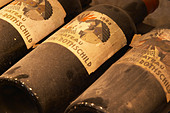
The wine business is in no way safe from fraud or fakes. You may remember the recent scandal when a wine producer in the south of France sold large quantities of pinot noir wine to an American customer. The problem was that he sold much more than what was made in the appellation… Or the Brunello wines that were suspected of containing grape varieties that were not allowed. And so on. Mike Veseth writes on his blog The Wine Economist about another type of fraud: someone who filled an empty bottle of chateau Mouton Rothschild 1982 (bough, full, for this purpose) with some other wine and included it in a blind tasting with “other” cru classé wines. Not surprisingly (really!) it was highly rated and some of the tasters even insisted it was the best wine in the tasting. Interesting story. Read about it and about other fake wines on the Wine Economist! The Wine Economist.

Read more...

Faugères in Languedoc celebrating summer - 11 July

>> Wednesday, July 07, 2010

On July 11 Faugères will be celebrating summer with a village party where you will be able to taste a lot of different wines and meet the winemakers. There will also be jazz music, dance, oyster eating and lots of other fun. More info on: http://www.faugeres.com/

Read more...

Red muscadet? (Or genetic modification in real life)

What would you say if someone offered you a red muscadet? No doubt you would not believe it. Muscadet is made at the mouth of the Loire river from the grape variety called muscadet (or melon de bourgogne). It is well known as a not overly sophisticated refreshing white wine. But soon you may have the possibility to taste red muscadet. Red? Indeed. The winegrower Pierre Viaud has discovered a red variant af the muscadet grape in his vineyard. It all started when he noticed one vine that had one branch with white grapes and another branch with red grapes. Shoots were taken from the red side and there is now an experiential vineyard with some forty vines. One of the ancestors of muscadet is pinot noir so it is no doubt that which is making a come-back. An interesting example of genetic modification in real life! (Source: La Vigne)

Read more...

Åsa's Wine of the Month: Trebbiano Spolentino

Trebbiano? No, Trebbiano Spolentino!

Wines made from 100% trebbiano can by thin and nondescript. This wine, Trebbiano Spoletino Bianco 2008, is also made solely from trebbiano. But it is a specific clone of the grape that has been used, coming from the area around Spolento in Umbria in central Italy. It was rediscovered by the producer Cantine Novelli after having been forgotten for hundreds of years. We wine consumers can be very grateful for this rediscovery – the wine is very fresh, with a good acidity, with mellow notes of almonds on the palate. The alcohol level reaches 13% and is a warm balance to the acidity. We tried it a warm summer day together with some ‘mozzarella di bufala’ (the real thing made from buffalo milk), succulent cherry tomatoes, olive oil, and some salt and basil. My suggestion this month, especially to those who look down the nose on trebbiano, is to try exactly that! Price around 13 euro. Web www.cantinenovelli.it

Read more...

BKWine Pick: restaurant La Part des Anges, Beaune

>> Tuesday, July 06, 2010

La Part des Anges, Beaune

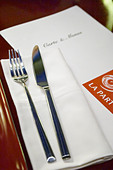
In the centre of the small town of Beaune you find La Part des Anges. the interior is modern, designed (for being in rural France). Food is stylish French, but not Burgundian. It rather takes its inspiration from the Mediterranean region. Elegantly presented by a cheerful staff. Expect to pay around 35-40 euro for three courses. they have a selection of wines by the glass (Burgundy of course) from 4 euro and up. A tiny terrace to stand outside with a glass of wine if weather permits.

Click here for address and more recommendations.

Read more...
The blog has moved. Here is the new location: BKWine Magazine Blog.

  © Blogger template Webnolia by Ourblogtemplates.com 2009

Back to TOP