THIS BLOG HAS MOVED


This blog has moved to a new location.


You can now read it on BKWine Magazine.


Please change your bookmarks and RSS feeds accordingly.


And do subscribe to our free wine newsletter, the BKWine Brief!


All info on our wine and food tours are now on BKWineTours.com.


Bordeaux crisis – in the USA?

>> Saturday, February 27, 2010

One of the biggest (if not the biggest) importer of exclusive clarets to the US, Diageo Chateau & Estates, has closed down its Bordeaux business in America, as we wrote in the Brief # 77. The very extensive stock of Bordeaux wines that they had is now finding its way on to the market. For the consumer this might mean that there will be ample supply of not-so-expensive luxury wines. A sudden increase in supply (by e.g. someone who’s dumping his stock) usually leads to falling prices.

For others it can be less positive: The importers that are still active on the American markets see their stock falling in value and have difficulties in selling it without making a loss. For the wine chateaux it can also be a headache. It may become more difficult to sell new (or recent) vintages and it can also give a bad image if prices fall so that those consumers who have recently bought their wines, e.g. as primeurs (wine futures), now see the same bottles for sale at lower prices than what they paid for them previously (at supposedly favourable primeur rates).

Some wine chateaux have tried to dampen these negative effects by buying back from the market wines that they sold (perhaps more expensively) a few years ago. AFP (Suzanne Mustacich) cites as an example Chateau Gruaud Larose who has even launched a press release to try and put a positive spin on it: that it has given them the possibility to replenish their own cellar with vintages that they no longer had… Even Chateau Petrus is rumoured to have done it.

Perhaps one can compare it with enterprises who implement corporate share buy-back schemes when management considers that the stock market does not value their share high enough? What do you think? A positive or negative development?

Read more...

What is ”organic wine”?

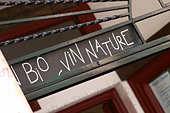
It’s not always easy to get to grips with the terminology, so here’s a short introduction. Strictly speaking one should talk about “wine made from organically grown grapes” since it is only what is done in the vineyard that is regulated, not what is done in the winery. But change is coming – the EU is working on defining what organic means also for the vinification. In spite of that we usually talk about “organic wines”. In French they say “vin biologique” or simply “vin bio”. There are a few terms that you should keep apart:

-- Organic wine: The work in the vineyard is certified by an official organisation, e.g. Ecocert. They do not use chemical treatments (except sulphur and copper) and wants to “respect nature”. The rules are common across the EU.

-- Biodynamic wine: They use special composts and herbal teas for treatments in the vineyard. Often they also follow a planting and work calendar based on e.g. the moon phases, albeit this is not strictly part of the biodynamic principles (and it is also used by non-biodynamic winemakers). All biodynamic growers are ‘par force’ organic. They are certified by private organisations, e.g. Demter and Biodyvin.

-- Natural wine: A concept that has gained in popularity recently. The concept is based on that one should do as little intervention as possible, if any. But there is no definition of what it is, so anyone can call the wine “natural”.

-- Culture raisonnée: there’s not really a good term for this in English. Sometimes “sustainable viticulture “ is used. One can describe it as “almost organic”. They try and not use any chemicals in the vineyard (like organic) but if e.g. grey rot threatens to wreak havoc with the total harvest the allow themselves to treat with chemicals. There is no official definition or certification, but many wine growers say they belong here.

It’s also worth noting that all of the above allow the use of sulphur and copper in the vineyard, if in lesser quantities than “conventional” farming. If you want to know more you can come to the organic wine tasting that we do at Vinisud, together with Vinisud, in Montpellier on February 22. The most organic region in France (in total acreage) is, not surprisingly, Languedoc Roussillon, and the least organic region is, not surprisingly either, Champagne (2008, including vineyards in conversion):

-- Languedoc-Roussillon: 8337 ha
-- Provence-Côte d’Azur: 6674 ha
-- Aquitaine (incl Bordeaux): 3763 ha
-- Loire+Centre: 2415 ha
-- Rhône/Savoie/Auvergne: 2175 ha
-- Alsace: 1261 ha
-- Bourgogne: 1231 ha
-- Midi-Pyrénées: 735 ha
-- Poitou-Charentes: 712 ha
-- Corse: 445 ha
-- Franche-Comté: 191 ha
-- Champagne-Ardennes: 191 ha

Approximately 3% of all vineyards are organic, which is more than for agriculture in general. Italy is the country with the most ecologic vineyards with 36,684 ha. France is second with 22,509 ha.

Read more...

Open doors in Côtes du Bourg on May 8 & 9

On May 8 and 9 all the doors are open in Côte de Bourg, at least those of a hundred or so wine chateaux – the annual ‘portes ouvertes’. There will be plenty of other entertainment too: a wine tourism rally (whatever that means?!), cross-country biking, aperitifs on boats, wine tastings and much more. More info on: www.cotes-de-bourg.com

Read more...

A wine that's gone flat

>> Friday, February 26, 2010

Adrien Cussonneau, a design student, won a well deserved prize for his original wine bottle. His end-of-studies project was to design a bottle on the theme “Loire profiles”. The resulting bottle turned out, well, flat. From one side it’s a classic bottle profile, from the other it is completely flat. Very elegant. The flat bottle gave him first prize in the competition organised by the Institut du Design Packaging. Congratulations! www.lecolededesign.com (Photo: the design project)

Read more...

Winery for sale – in Bulgaria!

Our spook in Bulgaria reports that there is a winery for sale in Bulgaria. the place is equipped with classic winemaking stuff: concrete fermentation vats etc. the property does not have its own vineyard but there are many grape growers in the wine region where it is located. The area is known for its red wines made from merlot and cabernet grapes. I the area there is a lake that is connected to an irrigation system covering the nearby vineyards. To get more info, contact Dimitar Bankovski, e-mail: dbankovski-at-gmail-dot-com, phone: +359 889 443 745 (Photo: the winery)

Read more...

BKWine Pick: Ma Cave Fleury, Paris 2

Ma Cave Fleury, Paris 2

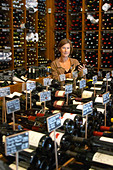
Almost exactly one year ago Morgane Fleury opened the doors to her ’cave éco-logique’ in Paris called Ma Cave Fleury. (The celebration was on February 13 so we say Happy Birthday a bit late.) Ma Cave Fleury is both a wine shop and a wine bar – small but very charming. “Fleury” is the well known champagne producing family of that name, one of the precursors of organic and biodynamic champagne. You can of course buy their own wines here (very clean, stylish, with no sulphur and very little dosage), but also other wines with the same philosophy, in other words, most of the wines here are biodynamic and all are organic. And most of the producers are also friends of the family. You can for example find Léon Barral from the Languedoc, La Tour Grise from Saumur, Marcel Richaud from the Rhône Valley, Marcel Deiss and Pierre Frick in Alsace, Marcel Lapierre from Beaujolais. You can have a glass of wine with some charcuterie or cheese (it’s not a pure bar – they generally serve something with the wines). If you book in advance you can also get a hot meal. The location, on Rue Saint Denis, with its seedy reputation, may make you hesitate, but Morgane shrugs it of and notes that there have never been any problems. They also organise wine tastings and other events, advertised on Morgane’s blog. Go take a look: http://macavefleury.wordpress.com

Click here for address and more recommendations.

Read more...

Record breaking organic wine fair: Millésime Bio

>> Friday, February 19, 2010

The number of visitors grew by 76% compared to 2009 to reach 3000 visitors at the organic wine fair in Montpellier that just took place. The number of exhibitors was also substantially up: plus 39% to reach 489. There were wines from thirteen different countries to taste and visitors that represented 26 different countries. The first edition of the show was held in 1993. Schedule a visit to next year’s Millésime bio: 24-26 January 2011 in Montpellier. More info www.millesime-bio.com

Read more...

Wine of the Month

Åsa’s wine of the month
Riserva Castel Sant´Elena

A wine for the ”goderecci”: Riserva Castel Sant’Elena. In other words, a wine for those of you who seek pleasure (which is what goderecci means in Italian), and as often when you are looking for some real pleasure it’s not exactly cheap. It comes from old vines of merlot and cabernet sauvignon in Umbria, not far from Perugia. Open the wine and decant it at least half an hour before serving to let the aromas develop – red fruit, as black currants and other dark fruit will then reach your nose when you dip it in the glass. In the mouth it is warm with a touch of tannin and a bit of ripe, jammy flavours. It is a Riserva 2007 and it wouldn’t hurt to keep it another few years to let the tannins round off a bit. www.cantinebusti.it. Around 30 euro.

Read more...

Organic wines at Millésime Bio

>> Thursday, February 18, 2010

We were (Per was) recently at the organic wine show in Montpellier: Millésime Bio. It is a wine fair that is quite different from many others. First, of course, since there are only organic wines there (well…. there were also some almost-organic wines, in “conversion”). But also because there are no traditional show stands. Every exhibitor gets a table and the size of the table is the same for everyone, so it has a certain democratic feel about it. It also avoids you having to wade through masses of utterly uninteresting, but gigantic, stands before you get to the interesting stuff. And interesting stuff there is. Obviously, not all organic wine is quality, or even good wine, but you do find quite a lot of interesting producers at Millesime Bio. I’d say that the ration of interesting to uninteresting is probably higher here than at most other fairs, disregarding if you are specifically interested in “bio” (the French for organic) or not. It is as much an occasion to discover new things as it is to say hello to old acquaintances. Here are some of the noteworthy rencontres this year:

-- Terre des Chardons – a biodynamic (sometimes very biodynamic) southern Rhône producer in the Costières
-- Domaine de la Crois Senaillet – in Burgundy / Maconnais making mineral chardonnays, including one that is made entirely in the curious egg-shaped concrete tanks
-- Domaine Freyburg – in Alsace, affordable whites, doing comparative trials with biodynamism
-- Chateau de Gaure – Limoux and Le Tour de France, some interesting (and curious) cuvees
-- Domaine Boucabeille – Roussillon with powerful wines
-- Alain Chabanon – confirmed talent in Languedoc, very unusual merlot (!) among many other things
-- Clos de l’Anhel – young and ambitioius domaine in Languedoc
-- Jean-Babtiste Senat – a refugee Parisian with elegant yet powerful reds
-- Daniel le Conte de Floris – a refugee journalist turned winemaker turned wine bar host (Pézenas) with wines with impossible names (but worth the while)
-- Mas des Agrunelles – a young couple running three different (MdA, Mas Nicot and Dom. la Marelle) small family properties with great talent
-- Henri Milan – veteran Provence producer near Aix
-- Chateau Haut Garrigue – a young Irish couple settled in Bergerac
-- Domaine Pialentou – a half-Swedish producer in Gaillac who’s made great strides over the last decade
-- Domaine Tour des Vidaux – a German producer in Provence with a really, really big beard
-- Domaine Pithon-Paillé – Loire winemaker revived like the Phenix making serious whites and some reds
-- Manoir de la Tête Rouge – some off-dry entry level wines and some more serious wines too
-- Domaine Virgile Joly – newish Languedoc (Montpeyroux) producer including a cuvée said to be “the Jura of the Languedoc”
-- Domaine Chateau de la Selve – a very young couple in the unlikely place of Ardèche
-- Domaine Paire – making some serious Beaujolais and some lovely-named but defunct Bourgogne Grande Ordinaire
-- Chateau Pech-Latt – a very reliable source for a good Languedoc bottle
-- Domaine Grand Guilhem – at the very far end of the Languedoc with lovely wines and lovely chambres d’hôtes
-- Domaine Zelige-Caravent – a start-up Pic Saint Loup producer making e.g. Zazou à Zanzibar. Do keep it up!
-- Cascina Corte – an Italian producer of Piedmont wines with unusually good volume
-- Domaine de la Croix Vanel – making excellent Languedoc terroir wines
-- Domaine Turner-Pageot – a start-up Australian-French family venture with great ambitions
-- Domaine Coston – will be making wines from the land that Robert Mondavi was not allowed to buy some years back (not their fault!)
-- Domaine Costeplan – making some lightish and fruity white and some more substantial reds

Read more...

New (or renovated) photo blog for BKWine Photography

BKWine Photography, the name we’ve chosen for our wine, travel and food photo archive, has undergone a renovation. We’ve completely re-done the design for the photo blog, the Wine Picture Blog, http://wine-pictures.blogspot.com/. Easier to read, less cluttered. For those who are curious how you do a blog renovation we’ve written a post on how we did it. We also have a separate site dedicated to the photos. It’s been there for a little while now but it is still in “beta”. Recently we also gave it it’s very own web address (url): BKWine Photography on http://www.bkwinephotography.com. Do pop in and have a look! What do you think?

Read more...

BKWine Pick: Domaine Courtault, Chablis

Domaine Courtault, Chablis

Jean-Claude Courtault came from the Loire Valley to Chablis in 1974 to work as vineyard manager at a winery in Lignorelles. In 1984 he started to buy his own land and in 1987 he launched his first vintage. Now Jean-Claude has 20 hectares and he has almost handed over to his daughter Stéphanie and her husband Vincent Michelet. Half of their production is ‘petit chablis’. “We make a good quality petit Chablis because we really make an effort. We’re one of the few who really care about making a high quality petit Chablis”, says Stéphanie as we taste her 2008. It is very fresh, with citrus aromas, refreshing acidity and hints of apple. A domaine well worth keeping an eye on.

Click here for address and more recommendations.

Read more...

”How I saved the world from Parkerization”

>> Wednesday, February 17, 2010

The full title of the book is “The battle of the wine and of love – How I saved the world from Parkerization” ("La bataille du vin et de l’amour – Comment j’ai sauvé le monde de la parkerisation"). It is written by the (obviously) opinionated wine writer Alice Feiring who writes for The New York Times, and the Wall Street Journal, just to mention a few of her clients. In the book she writes about her passion for wine, in particular for wine with a soul. and her dislike for standardised wine, designed by oenologist and consulting winemakers, and not least about how wrong it is to reduce the appreciation of wine to a single number of course. Well, you get the picture. The book will be launched and signed, by Alice, at an event in Paris on February 18 at 18.00 in a place called Lieu Commun, 5 rue des Filles du Calvaire, https://www.lieucommun.fr/

Read more...

More wine tastings and events at (or off) Vinisud

If you’re going to Vinisud you can come to the organic wine tasting with BKWine that we talk about elsewhere. But there is more. Here are some other things you might enjoy:

- Les Vinifilles on the Sunday evening, to warm up the day before it all starts? 18 women winemakers join for a private party. Who can resist? On invitation only. Perhaps you can get one if you are nice to Louise Hurren: louisehurren-at-wanadoo-dot-fr

- Clos Centeilles has at the Salon two interesting tastings, Monday morning and Tuesday morning, of e.g. their very unusual 100% cinsault wine as well as some other rare grape varieties, more info: http://www.closcenteilles.com/

- A vertical tasting of all ten vintages since the creation of Mas de l'Ecriture at the Chez Boris restaurant in Montpellier centre on Monday evening and Tuesday evening. More info: louisehurren-at-wanadoo-dot-fr

- W.O.W n°3 - Vinisud after Fair Party, with 15 wine producers (”Worldwinde original Winemakers”), e.g. Champagne Tarlant, in the evening of the 23rd, more info: http://www.worldwide-original-winemakers.com/

- Le Vin de Mes Amis, if you want to take a rest from Vinisud ”même” you can go to Castelnau le Lex where some 50 ’pirates’ have an “off” show. More info: http://www.domaine-jeanbaptistesenat.fr/

Read more...

Taste organic wines with BKWine at Vinisud

http://www.bkwine.com/images/vinisud-2010-345x100.gifVinisud, France’s second largest wine show after Vinexpo, organises a tasting of organic wines. The tasting is primarily intended for Scandinavian visitors but as a reader of the BKWine Brief you are of course welcome too. The tasting will start with a presentation by Britt (BKWine) and then there will be some 30 (or more) organic, biodynamic and “natural” wines to taste from various regions in the south of France. The presentation will be in Swedish but even if you don’s speak Swedish you are welcome to come and taste the wines. Details: Monday February 22 at 17.00 in the Centre de Conférences at Vinisud. If you can’t come to the tasting but will be at Vinisud it would be nice to say hello anyway. Give us a call on +33 6 83 51 12 53. PS: Don’t forget to register for a badge at Vinisud in advance on their site: http://www.vinisud.com/. Then you’ll save on the entrance fee.

Read more...

BKWine Pick: Weingut Erich Machherndl, Wachau, Austria

Weingut Erich Machherndl, Wachau, Austria
Erich Machherndl in Weissenkirchen in der Wachau is a master of the Austrian grape variety grüner veltliner. A good example is his Grüner Veltliner Federspiel 2008, with a high acidity, very clean and crisp style. “That’s exactly how I want it” says Erich. He started working in the vineyard with his father in 1997. Now it is mostly Erich who runs the business, and thus gets the glory. He has 8 hectares and makes a wide range of different wines, not only the GV. He also makes excellent pinot blanc and chardonnay. The pinot blancs are of high quality, full of character, not what you would expect from this otherwise rather anonymous grape. The Pinot Blanc 2000 is outstanding with an intense flavour, with touches of oily honey (if that sounds strange, it’s not!) notes and a god minerality. His chardonnay is made in two variants: with and without oak. My favourite is his Chardonnay Mal Anders, full-bodied with a high acidity, not unlike a chablis.

Click here for address and more recommendations.

Read more...

Welcome to the BKWine Brief nr 79, February 2010

You, us and The Brief

We do put in quite a lot of effort and time into making the Brief each month. Partially because it is interesting and fun to do it. But also since, as we are sure you have noticed, it is a marketing channel for our wine tours. But we really want the Brief to bring you both information and opinion. A reader recently said “What I like about your newsletter is just that - the attractive photos, the humorous touches and bits of lighter news, the personal opinion”. That’s the kind of thing that makes you happy. You’ve achieved at least a bit of what you want. Both information and giving you a feeling of what we think about what’s going on.

We hope that you get a bit of useful information from the Brief. Perhaps you read just a short snippet, perhaps you devour it from beginning to end (if you do, please let us know, we’ll give you a golden star in our report book!). We try and share what’s going on, what we see and hear about wine.

But we need your help! We would like to (need to) reach more wine enthusiasts – people who want to read about wine, gastronomy and travel (and perhaps one day come on a wine tour). Recommend it to your friends! To your wine club associates! To everyone at work! To family and cousins! Help us find more wine loving readers! After all, it’s good value for money, isn’t it? Here's where you sign up as new subscriber!

And if you have any suggestions how we’d make it even better do let us know!

Châteauneuf-du-Pape

Châteauneuf has been chosen as “wine village of the year” by the (very big) Swedish wine tasting club Munskänkarna (they have 20,000 members). That inspired us to make a selection of wine photos that could be used to illustrate wine tastings with Chateauneuf wine. This is, just like the BKWine Brief itself, an example of a ‘trade’ between us and our readers. The person talking about Chateauneuf gets a very good selection of illustrations and in return we get an opportunity to be “seen” by some more wine lovers. There’s a small tag line at the bottom of each image that mentions what we do. (The offer is only for non-profit, non-professional tasting tutors at the moment.) A ‘trade’ just like the BKWine Brief. Here’s the selection of the Chateauneuf photos: http://tinyurl.com/munsk-rhone. At the moment, this is only an offer open to the Munskänkarna society in Sweden, but perhaps it would be interesting for other too? Perhaps on other subjects than Châteauneuf too? What do you think?

Organic

We (i.e. Per, in this case) were recently at the big trade show Millésime Bio with organic wines. A very interesting wine fair, even if you have no particular penchant for organic wines. Plenty of interesting producers. You can read more on some of the winemakers we met further down in the Brief.

And the organic theme continues. It seems to be a strong trend at the moment (as we predicted in the last Brief). The next big event is France’s second biggest wine fair, Vinisud, where we will be doing a wine tasting on organic wines. It’s primarily for Scandinavian visitors but as a reader of the Brief you are of course welcome too. Read more about it below. In any case we will be back with some reporting from the wine show.

Competitions

A bit later this spring (if the spring will ever arrive!) there will be the Concours Mondial de Bruxelles. It is one of the world’s biggest wine competitions with wines from all over the world. It’s a gigantic organisation, not least since it is a “nomadic” competition since a few years back. In spite of its name the competition will be held in Palermo on Sicily this year. Some 250 judges will participate from many different countries, to judge the thousands and thousands of wines. Britt is what seems like a permanent member of the jury (without wanting to sound as if she’s been there since the beginning of time). This year, Per will also be in the jury, which means that two thirds of the Swedish contribution to the jury will be from BKWine (last time we looked at least). We will be reporting from this too.

But now, over to the Brief.

Britt & Per

PS: Recommend to your friends to read the Brief or forward it to them ! More on wine:

Read all of the new BKWine Brief here!

Read more...

Wine events : exhibitions, competitions,…

>> Wednesday, February 03, 2010

We have updated our events calendar with several new events : competitions, shows and other. Thank you to FIJEV (Federation International des Journalistes en Vin) who had put the list together:


- 25-27/01 Montpellier (F) : Millésime Bio www.millesime-bio.com

- 28-30/01 Mumbai (IND) : India International Wine Fair, http://www.taste-expo.com/

- 30-31/01 Chassagne (F) : Saint Vincent Tournante, http://www.st-vincent-tournante.fr/

- 4-7/02 Berlin (D) : Berliner Weintrophy, http://www.berliner-wein-trophy.de

- 1-3/02 Angers (F) : Salon des vins de Loire, http://www.salondesvinsdeloire.com/

- 22-24/02 Montpellier (F) : Vinisud, http://www.vinisud.com/

- 24-24/02 Sonoma (USA) : Grand Harvest Awards, http://www.vwm-online.com/wine_competitions/grand_harvest/index.asp

- 26-02-2/03 Paris (F) : Vinalies Paris, http://www.vinalies-internationales.com/en/

- 3-5/03 Thessalonique (GR) : Concours Int . du Vin de Thessalonique, http://www.wineroads.gr/eng/index.php

- 5-7/03 Aiseau-Presles (B) : Salon Saint Vincent, http://www.salonduvinfloreffe.be/

- 10-13/03 Saint Lager (F) : Chardonnay du Monde, http://www.chardonnay-du-monde.com/

- 12-16/03 Madrid (E) : Bacchus

- 21-23/03 Düsseldorf (D) : Prowein, http://www.prowein.com/

- 22-26/03 Barcelona (E) : Alimentaria Barcelona, http://www.alimentaria-bcn.com/

- 22-27/03 Beaune (F) : Grands Jours de Bourgogne, http://www.grands-jours-bourgogne.com/

- 25-28/03 Montréal (CDN) : Salon des Vins & Spiritueux de Montréal, http://www.salondesvins.com/

- 8-12/04 Verona (I) : Vinitaly, http://www.vinitaly.com

- 16-18/04 Olne (B) : Salon des vins bio & naturels, http://www.salondesvignerons.be/

- 23-25/04 Palermo (I) : Concours Mondial de Bruxelles, http://www.concoursmondial.com/

- 29/04-06/05 Adelaide (AUS) : Tasting Australia, http://www.tasting-australia.com.au/

- 13-16/05 Aigues-Mortes (F) : Oenovideo, http://www.oenovideo.oeno.tm.fr/

- 18-20/05 London (GB) : London Wine Fair, http://2010.londonwinefair.com/

- 25-27/05 Hong Kong (CN) : Vinexpo Hong Kong, http://www.vinexpo.com/en/asia-pacific-2010/

- 27-28/05 Ampuis (F) : Syrah du Monde, http://www.syrah-du-monde.com/

- 28-31/05 Ljubljana (SLO) : Vino Ljubljana, http://www.ljubljanafair.com

- 1-6/06 Québec (CDN) : Sélections Mondiales des Vins Canada, http://www.smvcanada.ca/

- 17-20/06 Visegrád (H) : Vinagora, http://www.aborfesztival.hu/

- 1-2 /07 Frontignan (F) : Muscats du Monde, http://www.muscats-du-monde.com/

- 16-21/08 Stellenbosch (ZA) : Michelangelo Wine Awards, http://www.michelangeloawards.com/

- 20-22/08 Sierre (CH) : Mondial du Pinot Noir, http://www.mondial-du-pinot-noir.com/

- 26-08-05/09 Neustadt (D) : Mundus Vini, http://www.mundusvini.de

- 12-14/11 Lugano (CH) : Mondial du Merlot, http://www.mondialdumerlot.com

Read more...

Record wine sales expected in Sweden

>> Tuesday, February 02, 2010

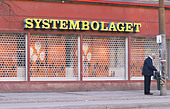
According to the forecast at the end of last year 2009 will be a record year for wine sales in Sweden. If December sales were as expected (as hoped for, is probably not the right expression in this country) sales for the full year would reach 174 million litres of wine, well above the last record from 2008 of 161 million litres. Sweden has since many years a retail monopoly on wine and spirits, through Systembolaget, in order to limit sales and to improve public health. Perhaps it is a sign of the monopoly’s efficiency that Sweden is doing so well compared to other countries in reducing consumption? More info: www.thelocal.se (Yes, that's Britt on the picture.)

Read more...

Worcester Sauce and wine. Revealed!

>> Monday, February 01, 2010

Last month we asked the question “what does Worcester Sauce has to do with wine?” It was sparked by the wine blog called Worcester Sauce (sometimes called Worcestershire Sauce – the sauce, not the blog) idiosyncratically written by Stuart George. One (anonymous) reader suggested this explanation: “Worcester Sauce is a very well-known and rather emblematic cooking and cocktail-making ingredient (pronounced "wooster"), and I suppose some of Stuart's remarks might be considered cheeky, or saucy - hence, Worcester Sauce”. She added, importantly, as did another reader, that Stuart actually comes from Worcestershire. So, going to the source of the sauce, so to speak, Stuart confirms “my blog is called that name because I was born near Worcester!” Once again, here it is: http://worcestersauce.wordpress.com/

Read more...

This month’s must-have wine gadget: the screw cap opener

>> Monday, January 25, 2010

Dr. Vino is a wine blogger with a talent to unearth unusual and intriguing stories. He has found this month’s wine accessory that one should definitely not be without: a “cork screw” for bottles closed with screw cap the Butterfly Wine Opener. How else will you be able to open with flair those challenging screw top bottles?! We dive for the credit card to place an order!(not pictured here)

Read more...

Zagreb Wine Gourmet Festival, February 12 & 13

Croatian wine and gastronomic delicacies will be on show on the upcoming Zagreb Wine Gourmet Festival on February 12 and 13. Lectures, workshops, wine tastings, cooking shows and culinary presentations will be part of the two day programme. More information on Zagreb Wine Gourmet Festival here http://www.zagrebwinegourmet.com/

Read more...

Taste organic wines at Vinisud with BKWine on February 22

>> Friday, January 22, 2010

http://www.bkwine.com/images/vinisud-2010-345x100.gifThe other big wine fair to put in the agenda this winter is Vinisud (also in Montpellier), specialised in wines from the Mediterranean basin. Vinisud has asked BKWine to lead a wine tasting of organic (including biodynamic) wines. There will be range of wine producers represented from the different regions around the Mediterranean (Languedoc, Roussillon, Rhône, Italy, Spain…). Britt will make a short introduction on the latest developments in organic wine growing/making followed by an open tasting. There will be some 15-25 wines to taste. All details are not yet settled but the tasting will take place on Monday February 22 (IMPORTANT: NEW DATE!) at Vinisud in Montpellier. The introduction will be in Swedish (the primary target audience being Scandinavians) but if you can take a bit of Swedish you’re welcome even if you’re not Scandinavian! (So, if you’re there why not give us a call to meet over a glass of wine? BKWine will be there!: +33 6 83 51 12 53)

Read more...

Millésime Bio the big organic wine fair

>> Thursday, January 21, 2010

Just a reminder on Millésime Bio, the big (only?) wine fair focussed on organic and biodynamic wines. A very interesting event for anyone hunting for wines with a sense of the environment. In Montpellier on 25-27 of January. More info www.millesime-bio.com (And if you’re there why not give us a call to meet over a glass of wine? BKWine will be there!: +33 6 83 51 12 53)

Read more...

Taste Languedoc wines in Paris on January 21

Miss Vicky’s real name is Anne-Victoire Monrozier and she writes the blog Miss Vicky Wine. She also sells wine (I think, her family has a vineyard in the Loire valley), and, above all, she organises wine tastings in Paris. Her next event is a Languedoc tasting at the art gallery l’Oeilduhuit in Paris on January 21. Several interesting Languedoc producers are on the list. More info and registration on Anne-Victoire’s blog Miss Vicky Wine http://missvickywine.blogspot.com/

Read more...

An apple a day keeps the doctor away – No, make that a wine photo a day!

You may not know of our wine picture blog. It is a blog where we publish a new wine photograph every day. Or every day we’re in front of the computer. Each morning we pick a photo from our wine photo stock collection (we have some 30,000 images available on Alamy and on Photoshelter). Some recent entries have been on:

- making a wine barrel (cooperage)
- Chateau Haut-Marbuzet in St Estephe
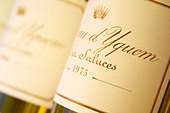
- Château d’Yquem

And so on. You can subscribe to updates to the wine picture blog either on RSS or on email. The biggest challenge is to find a clever headline each morning. Sometimes inspiration is decidedly lacking… Perhaps we should start a reader/viewer competition? The Wine Picture Blog.

Read more...

Vote for the new organic logo in the EU!

>> Wednesday, January 20, 2010

http://www.bkwine.com/images/eco-logo.gifEU will launch a new logo to mark organic products (“biologique” in French). They created a large number of suggestions. Three suggested logotypes have been chosen for the final round – and you can be part of the jury. In fact, anyone can vote for what logo we should have in the future. Here’s the page to cast your vote for the best logo for organic products. Vote until 31 January 2010!

Read more...

"Wine Tech" galleries for the enthusiasts

We have started a series of wine growing and wine making slide shows to show more details on how some things are done. The intention is to illustrate some aspects of wine making or growing more in detail to give the enthusiast a better insight into each theme. For each theme we’ve created what we in lack of a better name call a Wine Tech Gallery. It’s a slide show with a series of photographs that illustrates the subject. (You can view it in full screen mode if you want.) Originally it was intended as supplementary material for our book A Wine is Born but it can of course be of interest to anyone who wants to know more about wine. Here’s what we’ve covered so far (an do come with suggestions for new subjects if you have ideas of things you’d want to see us cover):

- Noble rot
- Pumping over (remontage)
- Machine harvesting grapes
- Grape sorting and selection

Read more...

Wine Trend 2010 #10: China grows in importance

>> Saturday, January 16, 2010

In a longer term this will have a big impact but even in the short term it will be noticeable. It is above all on the consumption side that it will have an effect – the Chinese demand for wine will grow. It will primarily be more expensive wines that will sell rather than budget wines for the mass market. On the production side, on the other hand, i.e. Chinese wine, it will take much longer time before it will have any impact internationally.

Read more...

Wine Trend 2010 #9: More protectionism in the EU

This is the trend that we most hop that we will be mistaken on. Over the last few years the EU agricultural policy (the CAP) regarding wine has mad quite a lot of progress towards a more open and market oriented regulation. This is largely thanks to the outgoing agriculture commissioner Mariann Fischer Boel and her diligent (but not always successful) work. It has often led to protests from the wine producers, and above all from the wine producers lobbying groups. Now it is time for a new commissioner and Dacian Ciolos from Romania has been nominated. His nomination has been greeted with cheers from the protection-loving wine lobby. Ciolos comes from a wine producing country (albeit not a big one) and the wine lobby hopes that he will show more sympathy towards their demands for subsidies, protection measure than what Fischer Boel did. Before we see what happens in reality in Brussels there is no way of knowing, of course, but let us hope that there will NOT be a trend towards more subsidies, more protectionism and other things that are only bad for consumers, and also bad for the wine sector in the long run.

Read more...

Wine Trend 2010 #8: Cheaper (less expensive) champagne

Champagne is probably the wine region that has prospered most during the past decade. They have rather had a shortage of wine (or grapes) and steadily growing prices. But there’s a risk that this is over. Sales in 2009 have probably dived by more than 25% (we don’t have any final numbers). In spite of what is almost effectively a production cartel in the Champagne region, to control prices, next year is likely to be hard. (The local control authority decided, for example, to cut the allowed grape yield in 2009, hoping that it would keep prices up.) In time for New Year you could buy champagne in Paris for less than 9 euro and in England it seems you could find some bottles at less than 15.

Read more...

Wine Trend 2010 #7: More demand for lesser known grape varieties

>> Friday, January 15, 2010

In Bordeaux they grow more and more petit verdot and sauvignon gris. Marselan has been approved for AOC Côtes du Rhône. We will see more and more wines with unusual grape varieties that previously were known only locally. If even. Are consumers tired of chardonnay and merlot? Why not try a tannat or a malbec? Or even more exotic a prieto picudo, an alfrocheiro, negrette, xinomavro…?

Read more...

Wine Trend 2010 #6: Good time for budget wines

2009 was the year of The Crisis but it didn’t make people stop drinking wines. Instead, consumers moved towards less expensive wines. This, we think, will continue in 2010. There will be a focus on value for money. Expect good times for wine producers who make budget (not to say cheap) wines with lots of taste. Garage wines have almost disappeared from the lime light; bubbles tend more and more to come from northern Italy or Spain; perhaps consumers will even discover that there are plenty of excellent Bordeaux wines that are not “classed growths” – and that sell at a fraction of the price.

Read more...

From Parisian to walnut farmer and truffle hunter

>> Thursday, January 14, 2010

Just read this wonderful story by Tom Fiorina about how he became a truffle hunter. Hunting truffles not with a pig, not with a dog. But with flies. Truffle flies.

I have participated in a truffle hunt a few times and it's always been with a dog. That's what is usually the case these days. But I've heard it explained and seen it demonstrated that you can do it by letting the flies guide you. But I hardly thought it was true. But apparently it is.

It's a wonderful story and you should read all of it (it's quite long but worth while).

Just to illustrate it a bit, here's a truffle fly (a real, but dead, one):


And here are a few illustrations of how you do it:


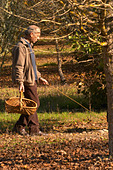
(No, that's not Tom Fiorina on the picture)

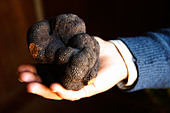
Here's a rather normal size truffle:


And a really, really big one:


Here you can see the white pattern inside the truffle:


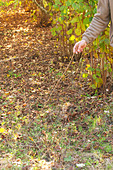
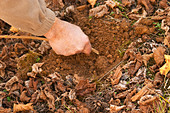
But back to hunting them. Digging to find it:


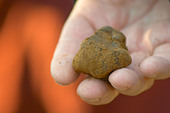
Here it is. What? You think it's a stone?


Well, this may look like one but it tastes quite different from a stone, and costs a bit more:


If you don't trust your fly finding capabilities:


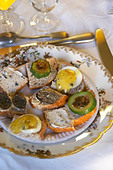
Some truffles canapes perhaps?:


And if you have too many you can sell them at the market:


If you want to see more truffles and truffles hunting photos you can look here.

We occasionally organise truffle hunting tours for the enthusiasts. Where you can take part in a real truffle hunt a winter morning (you can only do it from December to February...). And once you've spent all morning outside, frozen to the bone (perhaps), we sit down around a lunch table and have a truffle lunch: appetizer with truffles, starter with truffles, main course with truffles, and a bit more truffles, cheese with truffles, dessert with truffles... It's really a wonderful experience.

If you're curious you can find out more about our truffles and wine tours here. Sometimes we have a truffles tour on our 'public' tour program but we also do them custom made on request.

Read more...

Wine Trend 2010 #5: Less oaky wines #2

When talking to producers it is much more clear: they frequently say that they want to emphasise the fruit and avoid masking it with oak. They cut down on the portion of new oak used. So, on the producer side this is a clear trend. Perhaps a contributing factor, a year like this year, is that an added benefit of this is a reduction in the outlays for new (and expensive) barrels?

Read more...

Wine Trend 2010 #4: Less oaky wines #1

We think this is a trend but we’re not quite sure. Many people talk about this: less oak in the wine, but …. when you make a show of hands after a wine tasting to see which wine was most appreciated it’s usually then one with oak character that comes out on top. So perhaps people like oak after all. Can it be like for champagne: many champagne producers tell the story of the visitor who says “I like the really dry champagne, preferably Brut Nature” (without any dosage), but when they taste the wines blind, one with no sugar at all and one with a slight dosage, it’s the wine with sugar that they prefer…

Read more...

Wine Trend 2010 #3: Balance

>> Wednesday, January 13, 2010

We will want less beef and punch in the wines and more balance and elegance. It is less important to reach a high alcohol level and more important to find an equilibrium between fruit and the other components in the wine. Wineries will experiment with yeast that produces less alcohol (yes, there is), grape varieties that produces less sugar but still ripe grapes, techniques for removing alcohol from the finished wine etc. (At the same time, one should remember that a high alcohol level is not in itself contrary to a well balanced wine. There are many well balanced wines with high alcohol levels. It is mostly a question of competent wine making. An in truth, if you think about the health effects, or drinking and driving and such things, does it really matter if it is 12.5% or 13.5%?)

Read more...

Wine Trend 2010 #2: environmental issues #2, ‘nicer’ packaging

The trend to less environmentally ‘bad’ packaging will continue. Not least, we will see fewer of the ridiculous weight lifting bottles often used for prestige cuvees. We remember well (but not with joy) the bottle that weighed in at 1.4 kg. Empty! We will see lighter bottles, PET bottles (plastic bottles making a return!), aluminium bottles, bag-in-box without the box (so, wine-in-a-plastic-pouch), and why not more of the wines in a can (recyclable of course). All these alternative packaging will continue to suffer from the stigma of assumedly containing cheap wine. In conjunction with this we have other environmental aspects: greenhouse-gas-neutral wines, CO2 studies in more an more regions etc.

Read more...

Wine Trend 2010 #1, environmental issues #1, eco-friendly wines

It’s been a trend for some time now but we think it will continue and perhaps accelerate in 2010. We consciously say “eco-friendly” and not organic wines since there is a big group of producers who work with so called culture raisonnée (almost organic, but not quite 100% so; sometimes wrongly, in our opinion, translated to ‘sustainable wine growing’). This group continues to grow and is in numbers probably bigger than organic wine growers. But both culture raisonnée, organic and bio-dynamic vine growing will grow. And if the EU agrees, as is the plan, on what an “organic wine” will be it will accentuate the trend (today there is only “wine made from organically grown grapes”; what is done in the wine cellar is not regulated).

Read more...

Jack’s wine of the month: Langhe Nebbiolo, Pio Cesare

>> Tuesday, January 12, 2010

Jack’s wine of the month
Langhe Nebbiolo, Pio Cesare

It’s a new decade and time for new wine experiences. I suggest that you take the time to make a nice and hearty meat stew one of the January weekends and serve it with a well-decanted (3-4 hours in advance) nebbiolo wine. Try the “mini-Barolo” from Pio Cesare, Langhe Nebbiolo 2006 (around 10€). You will get lots of compact grape character to go with the stew. The wine already shows some age with touches of porcini mushroom and cherries; a good tannin structure behind and a quite high acidity. You can keep it for a few years but excellent to drink now – with food.

Read more...

BKWine Pick: Le 26, Narbonne

Le 26, Narbonne

This is one of our favourite restaurants in Narbonne, not that choice is lacking. In the miniscule space (30 m2 plus terrasse) le chef Frédéric Nalais serves delicious and well made food. Try the croustillant de noix de saint jacques en feuille de brick (scallops in crispy spring roll dough), ravioli with basilica or a grilled dorade (sea bream) with coriander and cream of fennel. Excellent goat cheese from the Cévennes mountains. At lunch time you can get la formule expresse for the steal of 14.50 € and in the evening you can try the menu terroir for 24.50€ or, more ambitious, le menu des gourmets at 37€. A good wine list with an emphasis on local wines: Corbières, Minervois…

Click here for address and more recommendations.

Read more...

BKWine Pick: Osteria da Ugo, Verona

>> Monday, January 11, 2010

Osteria da Ugo, Verona

It’s hidden in a back street and you may have to fend off the dust bins on your way there even thought it’s in the beautiful city of Verona. It’s a traditional osteria (bistro for the Francophile), serving typical regional food from Veneto – the region where Verona is located in north east Italy. You can for example get a meat stew with amarone, or pasta with an abundance of porcini (and other) mushrooms, or a risotto made with local cheese and rosemary. A bit rustic, country-style, but very friendly service even when very busy. A pleasant restaurant, mid-priced food, and far from the local American province called Piazza delle Erbe. The wine list is also good, featuring many Valpolicellas and Amarone in various vintages.

Click here for address and more recommendations.

Read more...

BKWine Pick: Braida, Rocchetta Tanaro, Asti

>> Sunday, January 10, 2010

In Monferrato, in the hills east of Asti, we find Braida, a winery belonging to the Bologna family. Today it’s the third generation Bolognas who manages the winery, Raffaella and Guiseppe, both with an oenology education. They are assisted by Norbert Reinisch, an Austrian doctor, married to Raffaella. The Bologna family were perhaps the first to realise the potential of the barbera grape variety. In 1982 they launched their first vintage of Bricco dell’Uccellone, made from 100% barbera, aged in small French 225 litre barrels for 15 months. No one had made something like that before and people didn’t think it was a barbera. Bricco dell’Uccellone 2006 is a powerful, full-bodied wine with a dense structure and good fruit, not hidden behind the discrete oak aging (~35-40€). Some other delicious wines from Braida@ the white Il Fiore and the red Il Bacialè, a Monferrato Rosso made from barbera, pinot nero and a touch of cabernet sauvignon and merlot (~11-14€). Their top wine is Ai Suma, made from grapes harvested later, very concentrated and extracted, an almost overwhelming wine with close to 16% alcohol. Will survive a well chosen strong cheese…

Click here for address and more recommendations.

Read more...

BKWine Pick: Weingut Franz Leth, Fals am Wagram, Austria

>> Saturday, January 09, 2010

Weingut Franz Leth, Fals am Wagram, Austria

Wagram is an Austrian wine region a short distance west of Vienna totalling 2500 ha. The make primarily white wines and grüner veltliner accounts for 55% of the production. Winemaker Franz Leth also makes predominantly white wines but has expanded his production of reds recently. Try for instance his Grüner Veltliner Brunnthal 2008 (~12€), a wine with complexity with citrus flavours and ripe tropical fruit. It has a good and fresh acidity and in spite of the alcohol level reaching 13.5% it is well balanced. Another fantastic gruner veltliner that we tried is the Scheiben 2006. Franz suggests keeping if for 20 years or more… The Blauer Zweigelt Gigama 2006 (~22 euro) is proof that the red wines have a bright future. It is intense, spicy, with flavours of dark cherries and some oak. It has been aged for 24 months on barriques. Also a wine that definitely will improve with some aging.

Click here for address and more recommendations.

Read more...

Welcome to the BKWine Brief nr 78, January 2010

>> Friday, January 08, 2010

Just like last year, we did some brain storming (late one night after some good bottles of course) on what might be the trends in the wine world in the coming year. You can read more details below in the Brief but here are the headlines:

Wine Trend 1, environmental issues #1, eco-friendly wines
Wine Trend 2: environmental issues #2, ‘nicer’ packaging
Wine Trend 3: Balance
Wine Trend 4: Less oaky wines #1
Wine Trend 5: Less oaky wines #2
Wine Trend 6: Good time for budget wines
Wine Trend 7: More demand for lesser known grape varieties
Wine Trend 8: Cheaper champagne
Wine Trend 9: More protectionism in the EU
Wine Trend 10: China grows in importance

One year ago we also looked in the crystal ball, in the BKWine Brief in January 2010. Were our predictions correct last year? Take a look for yourself in the Brief for January 2009!

We’d be very interested to hear what you think about the wine world in 2010! Are we completely off the board? Or do you agree? Or perhaps you have completely different predictions for the coming year. Send us an email or post a comment in the blog!

This rather extended holiday season (especially if you’re Swedish: December 24, 25, 26, 31 and January 1 and 6, plus half of 5 are vacation days, or “red” days as they say in Sweden. It refers to the colour in the agenda and not to your political views) has given us plenty of opportunities to open some nice bottles. Traditionally, for Swedes, it’s the season for the Christmas gigantic smorgasbord with plenty of beer and aquavit. Yes, we’ve had some of that but we’ve also managed to down some good wines.

We wrote some time back about our “Swedish” wine cellar that we’ve moved home (from Stockholm to Paris). It’s been hibernating almost untouched in Stockholm since we moved from there almost twenty years ago. In other words, there were some “interesting” wines there that we have started to sift through. If you follow us on twitter (@bkwineper) you might already have had some of our spontaneous reactions to those wines ‘live’ over the holidays.

Just to give you some examples: Château Beauregard 1981 (Pomerol), Chateau Grillet 1986 (Condrieu), Château Chasse-Spleen 1976 (Bordeaux), Les Silex Chateauneuf-du-Pape 1977… The experiences have been very varied and sometimes unexpected : a magnificent Château Grillet (we no longer believe in those who say that Grillet cannot age !); a, to us, unknown Chateauneuf that surpassed all reasonable expectations; several (OK, that’s an exaggeration – let’s go for ‘some’) old clarets that were still alive (sometimes on life support) but that were mostly very elegant and delicate, partially due to the time that had passed (more than 30 years sometimes) but probably also because none had an alcohol level above 12.5%...

We’re thinking of making our database with tasting notes available on the internet. Would that be a good idea, in your opinion?

Britt & Per

PS: Recommend to your friends to read the Brief or forward it to them !

You can read the full Brief here!

Read more...

Wine tastes better in blue or red light

German researchers have concluded that wine tastes better (is perceived as tasting better? – a philosophical distinction perhaps) when tasted in light with a red or blue colour, compared to if the lighting is neutral white or green. They had the subjects taste wine in different coloured light and compared reactions. The colour also had other, more specific effects: Red light made the wine taste sweeter and fruitier. Red or green made the drinkers think the wine was more expensive (1 euro more on average) than white or green. Drinkers are warned of bar owners who try and manipulate guests’ perception with the colour of the light (no we’re not joking). All according to Telegraph.co.uk Telegraph.co.uk

Read more...

End of good times for Bordeaux?

>> Thursday, January 07, 2010

One of the most influential wholesalers of Bordeaux wine has closed down its Bordeaux business. It’s a potentially revolutionary story that has attracted surprisingly little attention. Diageo Chateaux and Estates has decided to abandon all trade with top Bordeaux wine, according to a story in the AFP. DCE has been the biggest actor on the American market for top of the range Bordeaux (primeurs). The decision means that they will cease trading in Bordeaux wines and that they will liquidate the stock that they have.

This means that the single biggest US customer will disappear and that there may be an oversupply of dumped Bordeaux on the market. According to some estimates their stock may be worth up to $200 million. A trader in New York, quoted by the AFP, says that he has stocks of Bordeaux worth $5.5 M that is now unsaleable since his prices would be 50% over the dumped DCE wines. Read the original article from AFP here.

Dan Berger, writing in the Napa Valley Register, thinks it may be the start of a crisis for Bordeaux , others don't agree, e.g. Tyler Colman (Dr Vino) is more sanguine and does not seem to think it’s a big issue.

One can’t help wondering what impact it will have on the Bordeaux Primeur Circus that will soon kick off for the 2009 vintage and for the Bordeaux market as a whole.

What do you think? Are we exaggerating the possible impact? What will the consequences be?

Read more...

Amarone is granted DOCG status

>> Wednesday, January 06, 2010

The DOCs Amarone della Valpolicella and Recioto della Valpolicella in Veneto in Italy have been promoted to DOCG status, according to Decanter.com. DOCG is the highest classification in the Italian wine laws. The DOCG label may be used from the 2008 harvest. Growers welcome the upgrade and say that they hope it will improve the economy and the quality of the regions wine, and that it may reduce the amount of fake amarone that has circulated on international markets recently. How that will happen is unclear. More www.decanter.com

Read more...

The magic of words: Chaume is ‘grand cru’ or ‘premier cru’ or both?

The French sometimes put too much stock in the magic of words and in the value of appellations, as this story, just one of several about AOC and name wrangling, shows: In 2003 a new appellation was launched in the Loire Valley, with the blessing of the INAO of course: the AC Chaume Premier Cru, within the Coteaux du Layon region. (It’s very difficult to understand how the INAO could agree to it to start with.) This was a sweet white wine appellation in a wine region close to the city of Angers.

However, the neighbours said ‘we are not amused’ since there was already since long an appellation, and a very prestigious one (albeit virtually unknown except to the real wine nerds) called Quart de Chaume. The producers of QdC thought (understandably) that the name “Chaume Premier Cru” might give the impression that ‘plain’ Quart de Chaume was something lesser (which it is not, rather the contrary).

So they took the case to court. And won. So Chaume Premier Cru was annulled in 2005 and disappeared. Wine growers are not ones to give up easily (if they were they probably wouldn’t be wine growers), so the CPC growers tried again, now in 2007 with the name Coteaux du Layon Chaume. But not with better luck. They ran into opposition and this AOC too was annulled in May 2009.

But there’s no giving up when it comes to AOC word magic (just think of Saint Emilion’s classification that’s been five (?) times in court and through the French parliament). The latest proposal, as we read in Decanter, is that Quart de Chaume will become a Grand Cru and Chaume ‘tout court’ will become a Premier Cru. It’s not yet approved by the INAO and there’s still scope for someone not being quite happy with it, but for the moment it looks as if it will pass.

If only the French wine growers would spend a little bit more time thinking about their customers and less fighting each other in court and in the AOC system they’d have more success on the international market… More in www.decanter.com

Read more...

Terras do Sado becomes Peninsula de Setubal

>> Tuesday, January 05, 2010

The Portuguese wine region Terras do Sado is located just south of Lisbon. It Has recently been renamed Península de Setúbal in an effort to make it better known. The new name will be uses from the 2009 harvest. www.vitisphere.com

Read more...

The monopoly model gains international supporters? More countries adopt monopoly?

They are discussing a reintroduction of the monopoly model for selling alcohol in the country. A working group is toiling to present a proposal in March 2010. The Prime Minister, who has initiated the project, has already previously introduced strict limitations on the sale of alcohol, e.g. by forbidding internet sales, we read in Vitisphere.com. So, where is this country that apparently has understood that the Swedish monopoly model is “the world’s best way to sell alcohol” (according to the Swedish monopoly’s own advertising)? Russia of course. More info www.vitisphere.com

Read more...

A bottle of Masa Super Premium for $2500

>> Monday, January 04, 2010

http://www.bkwine.com/images/masa-super-premium-tea.gifA very elegant bottle safely guarded in an elegant wooden box decorated with stylish calligraphy. Harvest made by hand, of course, and delicately treated to produce a unique beverage for the connoisseur. Produced in only 100 bottles. A new super-extra-special-premium wine from California? A new champagne to rival Krug’s Clos d’Ambonnay (with an equally silly price tag)? No. A bottle of green tea. More info on King of Green Masa Super Premium www.apr-inc.net

Read more...

400 Bordeaux chateaux sold at auction

>> Sunday, January 03, 2010

On December 18 a bit over 400 Bordeaux chateau were sold at auction in Paris. It wasn’t the actual wine estates that were sold of course, but depictions of them. In 1850 the first edition of what was to become a legendary wine book was published: Cocks et Feret’s Bordeaux et ses vins (Bordeaux and its wines). It was a description of all the major wine properties in Bordeaux at the time, including an illustration of the chateau. The illustrations were artistically designed copper plate prints. What has now been sold at auction is the original copper plates for the 400 and some featured chateaux, 5 to 15 centimetre big copper printing plates. They were sold at auction with price estimations ranging from 500€ to 3000€ (final prices not yet available). Judging from the catalogue it would make for beautiful desk decorations. More info: www.artcurial.com

Read more...

So what does Worcester Sauce has to do with wine?

We don’t know. But it’s the name of a new wine blog by Stuart George. Stuart. Stuart is a journalist which perhaps explains that is blog posts are on the long side compared to the blogger average. He writes mainly about wine but digresses frequently into other subjects like art (his most recent posts are on art exhibitions). But you have, as mentioned a lot of stuff on wine, e.g. a long (very long) text on wines from Chile. And if you look closely you can also find some “pages” (as opposed to blog posts) with more info, e.g. a chateau profile on Chateau Haut-Bailly in Bordeaux. So, why Worcester Sauce? Suggestions, anyone? http://worcestersauce.wordpress.com

Read more...

South Africa experiments with genetically modified vines

>> Saturday, January 02, 2010

In August the University of Stellenbosch was given permission to plant en experimental plot with 1 ha of genetically modified vines. This touches a very infected debate. Some say that such trials must not be done. The had a small planting of GM vines in Alsace until recently. They were allowed to plant the vines under condition that they produced no grapes, in other words, that all flowers were removed. They had this trial until recently – it was vandalised and destroyed. But now there is a new trial in South Africa. Those who say that it should be done are afraid of unpredictable consequences that might lead to a catastrophe. Those who are in favour say that the experiments may lead to plants that are resistant against some diseases. That could lead to substantial reductions of vineyard spraying, and thus less poison spread in nature. It will be interesting to see what happens. Read more: The Genetically Modified Grape Storm in a Desert Wine Glass. The Genetically Modified Grape Storm in a Desert Wine Glass. http://vnl.co.za

Read more...

World’s first malbec competition

>> Friday, January 01, 2010

It’s very popular with varietal wine competitions so for the first time in world history (!) there was recently an International Malbec Competition. Malbec perhaps not the world’s most wide-spread variety but you can find it in several different countries.

These are the plantings:

- Argentina 24,310 ha
- France 6,630 ha
- Chile 1,020 ha
- USA 680 ha
- South Africa 408 ha
- Italy 340 ha
- New Zealand 170 ha
- Total: 34 000 ha
(Source: P Fegan, Chicago Wine School)

Argentina, and specifically the Mendoza, dominates in terms of acreage. In France the variety is best known for the wines it produces in the Cahors, but it is also planted in Bordeaux and the Loire Valley (under the name cot). Cote de Bourg, who co-organised the competition, is the sub-district in Bordeaux with the highest percentage of malbec: 10%.

So what was the result of the competition? Well, there were two categories: northern hemisphere and southern hemisphere, but in the southern category there was a draw so three wines won trophies:

- Northern hemisphere: Cahors, Chateau du Cèdre "GC" 2007
- Southern hemisphere: Dolium Gran Reserva 2006 (Argentina, Mendoza) and Malbec Single Vineyard San Carlos 2005 (Chile, Valle de Colchagua)

Mer info : www.malbec-competition.com

Read more...
The blog has moved. Here is the new location: BKWine Magazine Blog.

  © Blogger template Webnolia by Ourblogtemplates.com 2009

Back to TOP