THIS BLOG HAS MOVED


This blog has moved to a new location.


You can now read it on BKWine Magazine.


Please change your bookmarks and RSS feeds accordingly.


And do subscribe to our free wine newsletter, the BKWine Brief!


All info on our wine and food tours are now on BKWineTours.com.


Vinisud 2010, 22-24 February

>> Thursday, December 31, 2009

http://www.bkwine.com/images/vinisud-2010-345x100.gifVinisud is one of the big wine shows. It is primarily focused on the professional visitor / wine buyer. It is a very interesting wine show, not least because there are plenty of small producers, much more than e.g. at a grand show like Vinexpo. One of the reasons is that it is relatively cheap to have a stand so smaller producer can afford it. They also focus on the wine regions around the Mediterranean, where there are many small / mid-size and interesting producers today. The Languedoc-Roussillon has the largest number of exhibitors, not surprising since it takes place in that region. But also for example the Rhône Valley as well as some other countries around the Mediterranean are well represented. This year there will even be an exhibitor from Greece. In spite of “the crisis” the numbers point towards at least as many exhibitors as last time. It’s certainly an interesting show for those who are looking to establish new contacts with producers. Well worth visiting if you’re interested in this type of wines. And who’s not? BKWine will certainly be there! Facts: 22-24 February 2010 in Montpellier. More info: www.vinisud.com

Read more...

Study wine in British Columbia

The University of British Columbia in western Canada runs a series of wine courses as part of their continuing studies program. In February they have a special interest course on the wines from Okanagan, in March there’s a course on food and wine pairing, and in April they have a more intensive course that is part of the WSET study program. More info on: web.ubc.ca

Read more...

Sex sells cheese

>> Wednesday, December 30, 2009

http://www.bkwine.com/images/from-girls-2010.jpgMaybe they simply thought it was worth a try. For the fifth consecutive year the Association Fromage et Terroir publishes a calendar with cheesy photos. Each year they have featured lightly clad ladies, but this year the go one step further to ‘unveil’ the attraction of cheese. The From’Girls calendar includes twelve juicy cheeses, as well as girls. Does it sell more cheese? Perhaps. And then of course, if you can sell coffee (Lavazza) or tyres and rubber products (no, not that kind; Pirelli), why not wine and cheese? After all, wine and cheese seems more appropriate than rubber cables. www.fromages-de-terroirs.com

Read more...

New issue of Fine Wine e-zine out

The e-zine Fine Wine is now out with the fourth issue for 2009. You can download it for free on their web site: www.finewine.nu. This issue contains articles on sherry, wine from Alentejo in Portugal, cork and many other things.

Read more...

Sex sells wine

>> Tuesday, December 29, 2009

http://www.bkwine.com/images/pur-video.jpgNo doubt it can contribute to the sales. The producer is called Domaine de l’Abbaye de Saint Hilaire. The monastic style seems to have been lost a long time ago, judging from their communications. A semi-nude young girl in a gigantic wine glass at a launch party, videos with barely covered ladies who let the wine flow suggestively over the mouth and throat and down over the body… Need we say more? (And it does not quite have the kitsch quality of the From’Girls.) They even have paparazzi style photo galleries from the launch parties. One wonders how the wines taste.

Read more...

Wine Tech Galleries

We have, as an experiment, made a few ”Wine Tech Galleries”. The idea is that each gallery, or slide show, will illustrate a more or less technical aspect of winemaking and that we with the photos have a better possibility to explain what it is and how it works. We launched it partially as “additional material” to our new book A Wine Is Born http://ettvinblirtill.wordpress.com/english/, and partially with the hope that it might be of some interest to wine enthusiasts who want to learn more about wine. The first three themes that we have covered are:

- Mechanical harvest
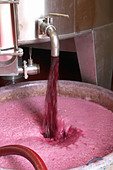
- Pumping over (remontage)
- Sorting of grapes or bunches

At the moment we publish the galleries / slide show on our wine photo blog http://wine-pictures.blogspot.com. When the new design of our web site is done they may get a more permanent home there. What else do you think we should cover in the Wine Tech Galleries?

Read more...

Alsace Grand Cru facts

- 51 ’lieu dits’ (place names) are included in the Grand Cru denomination, covering 1,750 hectares

- 914 ha of GC is in production (compared to a total of 11,459 ha for Alsace and 3,162 ha for crémant)

- Grand Cru represents 4% of the production (45,000 hl of GC)

- Four grape varieties are permitted: riesling, muscat, gewurztraminer, and pinot gris (except for GC Zotzenbert and for blends from GC Altenberg de Bergheim where one can also use sylvaner)

- The wines must (in principle) be made from a single grape variety, except for GC Altenberg de Bergheim and GC Kaefferkopf where grape blends are permitted. However, in 2005 it become permitted not to specify the grape variety on the label which opened the door to
Currently France is undergoing a major overhaul of the regulations, for example changing AOC to AOP. This will lead to a complete review of these and other rules, but for another few years they are still valid.

Read more...

BKWine TV: [E] Quinta do Crasto #2 with Manuel Lobo, winemaker

>> Monday, December 28, 2009


PART 2 of Quinta do Crasto interviews with Manuel Lobo de Vasconcellos, winemaker and oenologist at Crasto. Quinta do Crasto is in the Douro Valley in northern Portugal, the region best known for port wine, the Portuguese fortified wine. But it is also a wine country that makes excellent table wines.

So, how do they do the winemaking at Quinta do Crasto? They follow a very practical philosophy of making wines: Very high quality grapes from the vineyards to make high quality wines. They make both a fortified port wine and a range of table wines, red and white. At Quinta do Crasto they also believe in using local traditional Portuguese grape varieties.

For the vinification and the work in the winery they dont follow any specific recipe for how to do thing, they see how each vintage is and adapt to the climate and the grapes. The winemaking is about common sense, as Manuel says. Above all they like to respect the fruit in the wine.

They use both very modern winemaking technology and also very old: both temperature controlled stainless steel tanks and old concrete lagares. Manuel explains in detail how they work with treading the grapes in the lagares: either mechanical treading or manual treading by men walking on the grapes and crushing them with their feet. The first treading is always done by men, by real feet.

Crasto also makes a wine called Xisto Roquette e Cazes, made in collaboration with Jean-Michel Cazes. Manuel explains what is different in the winemaking between what they do traditionally in the Douro and what is the tradition in in Bordeaux (where Cazes comes from, Chateau Lynch Bages and other), and how this collaboration means that they both learn from each other.

This interview was made at the European Wine Bloggers Conference #EWBC 2009 in Lisbon: http://winebloggersconference.org/europe/

More on Quinta do Crasto: http://www.quintadocrasto.pt/uk/intro.htm

Music: Kaleidoscope, Sol e dad, Http://www.jamendo.com

By BKWine, http://www.bkwine.com. Interviewer: Per Karlsson, BKWine. © Copyright BKWine, Per Karlsson.

See all our wine videos on our BKWine TV channel: http://www.youtube.com/bkwine

Read more...

Côte de Bourg facts

- Some 500 grape growers: 259 independent producers, 171 cooperatuers
- 3900 ha vineyards with red grapes, 25 ha (!) with white grapes
- Red grape varieties: merlot 65%, cabernet sauvignon 20%, malbec 10%, cabernet franc 5%
- White grape varieties: sauvignon 46%, colombard 23%, sémillon 23%, muscadelle 8%
- Only 15% of sales go on export, mainly to Belgium (33%), UK (10%), Netherlands (10%), Germany, Japan and Canada (all 9%)
- Soil: limestone with iron, sand/clay, and limestone/clay
- Wines: mainly red of a typical Bordelais character, priced at 5-15 euro
- Web site: www.cotes-de-bourg.com
-Web shop selling (virtually) all the appellation’s wines: www.achat-vins-bordeaux.com

Read more...

Côte de Bourg remains in sole isolation?

Côte de Bourg will not be part of the newly created Côtes de Bordeaux appellation. It can be difficult to understand why one would choose not to be part of the collaboration (originally they were going to be). “Bordeaux” is a very strong in internationally well known brand with a strong quality image. Bourg, on the contrary, is small, unknown sub-district, so why not try and dove-tail on a strong brand and joint resources? Difficult to know. We can only speculate. Superficially, it certainly seems to be the wrong way to go. If you want to develop sales on an international market it should be better to build on “Bordeaux” rather than “Bourg”. There are far too many small and obscure appellations in France that are convinced that they must put forward their own name and their own particularities, rather than collaborate with others around a more marketable name (to take a few examples: la Livinière, Fenouillèdes, Pacherenc du Vic Bilh etc. Do you know them?). Some may of course succeed but many risk remaining in the unknown no man’s land. And what about Côte de Bourg? Maybe it has more to do with people and personalities than with marketing strategies. Perhaps Côte de Bourg will be one of those that succeed. Côte de Bourg is evidently an appellation with lots of dynamism and lots of initiative – they make things happen. The organise things. They make noise. For example, the international malbec meeting a few weeks ago. So one sees and hears about them quite often. But we can’t say we see or hear much about the other Côtes… Maybe that’s the answer to the question.

Read more...

The Côtes in Bordeaux now officially married

>> Wednesday, December 23, 2009

There have been five “côtes”-appellations in Bordeaux: Premières Côtes de Blaye, Côtes de Francs, Côtes de Castillon, Premières Côtes de Bordeaux and Côte de Bourg. INAO has just approved officially the merger of four of those into a new appellation that is called, simply, Côtes de Bordeaux. The fifth Côte, that has chosen not to be part of the new AOC is Côte de Bourg – they will remain as an independent AOC. The other four will from the 2009 vintage use the new name AOC Côtes de Bordeaux. They can either use only that name or they can add a “first name” to be more specific: Blaye, Francs, Castillon, or Cadillac (this is a new denomination). It will then look like e.g. “Castillon Côtes de Bordeaux”.

Côtes de Bordeaux facts:
- The new appellation Côtes de Bordeaux includes 14,000 hectares, which is about one sixth of Bordeaux
- It produces some 700,000 hl wine
- It is sold as either Côtes de Bordeaux or with one of four communal names added in front: Blaye, Castillon, Francs or Cadillac
- New web site: www.bordeaux-cotes.com

Read more...

Wine-filled chocolate, wine-flavoured salt…

Christmas time is often when we indulge (more than usual) in sweets and other goodies. Is chocolate filled with wine the perfect Christmas present for the wine lover? 80% merlot, 20% cabernet sauvignon, 72 % cocoa, and 1.2% alcohol (that makes for 173.2% in total!). Indeed, it sounds very interesting but unfortunately we have not yet tasted it. Or what about sea salt flavoured with the lees from wine barrels (again cabernet and merlot)? We don’t know how lees taste or why you would flavour salt with it but it does sound interesting so why not try it! (And it’s a clever way of using a waste product to something useful!) Both chocolate and salt come from Chateau La Gatte in Bordeaux: www.winechocolate.net

Read more...

”Bu sur le web” – a (-n amusing) wine talker on the web

It does require a bit of French, but ”Bu sur le web”, a series of short wine videos, is worth discovering. We are certainly not big enthusiasts of the type of wine videos where you have a wine “guru” who tastes a wine (or several) and tells you what it tastes like. (You might have noticed from our own videos – we prefer letting the winemakers talk.) But Aurélia, who makes “Bu sur le web” is something we like. Short clips, good speed and punch, a incredibly wonderful accent (she’s Canadian – are we a bit too chauvinist here?), sometimes even too fast (“avec quoi on mange ce vin?”…). A female (thank god) Gary Waynerchuk? In any case, she’s definitely more entertaining. A minute and a half is about as much as you can take with that level of energy! Definitely worth a taste: Bu sur le web. http://busurleweb.com/

Read more...

Call for papers for wine economists

>> Tuesday, December 22, 2009

The American Association of Wine Economists has launched a call for papers for their yearly conference in 2010. So if you have some good idea on a micro or macro economic subject on wine you can send them a proposal. More info www.wine-economics.org

Read more...

Do you get better scores in the wine magazines if you advertise?

Johan Reuter, a member of the Association of American Wine Economists, wondered if advertisers in the wine magazines get a “kinder” treatment than those who don’t advertise. Or in other words: do advertisers get better scores? So he decided to investigate. The result is a paper published by the AAWE called "Does Advertising Bias Product Reviews? An Analysis of Wine Ratings" (the full report can also be downloaded). The conclusion is essentially that no, advertising does not bias the review. It is also interesting to read the response from Wine Spectator to the paper. So everything is fine. On the other hand, the problem might be different: Perhaps advertisers get reviewed and those who don’t advertise have a more difficult time to get reviewed. One wine producer we talked to said that when they stopped advertising the suddenly no longer appeared in the reviews. Perhaps a subject for a second paper?

Read more...

BKWine TV: [E] Quinta do Crasto #1 with Tomas Roquette

>> Monday, December 21, 2009


PART 1 of Quinta do Crasto interviews. We begin with Tomas Roquette one of the owners. Tomas is the fourth generation at Quinta do Crasto. Crasto produces port wine since more than one hundred years and since 1994 also table wine with the same grape varieties as for port - more than a hundred different grape varieties.

Why did Quinta do Crasto start production table wines? Tomas explains the reasons. They wanted to show the world what is the potential of Douro, so they started to make table wines.

What is the type or the style of wines that they make at Quinta do Crasto. - wines that make people happy when they drink their wines.

About serving temperature: it is important not to serve the wines too warm. Chambré is not a good idea, especially if you are talking about wines with higher alcohol contents. They wines should be served at 16 to 18 degrees Celsius.

So what wines do they make at Quinta do Crasto? A port wine of course, but several table wines: Flor de Crasto, Crasto DOC (red and white), Reserva, Touriga Nacional (sometimes), Tinta Roriz, Vinha Maria Teresa, Vinha da Ponte, Xisto (Roquette & Cazes). And in 2010 there will be a new top wine coming on the market from the Douro Superior

This interview was made at the European Wine Bloggers Conference #EWBC 2009 in Lisbon: http://winebloggersconference.org/europe/

More on Quinta do Crasto: http://www.quintadocrasto.pt/uk/intro.htm

Music: Kaleidoscope, Sol e dad, Http://www.jamendo.com

By BKWine, http://www.bkwine.com. Interviewer: Per Karlsson, BKWine

See all our wine videos on our BKWine TV channel: http://www.youtube.com/bkwine

Read more...

How to make gravlax

This is one of the very luxurious Scandinavian delicacies...

Did you say luxurious? 1) It's really easy to do, 2) salmon is not strikingly expensive...

And it's very good!

Some call it gravlax salmon, which is a bit silly, since lax means salmon. It's simply a marinated salmon ("grava" is a traditional way of marinating in Scandinavia). And it really should be "gravad lax" (at least in Swedish).

Here's a somewhat simplified way of doing it:

Buy a side of salmon: a fillet without bone, but WITH THE SKIN still on it. You may need to feel it up (?) to make sure there are none of those hidden bones left. Use a pair of pliers from the tool box or use the real thing, the "laxpincett"

Cut the side in two (across) so that you have two pieces of equal length. Or even better, if you want to make bigger quantities: buy two sides / fillets, i.e. a whole fish. Making a large quantity is a good idea since you can keep it in the freezer for quite some time.

Put one of the pieces, skin side down, in a baking dish of some kind. The dish should be just slightly bigger than the piece of fish.

Cover the salmon with a mixture of salt, sugar and white pepper (not black). Mix the salt sugar and pepper in a bowl first. Use lots of salt and sugar, and a generous amount of pepper. Traditionally the proportions are one part salt to two parts sugar, some make it 50/50 today (don't worry, it won't be too sweet, nor too salty). The pepper should be coarsely ground. The salmon should be completely covered in a medium-thin white layer of salt & sugar. Yes.

Put lots of fresh dill on top of the salt & sugar. Lots of dill. And some more. (If you can't find dill you can use aniseed. It'll be different but still OK.)

Take the other piece of salmon and put salt and sugar and pepper on it too. Then put that piece on top of the one in the baking dish, skin side up, so that the two pieces are one on top of the other, flesh sides against each other.

Cover the dish with plastic foil.

Put a weight on top of it all. (The best thing is to put a slightly smaller dish on top and then put some weights in that second dish.)

But it all in the fridge. Keep it in the fridge for one (short), two (normal) or three (very long) days.

At least once a day you take it out and turn the package with the two pieces of salmon over. Don't separate the pieces. It is normal that during part of the process there will be a lot of liquid in the dish. Just leave it there. Sometimes it is reabsorbed, sometimes not. If you still have liquid in the dish when finished marinating, you just pour it out.

Voila. Done.

Wipe the salmon clean (not too clean) from the remaining dill.

Put the pieces in the freezer for a few days (this is what is recommended by the health authorities since it will kill off any unwanted parasites... Ugh. I'm not sure it's necessary. Some say it isn't for farmed salmon. And if it was already frozen when you bought it the question is irrelevant).

It's now ready to serve. Just slice it and serve it.

Traditionally it is sliced almost parallel to the skin in wafer-thin slices, but that's not important.

Very nice. Serve it by itself as a starter, or with scrambled eggs, or with a French potato salad (you know, with lots of olive oil), or in any number of different ways.

Read more...

BKWine Pick: Jack’s wine of the month: Smith Woodhouse Late Bottled Vintage 1995

Jack’s wine of the month:
Smith Woodhouse Late Bottled Vintage 1995

Forget dry, red, white. In December it should be sweet and strong. Christmas arrives with strong and blue cheeses that require some substantial counter-artillery to create a holiday harmony. The saviour comes in the shape of a bottle of port of course. A brilliant choice is Smith Woodhouse Late Bottled Vintage 1995 (some 15 euro). Not quite a vintage but not far from it. It squeezes as much character out of an LBV as one can reasonably hope for, full of fruit, cherries, mint, vanilla and a long, luscious finish. And so affordable that you can even bring it out when the whole wide family, cousins and all, arrives for the Christmas-time cheese and port rituals.

Read more...

BKWine Pick: Åsa’s …. olive oil of the month

Åsa’s …. olive oil of the month
Querce2

The olive oil of the month comes from Tuscany and the partly Swedish-owned farm Querce2, just south of Florence. They make an excellent oil that fulfils all requirements to be called “eccellente”, as the Italians would say. It has a low acidity, below 0.4%, is freshly pressed using only their own olives. The olives are brought to the press within 48 hours after harvest. The oil is not as green as some oil ‘nouveau’ can be but is more shimmering gold-yellow. The flavour is round and full-bodied with a bit of peppery spice.

It goes very well with salads and steamed vegetables, or you can create a gastronomic feast by just pouring it over a plate of rice or pasta with a bit of freshly grated parmesan cheese as the only addition. Or try it on a slice of grilled bread with a touch of fresh garlic and salt. One of my favourites! www.querce2.it

Read more...

BKWine TV: [E] Wines from Portugal #2 with Charles Metcalfe

>> Sunday, December 20, 2009


PART 2 of the interview with Charles Metcalfe, who can be called the guru on Portuguese wines: on the excellent wine and food in Portugal today.

Is Portugal perhaps a New World wine country (with all the new technology and new knowledge)? Charles says perhaps, but perhaps not. It is maybe more a question of rediscovery of the old world. Portugal has also benefited enormously benefited from infrastructure investments financed by the European community.

What about the prospects for the Portuguese to market and sell their wines with these local and unknown grape varieties on the international market? Are Portuguese grape names the future? Perhaps for arinto, touriga nacional, and maybe on or two others. Otherwise it is probably more important to emphasise the brand. But it can be very small brands e.g. Quinta do Crasto or Quinta de la Rosa to take two examples from the Douro Valley. Brands and branding is probably the way to go rather than the grape varieties, says Charles.

We must also mention the book The Wine and Food Lovers Guide to Portugal: A monumental book on Portugal, its food, the wineries and places to visits, hotels to stay in etc. A travel guide for people who love eating and drinking. By Charles Metcalfe and Kathryn McWhirter of course.

This interview was made at the European Wine Bloggers Conference #EWBC 2009 in Lisbon: http://winebloggersconference.org/europe/

On the book: http://www.innhousepublishing.com/
Charles blog, The wine singer: http://thewinesinger.blog.co.uk/
More on Charles: http://www.wineeducators.com/charles_metcalfe.html

Music: Kaleidoscope, Sol e dad, http://www.jamendo.com

By BKWine, http://www.bkwine.com. Interviewer: Per Karlsson, BKWine

See all our wine videos on our BKWine TV channel: http://www.youtube.com/bkwine

Read more...
The blog has moved. Here is the new location: BKWine Magazine Blog.

  © Blogger template Webnolia by Ourblogtemplates.com 2009

Back to TOP