THIS BLOG HAS MOVED


This blog has moved to a new location.


You can now read it on BKWine Magazine.


Please change your bookmarks and RSS feeds accordingly.


And do subscribe to our free wine newsletter, the BKWine Brief!


All info on our wine and food tours are now on BKWineTours.com.


Laroche winery sold to Jeanjean

>> Tuesday, November 10, 2009

The well known wine producer Laroche has now been sold to Jeanjean. Michel Laroche thereby concludes his efforts to sell the company that he has created. Laroche has vineyards and négociant activities in Chablis (100 ha of vineyards), in the Languedoc (Mas la Chevalière, 40 ha), Chile (Vino Punto Alto, 23 ha), and in south Africa (l’Avenir, 75 ha). Michel Laroche has been very successful in building his business, not least internationally, but has recently suffered some difficulties. For the latest accounting year (’08-’09) the turnover reached 27.3 M€, down by 17%, with a net loss of -1.6 M€. The previous year the loss was -0.6 M€. With this acquisition Jeanjean takes a substantial step up the quality ladder. Jeanjean is also a family business, base in the Languedoc region, but more focused on lower priced wines. The merged business will include 1450 ha of vines and is estimated to reach a turnover of 200 M€. It will operate under a new name (neither Jeanjean nor Laroche). Michel Laroche will remain in charge of the operations in Chablis for two years. According to Decanter the deal is valued at 52 M€ (24 M€ cash and 28 M€ in assumed debts). It is also said that Laroche will own 12.7% of the merged business. More info vitisphere.com and decanter.com

Read more...

Is this Europe’s revenge for the American wine louse?

At the end of the 19th century the vine louse (phylloxera vastatrix) arrived in Europe from North America. It had lived peacefully in symbiosis with the American vines but arriving in Europe, with different vines (vitis vinifera), it killed all vines across the continent over a few decades. A bit over a century later, today, the European Grapevine Moth (lobesia botrana) has been discovered in vineyards in California. Larvae from the moth have been identified recently in Napa Valley, raising concerns that Californian vineyards will be devastated. The moth eats both the flowers and the fruit of the vine. It can cause sever damage, e.g. rot in the vineyard. It is as yet unclear exactly how great a risk there is for a serious attack. More info www.pressdemocrat.com (the insect on the photo is not the grapevine moth)

Read more...

Wokingham Wine Festival

>> Monday, November 09, 2009

Another charity event: the Wokingham Wine Festival on December 5 and 6. It is for the benefit of the Multiple Sclerosis Society of the Thames Valley. Wine lovers can come and taste and buy interesting and unusual wines supplied by members of the Association of Small Direct Wine Merchants. More information on www.wokinghamwinefestival.co.uk

Read more...

Naked Absolut – Absolut irony

We read in the newsletter WoW News (no, it's not about computer games!) that Absolut Vodka is launching a new marketing campaign: Naked Absolut: ” In An Absolut World, There Are No Labels” with e.g. the catch phrase Absolute Anticipation. They have launched a special bottle on the theme, without any label. WoW quotes Kristina Hagbard, Global PR Manager: “For the first time we dare meeting the world completely naked. We are launching a bottle without label and logo, to show that it is less important what’s on the outside. It’s what’s inside that count”. It is certainly a laudable initiative to want to promote diversity and fight prejudices against sexual preferences (which is their aim it appears). However, can it be more ironic? What would be left of Absolute if it didn’t have the very distinctive packaging (the special bottle shape included) and the sophisticated marketing? The label is, after all, just one aspect of the “outside”. Does anyone really think that Absolut has become one of the world’s best selling spirits purely because the contents is so much better? www.wownews.se

Read more...

Difficult times in Bordeaux – Let’s increase production!

AOC Bordeaux and Bordeaux Supérieur are one of several regions that have a difficult time. 2008 was a small harvest and some areas were seriously hit by hail in 2009. Export and demand in general is down. Prices are falling. So what is the response from AC Bx & Bx Sup? Increase production. Next year they will introduce an “individual complementary volume” (Volume complémentaire Individuel, VCI) which means that the wine producers can increase their production above the usual limits. In principle to compensate for unforeseen climate effects (unforeseen? Has it never hailed before?). Doesn’t it seem odd to counter-act falling prices and lack of demand by increasing production? That, one would expect, will lead to even lower prices and more surplus. They also hope that the (understandably) much contested new designation Bordeaux 1er Cru will help creating demand. (Hands up all who think that consumers might be mislead into thinking that “Bordeaux 1er Cru” is similar to/same as “Bordeaux Grand Cru Classé”!) More info www.vitisphere.com

Read more...

Revue des Vins de France (finally) launches a web site

>> Sunday, November 08, 2009

About time. The leading French wine magazine La Revue des Vins de France (RVF) has launched a web site. They intend to publish their library of tasting notes (65 0000 wines), wine producer profiles and much more. The RVF journalists will write blogs on the site and they will have a reader forum. Some of the information is free but to have full access you have to pay a subscription. What we don’t like is that even if you subscribe to the magazine you have to pay for online access. In their launch information they underline their long history: 80 years of wine journalism (the world’s first wine magazine?). That’s of course very good, but not having had a web site until 2009 gives the impression more of living on past glories than in the present. Hopefully that will change. www.larvf.com

Read more...

Buy a potential vineyard in Pomerol

Pomerol is a small appellation in Bordeaux with only 780 ha of vineyards. There is also a horse racing course. But they only have four races per year and they have now decided to close it and sell the land – so they are looking for buyers. The interesting thing about it is that the 13 ha, a substantial plot in the appellation, could be planted with vines and transformed into a vineyard (Chateau du Cheval?). If it is possible to do is another question. For example, the buyers would need to have planting rights (cf the piece on the AREV in this Brief), which they don’t have. As a vineyard the land would be worth between 1 and 3 million euros. Per hectare. As a race course, or agricultural land, much, much less. More info newbordeaux.blog.co.uk

Read more...

American wine consumption continues to grow

>> Saturday, November 07, 2009

The forecast from the US Wine Market: Impact Databank Review and Forecast 2009 Edition shows that wine consumption in the US will continue to increase in 2009, albeit with only 0.6%. It will then be the 16th consecutive year that consumption is up. It is nevertheless affected by the recession: there’s a shift towards lower priced wines and thus towards bigger volume branded wines. And Americans tend more and more to drink American wines; imported wines have suffered, partially due to the weak dollar of course. Read more www.winespectator.com

Read more...

What is the worlds best classical symphony? The world’s best car? The best pub in London? The world’s best champagne?

Well, that would depend on what one is looking for and one’s taste you may think. But not so for wine perhaps? Many people have some kind of belief that there is an absolute scale of quality for wine. The magazine Fine Champagne has decided on what is “the world’s best champagne” in a recent ranking. They have tasted 1000 champagne and selected the best. The world’s tenth best champagne is, apparently, Chartogne-Taillet non-vintage.

Read more...

French wine consumption reaches record low

According to estimations by the French customs (who keep track of it) the French will drink less wine in the current 12 month period ’08-’09 (“la campagne 08-09”) than ever before: only 30 million hl, down by 9% since the previous year. Wines with appellation controllée do better, decreasing with “only” 7%, whereas all others shrunk by 11%. www.vitisphere.com

Read more...

Chile and France bestselling wine countries in Denmark

>> Friday, November 06, 2009

Some wine statistics:

According to the Wine and Spirit Organisation in Denmark, and Vinavisen.dk Chile is the top wine supplier to Denmark with a market share of 17%, followed closely by France with 16%. Italy has increased its share significantly, as has South Africa. Australia and Great Britain (!) are the big losers with respectively falls of -5% and -4%.

Total imports shrunk with almost 13% to reach 87 million litres. Numbers are for the first six months of 2009, compared with 2008. It’s interesting to note how different this is from neighbouring Sweden's preferences. The full list:

1. Chile 17.2% (+1.4%)
2. France 16.5% (+1.2%)
3. Italy 14.7% (+2.9%)
4. Spain 11.8% (+1.8%)
5. South Africa 10% (+2.8%)
6. Australia 9.3% (-5.2%)
7. Germany 8.3% (+0.9%)
8. USA 3.3% (+0.1%)
9. Argentina 3.2% (-0.9%)
10. Great Britain 2.8% (-4.6%)
11. Portugal 1.2% (+0.2%)
12. New Zeeland 0.6% (+0.2%)
13. Greece 0.2% (+0.1%)
14. Others 0.9% (-0.2%)

Read more...

Rhone vineyard next location for American ’reality show’

>> Thursday, November 05, 2009

According to a press release from Vignobles Investissement they have been tasked by the Film Commission of Luberon Vaucluse to find a suitable winery location to record a series of reality shows. It is the American producer PBS that is producing the series. Apparently, the programs have already been shot, during the 2009 harvest. When can we hope to see the result? http://thewinemakers.tv/

Read more...

Just like hand sewn shoes?

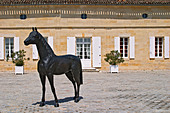
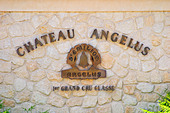
Chateau Angélus in Saint Emilion, Bordeaux, is not making hand sewn shoes but something of the sort – haute couture. They destem their grapes by hand. When you make red wine in nine cases out of ten (or more) you destem the grape bunches. Using a destemmer, you feed it with grape bunches and out comes at one end the separated grapes and at the other end the stems. Voilà. After that the grapes are (usually) crushed and the fermentation begins. At Chateau Angelus they think this is too brutal a treatment for the grapes so they recruited some 50 persons (we estimate) to do the destemming by hand, separating the berries from the stems… Does it make any difference? It is difficult to believe it does, but we have not made a comparative tasting. Watch the video here: www.chateau-angelus.com

Read more...

Rollan de By in Bordeaux launches single-variety collection

>> Wednesday, November 04, 2009

Domaines Rollan de By, best known for the Château Rollan de By in the Médoc, has launched a four bottle case with single variety wines. Each bottle contains wine from just a single grape variety. The four bottles are made from cabernet sauvignon, merlot, cabernet franc, and petit verdot (no doubt they did not have any malbec or carmenère in the vineyards). It gives you the possibility to taste each variety in its pure state. and you can play the game “make your own blend (assemblage)”, mixing the wines to see which proportions you prefer. But it is a rather expensive game. The four bottles retail for 400€! Can be found at La Cave de Joël Robuchon in Paris. We also wonder how it works with the AOC on the wines (that according to our info is Medoc). Normally, a wine should be “typical” to get the right to an appellation controllée, and single variety wines are extremely unusual (nonexistent) in Bordeaux. But is it definitely a fun initiative.

Read more...

Austrian wine exports up

For the first six months 2009 Austrian wine exports were up 10% in volume and only marginally down in value (-1.8%). Austria needs be cautious in the longer run though, since the general price level has fallen and an increasing portion of the exports are in bulk rather than in bottle (especially to Germany). "For the Austrian wine industry overall, the export figures - considering the economic climate - are very positive," states Willi Klinger, general manager of Austrian Wine Marketing Board. www.austrianwine.com It is indeed much more positive numbers than in many other places.

Read more...

AREV wants to go backwards

>> Wednesday, October 28, 2009

AREV (l’Assemblée des Régions Européennes Viticoles http://www.arev.org/) is some kind of collaboration organisation between some European wine regions. In their latest press release they underline the importance of fighting the EU reform that will abolish planting rights control. Currently (and historically) the European planting rights control means that to be allowed to plant new vines you have to get planting rights, which in general is difficult to get. So if you have good demand for your wines it can be very difficult (if at all possible) to increase production by planting more vineyards. The EU reform will lead to that this control system will disappear. The principle will instead be that you can plant more vines if you want but it will be your responsibility to sell it (in the old system, if you could not sell it you would get subsidies). This new principle is something the AREV wants to fight. They also criticise the “neo-liberal” reforms that Mariann Fischer Boel has introduced in the wine sector. The AREV hopes that a future EU commissioner will be selected that has some wine background. Reading behind the lines it seems that the AREV is hoping for more subsidies and more controls, and less market orientation in the future. A pity. And in the long run it is hardly something that will benefit the European wine growers.

Read more...

700 naked people in the vineyard

To influence the upcoming climate conference inn Copenhagen Greenpeace France and Spencer Tunick organised a demonstration / installation / work of art in a vineyard in Burgundy: 700 naked people in the vineyard. The purpose was to draw attention to the effects that climate change will have on agriculture, and specifically wine growing, in France. You can now watch the video from the happening, 700 nude people in the vineyard: http://www.greenpeace.fr/tunick/ and www.treehugger.com (But one assumes that at least at that occasion all participants appreciated the unseasonably warm weather.)

Read more...

Bordeaux 2007

>> Tuesday, October 27, 2009

The Union des Grands Crus (UGC) in Bordeaux recently presented the 2007 vintage in Paris. the UGC includes not only the 1855 Grands Crus Classés but also some excellent producers inn Pomerol, Graves, Médoc and Saint Emilion. It can be quite a chore to taste a large number of young Bordeaux wines but this time it was quite pleasant. 2007 is a year with soft tanning and many of the wines are virtually ready to drink already today. The summer was cool with quite a lot of rain but the vintage was ‘saved’ by a nice autumn and harvest season. However, you had to be careful with the extraction, or risk getting too much green and bitter notes in the wine. Most producers choose to make a wine playing on the fruit. The best have done careful extractions and have avoided too much new oak. The result is a very good wine, approachable and with a very nice fruit dominated by blackcurrant notes and a touch of mint.

2007 is a vintage that restaurateurs will love. Ready to drink young, not needing long cellaring. This, no doubt, will benefit the consumer too in offering less expensive wines accessible now. “It’s good to have a vintage like 2007 every once in a while”, says Caroline Poniatowski at Château Lafon-Rochet in Saint Estèphe. Gonzague Lurton at Château Durfort-Vivens in Margaux thinks that they can age for 10 to 12 years: “2007 is not a vintage to lay down for very long”, he says. A “vin de plaisir” is how Eric d’Aramon at Château de Figeac describes it, to drink before the 2005s and 2006s: "What’s important for the 2007s is to keep the fruit and the freshness”, he says. Tristan Kressmann at Chateau Latour Martillac in Pessac-Léognan sees it as an ‘in-between’ year: Cabernet sauvignon was successful thanks to good weather in October but the merlots suffered from the humidity earlier in the season. That’s why we use two thirds cabernet in the blend which is more than what we normally have. But it gives us both elegance and fruit”. Château Lagrange in Saint Julien is another winery that used more cabernet than normally and in their case it has given the wines a good structure and, thanks to soft extractions, a fresh fruit. The wine is nice, soft and agreeable.
Antonio Flores, chef de culture at Château Malescasse in Haut-Medoc, is quite satisfied with the result. “But”, he says, “it was difficult to get sufficient ripening of the grapes. We had to do a lot of work in the vineyard and a strict sorting of the grapes when they arrived at the chai before the fermentation”.

Many chateaux choose to use less new oak than habitually in 2007. Frédéric Le Clerc at Château La Tour de By in northern Médoc used only 10%. “You had to be careful not to mask the fruit”, he says.

Some other of my favourites: Cos Laboury, Saint Estèphe, with hints of aniseed, blackcurrants and a round and soft body; Grand Puy Ducasse in Pauillac, complex with a bit of astringency, needing a few more years of bottle age; Haut-Batailly and Lynch Moussas, both in Pauillac and both with lots of finesse and a fabulous fruit.

If 2007 was a non-exceptional year for the reds it was, on the contrary, a fantastic year for the whites from Pessac-Léognans (the region which was on tasting). The white Château Latour-Martillac had exceptional balance between the aromatic side of the sauvignon blanc and sémillon’s “fat”. “We don’t use more than 1/3 now oak. There should be just a hint of oak”, says Tristan Kressmann. Some other very good whites I tasted came from La Louvière, Larrivet-Haut-Brion, Ch La France, Carbonnieux and Pape-Clément (the latter with quite a lot of new oak though!).

Read more...

BKWine Pick: Domaine Grand Lauze, Ferrals de Corbières

>> Monday, October 26, 2009

Domaine Grand Lauze, Ferrals de Corbières

This is a 22 ha big estate in Boutenac, one of the best areas in the Corbières. The vines are old. Some carignans and grenaches are over 100 years old. 80% of production is AOC and the remainder is Vin de Pays. Xavier Ledogar is the winemaker. He has a passionate interest in the soil and in his vines. You feel right away that this will be individualistic wines full of character. Which indeed they are when you taste them. Together with his younger brother Xavier, he makes white and red wines with a very distinct Languedoc stamp on them, as well as having depth and complexity. Taste for instance the La Compagnon 2007, a Corbières made from 50% mourvèdre and the rest a mix of carignan, syrah and grenache. A very nice wine with flavours of the local herbs, good fruit and freshness and lots of personality. “I try and make something special”, says Xavier, “I adapt to what nature gives me”. With excellent results.

Click here for address and more recommendations.

Read more...

BKWine Pick: Domaine Grand Guilhem, Fitou

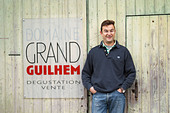
Domaine Grand Guilhem, Fitou

In the mountainous part of Fitou, in the small village of Cascastel, on the border to Corbières, that’s where we find Gilles Contrepois (an exiled Parisian) at Domaine Grand Guilhem. He and his wife completely changed their lifestyle a few years back when they settled here among the vines and the aromatic garrigue shrub. They have 12 ha of vineyards in four different appellations: Fitou, Corbières, Rivesaltes and Muscat de Rivesaltes. The grow the vines organically and try and emphasise the terroir expression in the wines. Taste for example his Fitou 2007, fermented with natural yeast, made from 47% carignan grapes, and you will get a wonderfully garrigue-herbs wine, fruity, with good acidity and structure. A Fitou when it is as it should be.

Click here for address and more recommendations.

Read more...
The blog has moved. Here is the new location: BKWine Magazine Blog.

  © Blogger template Webnolia by Ourblogtemplates.com 2009

Back to TOP