THIS BLOG HAS MOVED


This blog has moved to a new location.


You can now read it on BKWine Magazine.


Please change your bookmarks and RSS feeds accordingly.


And do subscribe to our free wine newsletter, the BKWine Brief!


All info on our wine and food tours are now on BKWineTours.com.


Rollan de By in Bordeaux launches single-variety collection

>> Wednesday, November 04, 2009

Domaines Rollan de By, best known for the Château Rollan de By in the Médoc, has launched a four bottle case with single variety wines. Each bottle contains wine from just a single grape variety. The four bottles are made from cabernet sauvignon, merlot, cabernet franc, and petit verdot (no doubt they did not have any malbec or carmenère in the vineyards). It gives you the possibility to taste each variety in its pure state. and you can play the game “make your own blend (assemblage)”, mixing the wines to see which proportions you prefer. But it is a rather expensive game. The four bottles retail for 400€! Can be found at La Cave de Joël Robuchon in Paris. We also wonder how it works with the AOC on the wines (that according to our info is Medoc). Normally, a wine should be “typical” to get the right to an appellation controllée, and single variety wines are extremely unusual (nonexistent) in Bordeaux. But is it definitely a fun initiative.

Read more...

Austrian wine exports up

For the first six months 2009 Austrian wine exports were up 10% in volume and only marginally down in value (-1.8%). Austria needs be cautious in the longer run though, since the general price level has fallen and an increasing portion of the exports are in bulk rather than in bottle (especially to Germany). "For the Austrian wine industry overall, the export figures - considering the economic climate - are very positive," states Willi Klinger, general manager of Austrian Wine Marketing Board. www.austrianwine.com It is indeed much more positive numbers than in many other places.

Read more...

AREV wants to go backwards

>> Wednesday, October 28, 2009

AREV (l’Assemblée des Régions Européennes Viticoles http://www.arev.org/) is some kind of collaboration organisation between some European wine regions. In their latest press release they underline the importance of fighting the EU reform that will abolish planting rights control. Currently (and historically) the European planting rights control means that to be allowed to plant new vines you have to get planting rights, which in general is difficult to get. So if you have good demand for your wines it can be very difficult (if at all possible) to increase production by planting more vineyards. The EU reform will lead to that this control system will disappear. The principle will instead be that you can plant more vines if you want but it will be your responsibility to sell it (in the old system, if you could not sell it you would get subsidies). This new principle is something the AREV wants to fight. They also criticise the “neo-liberal” reforms that Mariann Fischer Boel has introduced in the wine sector. The AREV hopes that a future EU commissioner will be selected that has some wine background. Reading behind the lines it seems that the AREV is hoping for more subsidies and more controls, and less market orientation in the future. A pity. And in the long run it is hardly something that will benefit the European wine growers.

Read more...

700 naked people in the vineyard

To influence the upcoming climate conference inn Copenhagen Greenpeace France and Spencer Tunick organised a demonstration / installation / work of art in a vineyard in Burgundy: 700 naked people in the vineyard. The purpose was to draw attention to the effects that climate change will have on agriculture, and specifically wine growing, in France. You can now watch the video from the happening, 700 nude people in the vineyard: http://www.greenpeace.fr/tunick/ and www.treehugger.com (But one assumes that at least at that occasion all participants appreciated the unseasonably warm weather.)

Read more...

Bordeaux 2007

>> Tuesday, October 27, 2009

The Union des Grands Crus (UGC) in Bordeaux recently presented the 2007 vintage in Paris. the UGC includes not only the 1855 Grands Crus Classés but also some excellent producers inn Pomerol, Graves, Médoc and Saint Emilion. It can be quite a chore to taste a large number of young Bordeaux wines but this time it was quite pleasant. 2007 is a year with soft tanning and many of the wines are virtually ready to drink already today. The summer was cool with quite a lot of rain but the vintage was ‘saved’ by a nice autumn and harvest season. However, you had to be careful with the extraction, or risk getting too much green and bitter notes in the wine. Most producers choose to make a wine playing on the fruit. The best have done careful extractions and have avoided too much new oak. The result is a very good wine, approachable and with a very nice fruit dominated by blackcurrant notes and a touch of mint.

2007 is a vintage that restaurateurs will love. Ready to drink young, not needing long cellaring. This, no doubt, will benefit the consumer too in offering less expensive wines accessible now. “It’s good to have a vintage like 2007 every once in a while”, says Caroline Poniatowski at Château Lafon-Rochet in Saint Estèphe. Gonzague Lurton at Château Durfort-Vivens in Margaux thinks that they can age for 10 to 12 years: “2007 is not a vintage to lay down for very long”, he says. A “vin de plaisir” is how Eric d’Aramon at Château de Figeac describes it, to drink before the 2005s and 2006s: "What’s important for the 2007s is to keep the fruit and the freshness”, he says. Tristan Kressmann at Chateau Latour Martillac in Pessac-Léognan sees it as an ‘in-between’ year: Cabernet sauvignon was successful thanks to good weather in October but the merlots suffered from the humidity earlier in the season. That’s why we use two thirds cabernet in the blend which is more than what we normally have. But it gives us both elegance and fruit”. Château Lagrange in Saint Julien is another winery that used more cabernet than normally and in their case it has given the wines a good structure and, thanks to soft extractions, a fresh fruit. The wine is nice, soft and agreeable.

Antonio Flores, chef de culture at Château Malescasse in Haut-Medoc, is quite satisfied with the result. “But”, he says, “it was difficult to get sufficient ripening of the grapes. We had to do a lot of work in the vineyard and a strict sorting of the grapes when they arrived at the chai before the fermentation”.

Many chateaux choose to use less new oak than habitually in 2007. Frédéric Le Clerc at Château La Tour de By in northern Médoc used only 10%. “You had to be careful not to mask the fruit”, he says.

Some other of my favourites: Cos Laboury, Saint Estèphe, with hints of aniseed, blackcurrants and a round and soft body; Grand Puy Ducasse in Pauillac, complex with a bit of astringency, needing a few more years of bottle age; Haut-Batailly and Lynch Moussas, both in Pauillac and both with lots of finesse and a fabulous fruit.

If 2007 was a non-exceptional year for the reds it was, on the contrary, a fantastic year for the whites from Pessac-Léognans (the region which was on tasting). The white Château Latour-Martillac had exceptional balance between the aromatic side of the sauvignon blanc and sémillon’s “fat”. “We don’t use more than 1/3 now oak. There should be just a hint of oak”, says Tristan Kressmann. Some other very good whites I tasted came from La Louvière, Larrivet-Haut-Brion, Ch La France, Carbonnieux and Pape-Clément (the latter with quite a lot of new oak though!).

Read more...

BKWine Pick: Domaine Grand Lauze, Ferrals de Corbières

>> Monday, October 26, 2009

Domaine Grand Lauze, Ferrals de Corbières

This is a 22 ha big estate in Boutenac, one of the best areas in the Corbières. The vines are old. Some carignans and grenaches are over 100 years old. 80% of production is AOC and the remainder is Vin de Pays. Xavier Ledogar is the winemaker. He has a passionate interest in the soil and in his vines. You feel right away that this will be individualistic wines full of character. Which indeed they are when you taste them. Together with his younger brother Xavier, he makes white and red wines with a very distinct Languedoc stamp on them, as well as having depth and complexity. Taste for instance the La Compagnon 2007, a Corbières made from 50% mourvèdre and the rest a mix of carignan, syrah and grenache. A very nice wine with flavours of the local herbs, good fruit and freshness and lots of personality. “I try and make something special”, says Xavier, “I adapt to what nature gives me”. With excellent results.

Click here for address and more recommendations.

Read more...

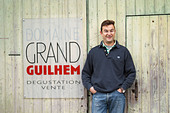
BKWine Pick: Domaine Grand Guilhem, Fitou

Domaine Grand Guilhem, Fitou

In the mountainous part of Fitou, in the small village of Cascastel, on the border to Corbières, that’s where we find Gilles Contrepois (an exiled Parisian) at Domaine Grand Guilhem. He and his wife completely changed their lifestyle a few years back when they settled here among the vines and the aromatic garrigue shrub. They have 12 ha of vineyards in four different appellations: Fitou, Corbières, Rivesaltes and Muscat de Rivesaltes. The grow the vines organically and try and emphasise the terroir expression in the wines. Taste for example his Fitou 2007, fermented with natural yeast, made from 47% carignan grapes, and you will get a wonderfully garrigue-herbs wine, fruity, with good acidity and structure. A Fitou when it is as it should be.

Click here for address and more recommendations.

Read more...

Welcome to the BKWine Brief nr 75, October 2009

The big thing for us right now is that our new book is finished. Really finished. We will have it in our hands in just a few weeks! We’re really excited.

The book tells the story of how a wine is made. It’s aimed at the wine enthusiast but can also be used as a wine course book. It’s quite unusual in that it goes into details of vine growing and winemaking – but with a text aimed at the wine lover.

The story in the book evolves around two themes: First, our innumerable conversations with winemakers, interviews, vineyard visits (we visit some 200-300 vineyards each year), wine shows etc. They are to a great extent the ones who tell the story in the book, explaining what they do and why. Secondly, we show that there are rarely any absolute truths. There are always different sides to an argument. If one winemaker says that you should absolutely have stainless steel fermentation tanks to make good wines, his neighbour will be convinced concrete is the best. The same goes for closures, oak, filtering, planting density etc etc. And both are generally right and make good wines. The interesting thing then is why you do this or that. And we explain, or let them explain, that in the book.

The book has two sections: The first half is dedicated to the vineyard: planting, vines and grape varieties, training and pruning methods, soil, climate, illnesses, manual vs. mechanical harvest etc. We also try and get to grips with this thing “terroir”. The vineyard section ends with an explanation of organic wine growing and biodynamic wines (issues that are often misunderstood!). We try and explain it in a practical, down to earth way.

The second half talks about the work in the wine cellar: The importance of sorting (and how you do it), crushing, pressing, fermentation is looked at in detail, as is the ‘upbringing’ of the wine (élevage) and the aging, the influence of oak, assemblage (blending), fining and filtering (should you or should you not?) etc. We look at what various substances you can add in the winemaking to control and influence the result. Closures have a chapter of their own (another subject that is often misunderstood): natural cork, plastic cork, screw caps, etc, as does ‘special' vinifications: sweet wine and sparkling wines. Finally we look at defects and problems, e.g. corked wine and reduction, and what types of wine you should cellar and age.

Everything is illustrated over 300 pages with many, many colour photographs (you wouldn’t expect anything else from us, would you?).

It will be hot off the presses (not the wine ones) by mid November.

Sounds interesting?

Well, hrrm, it’s published in Swedish (but the pictures are nice). We’d love to find a publisher for an English or French edition. Any suggestions?

Apart from that, the travel season is starting to calm down now. We’ve been to quite a few of Europe’s wine districts this autumn, and most have been very positive about the harvest, and some have been positively jubilant. At least for the quality. Many are suffering from smaller harvests than usual.

But what remains is the European Wine Bloggers conference next week (at least for some of us – Britt stays in Paris), something that I’m sure we’ll have reasons to come back to.

In this issue you also get a special report on the 2007 wines from Bordeaux. We recently tasted most of the Grands Crus Classés plus some others (the ones that are part of the Union des Grands Crus). In summary the reds from 2007 are delicious, accessible, with a nice fruit dominated by blackcurrant and some mint. Not an extraordinary vintage – instead they’re quite nice to drink already today! But the whites on the other hand …. are fabulous. Unfortunately, white Bordeaux seems not to be much appreciated by the consumers. Production has shrunk to only 10% of the total in Bordeaux. Let’s hope that the superb 2007s can change that.

Britt & Per

PS: Recommend to your friends to read the Brief or forward it to them !

More on wine:


Read all of the BKWine Brief here!

Read more...

Bordeaux exports drop

>> Monday, October 19, 2009

Exports of Bordeaux wine fell with 16% over the 12 months up to June 2009 to reach only 1.62 M hectolitre. Measured in value the drop was 14% to reach 1.43 M euro. According to CIVB/Vitisphere.

Read more...

Wine festivals in Zagreb

In the last Brief we wrote a piece on a wine event in Zagreb. It turns out that what we wrote may have led to some confusion. So here we try and be a little clearer:

- On November 27-28 there will be ”The Fourth International Zagreb Festival of Wine & Culinary Art”, more info here: www.vino.com.hr

- On February 12-13, 2010 there will be the ”Zagreb Wine Gourmet Festival” at the Arts & Crafts Museum in Zagreb. More information here: zagrebwinegourmet.com

We apologise for any misunderstanding or confusion due to our earlier post. So, if you happen to pass by Zagreb, either in November or in February, there are some fun things to do!

Read more...

Three entertaining wine videos

>> Saturday, October 17, 2009

It’s quite some while since we had the time to update BKWine TV, so here are three other entertaining wine videos:

1 - Don't go to the gym! Come and pull weed in my vineyard instead!, says Pierre Caslot at Domaine de la Chevalerie in the Loire

2 - Can you tell the difference between a 1500 euro wine and a 15 euro wine? Not evident, not even for these wine tasting experts: With English subtitles, or simply in French

3 - What does the average Frenchman think about screw caps on wine?

Read more...

Excellent harvest in the Roussillon

>> Friday, October 16, 2009

In the Roussillon the harvest is essentially finished. As in many other regions, it is estimated to be a very good vintage. The winter and spring saw a reasonable rainfall (after some dry years) and summer was dry and hot. In August they had, just like in Spain, exceptional heat and it was feared that it might block the maturation of the grapes. Not too much damage was caused though, albeit different parcels have ripened very differently. Provided the wine grower have adapted harvest dates accordingly this has not been a problem. Over all it is expected to be an excellent vintage.

Read more...

Pirate wine

Many countries across Europe are pondering anti-piracy laws. In France we have a proposal (likely to go through) called Hadopi that woul make it easy for authorities to cut the interenet connection for people suspected of downloading pirated music and films. Domaine Bérénas has launched a protest wine called Cuvée Hadopi (admittedly, not a very elegant name). It exists in both red and white. Exactly how it supports the anti-hadopi case we are not sure. Perhaps the profit from the sales goes to a defence fund for pirates? blog.vinospherus.fr

Read more...

Languedoc reading

>> Thursday, October 15, 2009

We have, as you might know, a certain weakness for the Languedoc-Roussillon. A few years back we wrote a book about the wines from the region (so far only published in Swedish unfortunately). Therefore it is with great pleasure that we recently discovered a new blog about Languedoc wines. It is written by the well known British wine book author Rosemary George, who happens to have a summer house in the region. Recommended reading here: Taste Languedoc http://tastelanguedoc.blogspot.com/ (And when we're talking about the Languedoc we also must mention our own book on the wines from that very dynamic region: The Languedoc Book)

Read more...

New wine magazine launched #2: Palate Press

An interesting initiative: Palate Press. It is an entirely internet based “magazine” that works like a collaborative project. The articles are written by a group of wine bloggers. “By harnessing the power of the internet […] we are able to have an ‘on the scene reporter’ at every wine-related event on the globe” they say in their introduction, not without a certain (unintended?) hyperbole. What their business model is is not quite clear. Advertising revenue perhaps? And on the other side paying fees to the journalists? Read it here: http://palatepress.com/

Read more...

New wine magazine launched #1: Terre de Vins

>> Wednesday, October 14, 2009

It’s not every day, with the implosion of the advertising market, that a new wine magazine is launched. To be fair, Terre de Vins has existed for quite a few years, but as a magazine solely dedicated to the wines of the Languedoc-Roussillon. With backing from the Sud-Ouest publishing group they have reshaped the magazine and made it into a national wine mag, with even international scope. So now we will be able to read about wines from all of France as well as some “foreign” wines in Terres de Vins. It uses very good quality photographic material and the articles are generally well written and easy to read. http://www.terredevins.com/

Read more...

Eight new Masters of Wine

The total has now reached 280 with the addition of eight new Masters of Wine (MW) in the latest round of diploma attribution. MW is a much coveted British diploma that shows that you know quite a few things about wine. Here are the eight new MWs:

- Susie Barrie MW, a freelance journalist, author, television and radio presenter from Winchester, UK;
- Michael Collier MW, a wine consultant based in Surrey, UK;
- Roman Horvath MW, managing director of Domäne Wachau, Austria;
- Isabelle Legeron MW, a French-born educator, event organiser and television broadcaster, living in London, UK;
- Tim Marson MW, a wine buyer for Bibendum in London, UK;
- Tuomas Meriluoto MW, managing director of WineState, an importer in Finland;
- Frank Roeder MW, founder and chief executive of VIT, a wine distribution company based in Saar, Germany;
- Mai Tjemsland MW, owner of GastroConsult, a restaurant, catering and wine club group in Oslo, Norway.

More info: www.mastersofwine.org

Read more...

Argentinean exports of malbec up

>> Tuesday, October 13, 2009

The exports from Argentina of malbec wines grew with 28% in value and 29% in volume for the first six months 2009. Nice with positivie numbers for a change these days! The biggest export markets are:

- USA, 52 % of exports
- Canada, 10 %
- United Kingdom, 5%
- Brazil, 5%
- Netherlands, Switzerland, Mexico, Sweden, Denmark and Germany, all 2 % each

Source: WineSur

Read more...

New sherry bodega launched: Urium

It is probably quite some time since someone launched a new sherry bodega. But now it has happened. The Spanish Ruiz family, headed by Alonso Ruiz has just launched Bodegas Urium. Undoubtedly a very ambitious and challenging project in times when, unfortunately, sherry is not very easy to sell on the international market. We wish them good luck and success! More info www.diariodejerez.es and jerezwine.com

Read more...

Wine buying preferences charted by Twenga

>> Monday, October 12, 2009

The price comparison search engine Twenga has analysed how their visitors search for wine in different countries. Here are some statistics:

- France: 86% of searches are for French wine
- Italy: 52% are for Italian wine, 43% for French
- Spain: 50% are for Spanish wines, 24% for French and 13% for Italian
- Germany: 40% are for French wine, 27% for Italian, and only 11% for German
- Great Britain: 64% French, 20% Italian

Some more details by country:

Top ten searches in the UK:
- Bordeaux
- Bourgogne (French Burgundy)
- Champagne
- Vallée du Rhône
- Loire
- Languedoc Roussillon
- Spanish Rioja
- French sparkling wine
- Italian Barolo
- Pinot Grigio Italy

Top ten searches in France:
- Bordeaux
- Bourgogne (French Burgundy)
- Champagne
- Vallee du Rhône
- Loire
- French sparkling wine
- Languedoc Roussillon
- Alsace
- Provence
- Jura

Top ten searches in Italy for Italian wines:
- Barolo
- Pinot Grigio
- Chianti Classico
- Amarone
- Nero d'Avola
- Syrah
- Gavi
- Marsala
- Prosecco di Valdobbiadene
- Montepulciano d'Abruzzo

Top ten in Spain for Spanish wines:
- Rioja
- Albarino
- Cava
- Crianza
- Jerez
- Rueda
- Ribeira sacra
- Ribera del duero
- Penedes
- Tempranillo

Top six in Germany for German wines:
- spatburgunder
- deutscher riesling
- dornfelder
- grauburgunder
- scheurebe
- weissburgunder

Evidently French don’t drink much else than French wine, Italians and Spanish are a little more adventurous, Germans don’t seem to particularly like German wines, and English wine drinkers are very conservative. More info on the Twenga blog
Read more...

Organic wine: Millesime Bio on January 25-27

Millesime Bio is a wine show that focuses on wine producers who work organically or with biodynamic principles. It has grown substantially over recent years and is now probably the biggest event for organic wine. the next Millesime Bio will take place in Montpellier in the Languedoc on January 25-27 2010.More info: www.millesime-bio.com

Read more...

Chablis celebration on February 6-7

Saint Vincent Tournante is two days of wine tasting, good food and festivities in Chablis. This time the event takes place on the weekend of February 6-7. More info here: www.saint-vincent-milly-chablis.com

Read more...

How much (or how little) wine in Champagne?

>> Tuesday, October 06, 2009

There have been lots of discussions in champagne this year on how much the growers will be permitted to harvest. Curiously, the limit is not set until the beginning of September. Wit the crash in champagne sales the big houses wanted to limit the yield to 7500 kg/ha, compared to 13 000 kg/ha last year. Almost halving harvest volume. They fear a glut of champagne, falling prices, loss of the exclusive aura around the bubbly etc. Smaller producers were keener on keeping the yield higher, perhaps more concerned about this year’s revenue. The result was a compromise: the maximum yield was set to 9700 kg/ha. But as often is the case, this is not the whole story. On top of that, there is an allowance for 4300 kg/ha to be set aside for the “reserve” wine, theoretically used to even out years with lower yields. So, in total we then have a yield of 14,000 kg/ha. Why do they count in kg/ha instead of hectolitres/ha as everyone else in France? Don’t know. If you make the calculation 9700 kg/ha is the same as 62 hl/ha and 14,000 kg/ha represents a hefty yield of almost 100 hl/ha. Perhaps that’s why? Read more: business.timesonline.co.uk or Decanter.com. One cannot help being amazed by this blatant price fixing. It is not to improve the quality that the yields are restricted (although that might actually be a good idea). Rather, it is simply in order to artificially inflate the prices so that the champagne becomes more expensive to the consumers and wine lovers than what it would need to be. It would perhaps be a nice case for the EU competition and open market authorities to put their teeth in?

Read more...

Rich and famous and winemakers

”How do you make a small fortune from wine? – You start with a big fortune.” So goes the story. Many rich people (though not always famous) like the thought of owning a vineyard. Apparently. Chateau Latour, as an example, is owned by François Pinault, one of France’s richest person who also own a telecom operator, TV channels, construction companies etc. More well known (at least in wine circles) is Bernard Arnault who (part-)owns Chateau Cheval Blanc and Yquem. Challenges, a French business magazine (obvious from it’s name, isn’t it?), recently listed the top French fortunes cum - “winemakers”. Read the details on the blog of Cesar Compadre/Sud-Ouest

Read more...

The difference between winemaking in Bordeaux and Burgundy

>> Monday, October 05, 2009

There are very few vignerons who own vineyards both in Bordeaux and in Burgundy. One of the happy few is Eduard Labruyère who owns Domaine Jacques Pieur in Burgundy and Chateau Rouget in Pomerol. Jane Anson has interviewed him on his experiences from the two regions. ”Burgundy is more about feeling that you should do things a certain way, while in Bordeaux you know that you have to do it because the university researchers have told you.” The whole article is very interesting and can be found on Jane Anson's blog The New Bordeaux

PS: What is the point with this photo? Any idea?

Read more...

A wine cinematographer disappears: Vininews

At least figuratively speaking. Vininews was a site that published video interviews and reportage from vineyards and wine regions on their site Vininews. But the latest message from them said that they are closing down the site. A great pity. One wonders why. Too ambitious? Anyway, one can find some consolation in the (rather more amateurish) wine videos on BKWine TV.

Read more...

Photographing wine bottles

While researching some other things I stumbled over an old post by Spittoon.biz: How To Photograph Wine Bottles - 10 tips. Considering the quality of the bottle shots you sometimes see in blogs this is definitely a post that some bloggers could benefit from reading.

Read more...

Colours and shaps on labels; Organic in Italy; Emilia-Romagna

>> Tuesday, September 29, 2009

Three other reports (working papers) have recently been published by the American Association of Wine Economists, all of the interesting, if a bit specialised. All are available for free on the AAWE site:

- Message on the bottel: Colours and shapes of wine labels

- Non-conventional viticulture as a viable system: A case study in Italy

- The value of designations of origin in Emilia-Romagna

Read more...

Can you trust wine competition medals?

Is it a sign of quality if a wine has been give a medal in a wine competition? That’s the question that Robert T Hodgson asked himself, and decided to investigate. His analysis, based on 4000 wines entered in 13 different Californian wine competitions, showed that, no, it’s not a reliable sign. His conclusion is based on that if a wine wins a medal in one competition it is not a reliable indication of that it is likely to wine in another competition. So, the medals seem to be given without much consistency between wine competitions. if you want to know more you can read the full article published by the American Association of Wine Economists: An Analysis of the Concordance Among 13 U.S. Wine Competitions. But the study is, we would say, based on the wrong assumption - that there is a neutral and general "scale" for the "quality" of wine. But that is not the case. Wine is a matter of taste and very subjective. On the other hand, what one can say is that if a wine has won a medal in a competition, at least someone has liked it.
Read more...

Wine of the Month: Chianti Rufina DOCG 2006 Fattoria Cerreto Libri

>> Thursday, September 24, 2009

This month’s wine by Åsa: Chianti Rufina DOCG 2006 Fattoria Cerreto Libri
A spicy wine with long after-taste. On the palate you have distinct notes of violet, warm and ripe black currants and a touch of vanilla. The colour is deep red, with flashes of ruby if the light is right. It has an astonishing long after taste. It’s made from 90% sangiovese and 10% canaiolo. It is macerated in concrete vats. Only natural yeasts are used. It is aged for 18 months in barrel and four months in bottle before release. The producer is a small bio-dynamic winery not far from the village Rufina, just north of Florence. They make some 8000 bottles of this wine. Approximate price: 13 euro. www.cerretolibri.it

Read more...

BKWine Pick: Domaine l’Oustal Blanc, La Livinière, Minervois, Languedoc

Domaine l’Oustal Blanc, La Livinière, Minervois, Languedoc
We’ve stopped counting all the exciting wineries we discover in the Languedoc. But among the interesting ones there are some that stick in memory and stand out. L’Oustal Blanc in Minervois is one of those. The owner is called Claude Fonquerle. He is a very skilled winemaker and often quite unorthodox. Several of his wines are made without the AOC Minervois because he doesn’t agree with the appellation rules. “K”, for example, is made from 100% carignan and is a Vin de Table (so it can’t say carignan on the label at the moment – but rules are changing). It’s made from 35 year old vines, so there’s nothing simple about this wine. The wines Claude make have both elegance and finesse. And tasting them one cannot help feeling a certain resemblance to (or inspiration from) other wine regions. And quite correctly so – Claude worked for ten years in Châteauneuf-du-Pape and is fascinated by Burgundy. His different cuvees, all with names inspired my musical words, are excellent. His light and elegant Naïck for example, or the very well structured Giocoso. And of course the full-bodied and well balanced Prima Donna.
Click here for address and more recommendations.

Read more...

BKWine Pick: Château Villars, Fronsac, Bordeaux

>> Wednesday, September 23, 2009

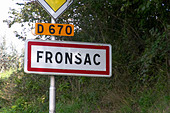
Fronsac is not as famous as its illustrious neighbour Pomerol. But it would deserve to be. It is pretty rolling hills landscape, much nicer than the flat land in Pomerol. And the wines from the best chateaux are excellent classic clarets in style. In addition to the quality the have the great advantage of being affordable. Fifteen of the more dynamic properties have created an association that they call Expression Fronsac. Their idea is to market the Fronsac wines internationally with a joint effort. One of the participating chateaux is Château Villars where the charming Thierry Gaudie makes elegant wines. He uses more cabernet franc than what is the norm; a grape that he says is needed and necessary to balance the merlot and to make the wines more interesting. He wants to enhance the expression of terroir in his wines and does not use much new oak. Chateau Villars 2005 has a very good structure with soft tannins. “2005 resembles the legendary 1961” says Thierry. His other cuvée, Charmes de Villars, is easy drinking – the first vintage was 2006. Interestingly he uses American oak for Charmes.

Read more...

Calling all wine bloggers: soon time for the European Wine Bloggers Conference

The European Wine Bloggers Conference takes place on the last weekend of October. It is a unique occasion to meet wine bloggers from all over Europe, and even beyond. More than a dozen countries will be represented and the organisers are expecting upwards to a hundred participants. Apart from networking participants can learn about blogging techniques and technology, marketing, video, monetization and much more. Plus, of course, many occasions to taste excellent wines and visit wineries, either during the conference or at the pre- and post-conference events with visits to wine regions in Portugal. More information here: http://winebloggersconference.org/europe/. An event not to miss for the dedicated wine blogger – plus it would be nice to meet some of you in real life in Portugal! You can get a taste of how it will be in our Wine Bloggers Conference teaser slide show.

Read more...

Welcome to the BKWine Brief nr 74, September 2009

>> Tuesday, September 22, 2009

The reports we’ve had from various vineyards are generally positive to very positive to outright jubilant. The growing season has mostly been excellent with good weather. Not much disease or other problems (even if there’s been some). So, in short, everything promises very well:

Philippe Bernard, Clos Saint Louis in Côtes de Nuits: “Our harvest started on September 12, a bit earlier than normal. The year has been overall good. Good winter, good spring, good summer, even if we’ve had a few problems with diseases. August was very sunny and warm and the grapes are very healthy. 2009 will be an excellent year for us.”

Champagne Duval-Leroy is also busy harvesting at the moment. Carol Duval-Leroy criss-crosses around champagne to visit the 120 (!) different presses they use. She confirms that the grapes are of very good quality: “I am very satisfied with this year’s harvest, we have healthy grapes with good sugar levels”.

Chablis is also in the middle of the harvest even if some growers have not yet started. Domaine Jean-Claude Courtault in Lignorelles was just about to start when we visited and Stéphanie Courtault confirms that it looks very promising.

Languedoc: “excellent quality, a bit less quantity than normal, perfect weather” says Domaine Rives Blanques, Limoux.

In the Rioja, reporting just before the harvest: promises very well but a very hot August blocked the phenolic ripeness. There’s a risk for some imbalances from that but if it is kept under control it will be a very good year.

Alentejo, southern Portugal: “overall good quality, some parcels will produce outstanding quality grapes” says Paolo Soares at Herdade da Malhadinha Nova.

Sud-Ouest: “Outstanding. Perfect. On par with 2005 in the whole region”, confirms Fabrice Durou at Château de Gaudou in Cahors.

We’ve now finished reading the final proofs of our new book. It’s been a very exciting project and hopefully we have now adjusted the last comma in the manuscript. It’s been particularly interesting since it is a wine book of a kind that is really missing, we think. There is really not much like it at all on the wine book market today. But I guess we’ll hear from reviewers and readers if they agree on that. If all goes according to plan it will be launched sometimes in mid November. What it’s about? Well, well keep that a secret until the launch has been decided.

This time of year is busy-busy with trips all round. Last week we’ve been to Champagne, Chablis and Burgundy. This week it’ll be Languedoc, cognac (!), and the Rhône Valley/Provence. Next week is Bordeaux and Alsace. But we’re two to share the things.

In a few weeks time we will also announce next springs ‘public’ travel program in English. We’ve just launched our Scandinavian schedule which includes Truffles & Wine in February, South African Wine & Food in March, Three Classics (Champagne, Chablis and Burgundy) as well as Bordeaux in April, and Tuscany, it’s Wine & Food in May.

And we also do custom tours both for private parties, travel agents, and professionals (importers, win trade, educational etc).

Get in touch if you want to know more.

Britt & Per


Read the entire BKWine Brief #74 here!
PS: Recommend to your friends to read the Brief or forward it to them !

Read more...

Nitrogen and sulphur makes for more aromatic wines

>> Thursday, September 10, 2009

If you spray the vines with a mix of nitrogen and sulphur the resulting wines will have a more pronounced aromatic character, in particular for white aromatic varieties (e.g. sauvignon blanc). The treatment stimulates production of a substance called thiol that contributes to the aromatic characteristics. The ideal is to make two sprayings in the vineyard around véraison – when the grapes change colour in late July / early August. That the conclusion of studies made at IFV Sud-Ouest (Thierry Dufourcq), IFV Tours and by Florian Lacroux at Enita Bordeaux.

Read more...

What with Cru Bourgeois?

>> Wednesday, September 09, 2009

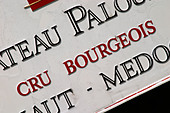
A few years ago (2003) Cru Bourgeois classification had the same unpleasant experience as the Saint Emilion one: a revised classification was challenged in court as being unfair and unjust. The plaintiffs won and the Cru Bourgeois classification was annulled. Since then there is no Cru Bourgeois classification, albeit it continues to be used in many circumstances… Instead of trying to make a new (and fairer) classification, as will be the case in Saint Emilion, the Médocains are trying to resuscitate Cru Bourgeois not as a classification but as a kind of quality label. Instead of a classification it will be called “Alliance” Cru Bourgeois. The principle is that the chateau would sign a quality charter and the wines be subject to tasting by an independent jury. Any chateau could sign the charter and adhere to the rules. They would then be subject to controls and audits by an independent organisation. If all is well according to the controls they would get the right to use the Alliance Cru Bourgeois label (but, as mentioned, it would not be considered to be a classification). One glitch: we read in La RVF that Bureau Veritas, the independent audit and control organisation originally in the picture, has declined the project since it is “politically and humanely unmanageable”.

Read more...

Swedish wine bar opens in China

>> Tuesday, September 08, 2009

Rolf Olofsson was one of the founders of the Barrique Wine Bar in Gothenburg in Sweden some years back. He has left his homeland (and Gothenburg) a couple of years ago to settle in China. His new creation, Barrique Wine Bar (in China) opened in Guangzhou on July 16, two days after the building works finished… Guangzhou is today a (partially) modern city that, according to some estimates, has some 18 million inhabitants. And according to other reports it has very few good restaurants. So the Barrique team has good hope for the future. We wish them the best of luck in their venture.

Read more...

The harvest approaches

According to estimates by Vignerons Idependents this years wine harvest will start early August for the Côtes de Provence, August 23 in Chateauneuf-du-Pape, around August 28 in Bandol and Coteaux Varois, September 15 in Anjou and Sancerre and then Bordeaux.

Read more...

Fastes growing wine brands

>> Monday, September 07, 2009

The fastes growing wine brands on the market in Great Britain are (source: OLN, Nielsen, MAT):

- Yellow Tail, +190%
- FirstCape, 135%
- Ogio, 118%
- Viña Maipo, 86%
- Arniston Bay, 42%
- Lindemans, 33%
- McGuigan, 32%
- Isla Negra, 32%
- Berberana, 18%
- Echo Falls, 27%
- Oyster Bay, 25%

Read more...

French barrel producers create wood appellations

The French barrel making federation (Tonneliers de France) have created a “charter”, which, like an appellation controlée for wine, defines the origin of the wood used to making the barrel. The charter states that if a barrel is labelled as “French” then 100% of the wood has to be of French origin, whereas if a more precise designation is used only 70% of the wood needs to have that origin. For example, a Limousin barrique must contain 70% wood from the Limousin region, the rest coming from other forests in France. The charter also wants to suppress the designations Nevèrs and Tronçais. “There are no forests in Nevèrs” explains François Peltreaux-Villeneuve, CEO of the barrel maker Seguin Moreau Napa. The approved geographic origins for the wood are: Le Centre, Limousin, L’Est, and Le Nord. Some coopers have already moved to classifying their barrels according to the tightness of the grain instead of by geographic origin (cf. for instance our piece on Radoux in the last Brief). All 43 members of Tonnelier de France are said to have signed up to the charter. They represent some 90% of French production. winesandvines.com

Read more...

Virus resistant vines

>> Friday, September 04, 2009

Vines can be attacked by many different diseases and other evils, e.g. the wine louse, mildew, rot, and many other things. One dreaded disease is “fanleaf degeneration” (or grapevine fanleaf virus) that is caused by, yes, a virus. There are chemical treatments available to fight the virus but they are not always effective. Researchers in Aachen have developed a vine with a “built in” defence against the virus, up to 100% effective. With genetic engineering they have introduced anti-bodies from a soil bacterium into the vine so that it produces substances that protect it from the virus. A remaining obstacle is, of course, that genetically modified grapes are not permitted in Europe. sciencedaily.com

Read more...

Laroche in Chablis for sale

Domaine Laroche, the big Chablis producer, is in discussions with Jeanjean, a negociant in the Languedoc, about a sale of the domaine. Laroche is one of the biggest producers in Chablis. They also have properties in the Languedoc, Chile, and South Africa. It is headed by Michel Laroche who is the person behind its greatness and its recent expansion. Nothing has been said about the reasons for the sale. Michel Laroche comments in La Revue du Vin de France that it is a plan that he has been working on for a couple of years to find a buyer to his wine empire but that has found more urgency due to the current financial crisis. vitisphere.com

Read more...

True ice wine? Vineyard plantings in Siberia

An experimental vineyard of 3 hectares will be planted in Siberia, as an experiment to develop winemaking in northern climates. The vineyard is in the Russian republic of Altai, in southern Siberia, not far from China, Mongolia and Kazakhstan. The vines come from Franche-Comté, and mountainous wine region in France. vitisphere.com

Read more...

Buy a satuernes: 68 M euro

But then you’ll get the entire chateau. According to reports in Decanter the (relatively) famous Chateau de Malle in Sauternes is on sale for € 68M. An anonymous ad first appeared in the Financial Times but it has since transpired that the property in question is the Ch de Malle. Industry observers seem to think that the price is high in view of the current climate. decanter.com
(The chateau in question is not pictured on the photo.)

Read more...

Starbucks wine bars?

>> Thursday, September 03, 2009

Starbucks is the world’s largest chain of coffee bars, best known for its selection of odd coffee-based concoctions with odd names. But also for its excellent espresso. They have now launched three experimental shops/bars in Seattle where they also will offer a selection of wines and beers. If it goes well we can expect to see Starbucks Wine Bars in more locations. One assumes that they will favour oak aged wines in barrels with French roast. www.bizjournals.com

Read more...

Charity auction in the Loire to benefit research on autism

Research about autism, that’s what the profit from the auction will go to. For the third time the Chateau Rivau in the Loire Valley organises a charity auction with some excellent wines from the Loire. The guest of honour this year is Italy and many Italian wines will also be on auction. The auction takes place on September 20. More info: http://www.chateaudurivau.com

Read more...

The '40%' of Champagne

40% seems to be a magic, or rather cursed, number for Champagne at the moment, according to what we read in The Drinks Business. The latest numbers from the CIVC show a drip in shipments to Great Britain with 40% for the first four months of this year, and Rémy Cointreau reports a drop in sales with 40%. But all is not so dark. Not quite. Moet shipped 35% less during the first three months and global sales at Laurent Perrier fell with 25%. They also mention that prices are going down and that it is not excessively difficult to get discounts when buying. In view of the price increases in recent years it is perhaps not so surprising.

Read more...

France loses ground in England

>> Wednesday, September 02, 2009

Down with 6.5% in a year. In third place, after Australia and USA (i.e. California). Chased by Italy (+14.9%) and South Africa (+34.9%!).

France and French wines do not have an easy time on the UK market, judging from an interesting article by Charles Metcalfe in The Telegraph: "Zut alors! French wine sales go down the drain".

Charles hypothesises on what may be the cause for the demise of French wines. For example tax hikes. That’s perhaps not so likely, since it hits all imports equally. Other ideas: The commonly quoted (but dubious) difficulties with French names and labels. What’s so very much more understandable with "Penfold's Yattarna Chardonnay Victoria" than "Louis Jadot Chevalier Montrachet Les Demoiselles Grand Cru"? (really, it’s not very likely that you don’t know that it’s a Burgundy if you’re even only close to thinking of buying the latter) – if you don’t know how a Burgundy tastes the chances are hardly bigger that you’ll know what chardonnay tastes like? But the big issue with this, though, is that you don’t have much of a clue just from the grape variety – there aren’t many similarities between, well, a Yattarna Chardonnay and a chablis. Or between a pinot noir from Patagonia and one from Sancerre. No, the grape variety can be helpful sometimes (and the French have started to understand that) but it is hardly the truth behind lost market shares.

Another hypothesis in the article is that the French classification system needs reviewing, so that what is sold as Bordeaux or Sancerre really deserves the appellation. Quality improvement is of course commendable but it is hardly because of the superior quality that Australia and the US are ahead of France on the UK market.

There are probably several other factors that are equally (or more) important, much that has to do with the changing structure of the market. For example: More and more wine consumers are not in the wine producing countries. In those countries it is more important with brands compared to in the “old” wine consuming countries (e.g. in France, where they (we) drink less and less wine). And France is not very good at wine brands. In those countries it is also more common to drink wine as a “social” drink instead of with a meal. And French wines are above all food wines.

But perhaps the most important aspect (and this is just a hypothesis we have) is that more and more of all wine is sold by big retail chains in the UK: Tesco, Asda, Sainsbury’s etc (just like in many other countries, France included). It is easier for the wine buyers at the supermarket chains to buy from big producers, those who can deliver sufficient quantities to make it rational from an economic and logistic perspective. The issue then is that the French wine industry is terribly fragmented. There is an enormous amount of small wine producers and very few big ones (but that is of course the charm of French wines for many of us). Compare it for instance with South Africa where the whole country has about the same number of wine producers as the tiny Bordeaux appellation of Pomerol. Then it is easier to sell to companies like Tesco. (Or, for that matter, our Swedish monopoly Systembolaget, where the situation is even more pronounced – France in 5th or 6th place.)

The question then is – what should France do to survive the international competition? We’ll have to save that for another time. But if you have any ideas, do let us know! Read the article here: www.telegraph.co.uk

Read more...

Zagreb Wine Gourmet Festival November 27-28

If you happen to be in or near Croatia in November it is an excellent opportunity to make a visit to Zagreb. Croatia has an amazingly beautiful coast line but it also has some very good wine and food. On November 27-28 they organise the Zagreb Wine Gourmet Festival in the capital. Guest of honour is France so there will no doubt be some French delicacies too. More info http://www.vino.com.hr/

Read more...

The wonderful world of search engines – Austrian wines and revengeful elephants

What’s the link between angry elephants and wines from Austria? Search engines (and primarily Google) influence much of what we do these days. But sometimes one wonders how it all works. If you watch a video on YouTube you will get a few recommendations, generated by the search engine, for other related videos you might want to watch. If you watch our interview with Weingut Emmerich Knoll in Wachau in Austria you get a list of related videos with various other wine videos and … one called Revenge of the Elephants about wild elephants, wilder than usual, who intentionally murders rhinoceros (the recommendations vary with when and where you are so you might not get the same). What’s the link? We have no idea.

Read more...

Three golden rules for drinking alcohol in Sweden

>> Tuesday, September 01, 2009

Sophe la Girafe is a young French woman exiled in Sweden. For some reason, we don’t know which, she has chosen to settle in Stockholm It does take some time to get to grips with Swedish society and customs – to make sure you behave, well, appropriately. But after some time (and practice) you get the hang of it. It seems. Sophie la Girafe summarizes her findings on the Swedish way to drink in an excellent blog post. It starts like this: ”When it comes to alcohol in Sweden, things are… quite special… Let me tell you how it works out here :) “. And then she reveals the three golden rules on how not to embarrass yourself when drinking in Sweden. Don’t miss the rest. Read it here: sophilagiraf.wordpress.com

Read more...

A Rose is a (new) Rose – or, a renovated wine site and musings on wine competitions

Anthony Rose is a highly respected British wine writer. He has recently launched a renovated version of his web site and blog with lots of information, well worth visiting. One of the articles on the site is “What’s your poison?”. It’s a story about the seminar organised by the Australians for a group of 20 wine writers (including some very famous names) in the UK to show how Australian wine judges are trained and selected. The tastings included the ability to identify wine defects and the reliability (or perhaps rather, the consistency) of scores. The tasters were given (without them being aware of it) the same wine to taste twice during the day. Ideally, the same score should be given to the wine both times. But that was not always the case… The article is very interesting and entertaining, especially for those who think that wine scoring is close to a science and absolute. Take the time to read the numbers at the end of the article! If we understand it right, none of the 20 participants were quite appropriate (in terms of consistency) to be an Australian wine judge. The basic idea is definitely a good one: reasonably, one should give relatively similar scores to one and the same wine when tasted at two different occasions within a few hours of each other. It is a much more reasonable idea than the one that is often heard – that different wine critics should consistently evaluate/score a wine similarly (illustrated e.g. by the spat some time ago when Jancis Robinson and Robert Parker did not agree on Chateau Pavie). That isn’t quite the case. Read that article and many others on Anthony Rose’s new site: http://www.anthonyrosewine.com

Read more...

Alcohol consumption

>> Monday, August 31, 2009

How much alcohol do people drink in different countries? Here’s some statistics on the alcohol consumption, counted in litres per capita (persons over 15), for 2003:

1. Luxemburg: 15.5 l
2. France: 14.8 l
3. Ireland: 13.5 l
4. Hungary: 13.4 l
5. Czech Republic: 12.1 l
6. Spain: 11.7 l
7. Denmark: 11.5 l
8. Portugal: 11.4 l
9. United Kingdom: 11.2 l
10. Austria: 11.1 l
12. Belgium: 10.7 l
13: Germany: 10.2 l
14. Australia: 9.8 l
16. Finland: 9.3 l
20. USA: 8.3 l
22. Italy: 8 l
26. Sweden: 7 l
27: Iceland: 6.5 l
28. Norway: 6 l

Source: OECD and nationmaster.com

Read more...

Tempest in a pot of Bordeaux

Even Bordeaux is affected by the crisis. Bordeaux is otherwise one of the few wine districts that from a sales perspective have been working quite well these last few years. But at the latest meeting at the CIVB (Conseil Interprofessionnel du Vin de Bordeaux), the cooperation and promotion organisation of the Bordeaux producers, the debate was at times heated. The background is that sales are down 14%, exports are down 15% and new contracts are down with 29%. In spite of that the CIVB President Alain Vironneau maintained that, according to research, consumer demand is not down (the effect is supposedly due to big stockholders of Bordeaux wine emptying their cellars). Whatever the truth is the meeting was at times animated and some of the growers present claimed that the CIVB don’t do enough to improve the situation. Read more on Blog Sud Ouest. -- And watch our video interview with Alain Vironneau, the president of CIVB and Georges Haushalter, its vice-president , where they talk about the situation.

Read more...

Wine from Bolivia!

But to tell the truth, Bolivia does produce ”real” wine too since a long time back. Unfortunately we have not (either…) had the opportunity to taste their wines. Since a few decades back they are trying to develop the wine production towards a quality profile. The vineyards are located near the Argentinean border at altitudes of between 1600 and 2850 metres! In total there are some 2000 ha (less than half of Chablis), planted with varieties such as malbec and cabernet sauvignon. Producers like Kohlberg and La Concepcion are spearheading the development. BBC Business and Wine Business Monthly

Read more...

Wine from Bolivia?

What else could one expect? 1000 bottles of wine were shipped from Bolivia, via Chile to Europe. When it arrived in Bulgaria it was seized by the police (cooperating with the US DEA). When they opened the bottles they found 700 litres of concentrated cocaine, worth some 10 million euro. reuters.com

Read more...

Åsa’s Wine of the Month: ”Behind the island” there is a sweet wine filled with sunshine – Dietro l’Isola from Salvino Gorgone

>> Friday, August 28, 2009

Salvino Gorgone owns two hectares on one of the southernmost islands of Italy, Pantelleria, south of Sicily. He makes a wonderful sweet wine using the passito method (drying of the grapes for some time after the harvest) called Dietro L’Isola, “behind the island”. It has aromas of sun-ripened peaches, apricots and honey. It has an astonishing fresh acidity so that it is sweet without being cloying. The balance between sweetness, fruit and acidity makes this wine a wonderful example of a passito di Pantelleria. On the palate it is filled with figs and citrus fruit. It’s made from a grape called zibibbo. It’s a wine that is best drunk on its own, without any food. My suggestion is to simply replace the cheese or the dessert with a glass of Dietro l’Isola so that it can shine on its own. A half-litre bottle costs some 20 euro. Salvino Gorgone does not have a web site but can e reached on salvino.gorgone [at] libero [dot] it

Read more...

BKWine Pick: Le Vin Chai Moi, Paris 1

Luc Menier is the sommelier and Sébastien Farré is the chef. Born and raised in the same village, in Chinon in the Loire Valley. Now they are both at the cleverly named and very nice restaurant Vin Chai Moi, just off Place de la Madeleine. They used to have a restaurant in the 20th arrondisement in Paris but in May they moved to this, much more central location. They are still putting the final touches to the decoration, when we were there the first time the parquet was not yet done on the first floor but the second time it was in place. They have three levels: a small are on street level which they will run as a small and elegant brasserie with just a few tables. The basement can be rented for private functions or tastings. One floor up is the restaurant and a small bar. A three course menu goes for 33 euro and if you pick and chose from the à la carte you can expect 40-45 euro. The ravioli de langoustine is a delicious starter with a creamy sauce, or try the foie gras de canard mi-cuit. As a main course you can try the file de bar (seabass) with penne and chanterelles mushrooms, a generous entrecôte with creamy mashed potatoes, or a souris d’agneu (literally, a smiling lamb, a very tender knuckle of lamb) with curry cauliflower. If you still have room for desert (please do) you can try their home made baba au rhum (sponge cake steeped in rum, but go easy on the rum, they’ll put the bottle on the table…) or a delicious Grand marnier soufflé. The wine list is quite extensive without being excessive, with several interesting bottles starting at 24 euro: a very good Saint Romain from Alain Gras for 36 euro (lots of pinot in that wine!) or a white Chinon (unusual!) for only 24 euro. (Open lunch and dinner. Closed Sundays and Mondays.)

Click here for address and more recommendations.

Read more...

BKWine Pick: Pascal Jolivet, Sancerre

>> Thursday, August 27, 2009

Pascal Jolivet, Sancerre

The Domaine Pascal Jolivet winery is just on the edge of the Sancerre village, at the bottom of the hill. He wines are full of character and quite full-bodied compared to many sancerres. They prove that sauvignon blanc can also make complex terroir wines. The secret, according to the winemaker Jean-Luc Soty, is to do very little débourbage (sedimentation of the must before fermentation). That gives the wine more power and complexity. He also thinks that it is important only to use the natural yeast (that is on the grapes). The sancerres from Pascal Jolivet all have finesse and minerality, good concentration and acidity. Sancerre Les Cailottes Blanc has a lot of terroir character with an underlying elegant and aromatic layer from the sauvignon grape. The Grand Cuvée Pouilly Fumé has grown on soil that is very rich in limestone. It is aged on the lees for nine months and has a touch of mushroom on the nose, lower acidity, more depth and a wonderful, long and intense flavour. They also make some of the best reds in the appellation.

Click here for address and more recommendations.

Read more...

BKWine Pick: Château d'Anglès, Languedoc La Clape

Château d'Anglès, Languedoc La Clape

La Clape is an appellation not far from Narbonne, on the Mediterranean. It’s a limestone rock that was once an island, mixed with red clay and stones, more stones than anyone would wish for. The area is a protected nature reserve that mixes the garrigue wildlife and vineyards. And it is one of France’s sunniest spots! You can find several excellent producers here. One is Château d’Anglès. It was bought by the Fabre family in 2001. Eric Fabre had worked as winemaker in the Médoc in Bordeaux but dreamed about having his own vineyard by the Mediterranean. Now he works with his son Arnaud and they make some very good wines. One is the white they make from they grape variety bourboulenc, typical for La Clape. Their red wine is full-bodied, partially due to a long skin contact. It has the typical aromas of herbs and spices (“garrigue style”), and ripe berries. A touch of mint, typical for La Clape.

Click here for address and more recommendations.

Read more...

Welcome to the BKWine Brief nr 73, August 2009

What makes a good wine list in a restaurant? Various magazines and others have an annual prize for ”best wine list”. The most (in-)famous is no doubt the one from Wine Spectator who a year or two ago gave a prize to a restaurant in Italy that did not exist… (They were tricked by a scam devised by an Italian journalist.) But for us, personally, what makes for a good wine list? It is mostly a question of inspiration, intelligence and the joys of discovery. It is not a purpose in itself (or even necessarily positive) that the wine list is long. We’ve seen many long wine lists with, for example, an impressive number of different Burgundies, but all from the same depressing négociant house.

No, a wine list is excellent if you can find something interesting and exciting in each category, wines that match the food on the menu. It’s nice if the wines are a bit unusual and not necessarily the most well known, so that you have a chance to discover something new. It’s a big minus if the list only has Bordeaux, Burgundy and Champagne (in some markets this “boring wine selection” is replaced by e.g. southern Italy, South Africa and Australia). We’d much rather see a handful of inspired choices than a long list of “safe” names.

Having a selection of wines by the glass is of course also important. But that does not have to be very long either. It’s OK with a few inspired wines. What we definitely don’t like is when the wines by the glass are served in aquarium-sized glasses in portions of, say, a quarter of a litre. Too many restaurants / wine bars serve wines by the glass in so big portions that you’d hesitate to order a second glass. It is much better, we think, with reasonable glass sizes and it’s a big added plus if you can order small “tasting portions” of e.g. 8 cl, so that you can order several different wines to compare.

And then there are some basic “hygiene” aspects of the wine list: It must show who the producer is. A wine list that only says “Bourgogne Saint Véran” is really useless, just as meaningless as if it only said “Shiraz from Australia”. This is really a sore point on many wine lists! The vintage must also be indicated of course. And it should correspond to what is on the bottle… If, in addition, the wine list has a short description of the wine style and some words about the producer and about the wine region, then it is a very good sign! Those simple things will surely help the restaurant to sell more wines and give the customer a much better wine experience!

Britt & Per

PS: Recommend to your friends to read the Brief or forward it to them !

Read the full BKWine Brief #73 here!

Read more...

Book Review: Wine Politics

>> Wednesday, August 26, 2009

Wine Politics
By Tyler Colman
Publisher: University of California Press

http://www.bkwine.com/images/wine-politics.jpgTyler Colman is perhaps better known under the name Dr Vino and is as such one of the most interesting wine bloggers in the US. This book is a result of his PhD dissertation in political science at Northwestern University. The book reads like a collection of historical/political essays on very different subjects around wine, mainly the recent (20th century) history of wine (and is perhaps not so much an analytical overview of wine and politics). It starts of in France and then goes around the world. Colman talks about terroir, the French appellation system, birth of the Californian wine industry and the American prohibition, the bizarre rules and regulations around wine distribution in the US, the impact of large wine corporations and the influence of (some) wine critics, and even organic and biodynamic wines. The strongest sections of the book are the one where Colman dissects the American wine industry and how, curiously, it is a business that is far from being open and competition driven (as one would have thought in the US) but is more marked by special interests, monopoly or oligopoly regulations and not-so-free a market. It is certainly a very interesting introduction to how the US wine industry functions and why it has become such a not-free-market industry. Some sections feel more out of place (and not always 100% accurate – French appellation, biodynamics). But in spite of this, it is an immensely readable and interesting book that we certainly recommend for anyone who wants to understand the US wine market better.

Click here for more book reviews on my site. You will also find links to on-line book shops on that page.

Read more...

Wine journalists – an endangered species?

Sometimes that is indeed the impression one can get. But the question was posed by Jancis Robinson when she made a presentation to the Wine Communicators of Australia. And her answer is, well, it does not look too bright with less wine writing in daily papers and very tough times for all the press. And if you (as a wine writer) have not yet discovered the internet, then you are in even more dire straits. Read her whole lecture here: www.jancisrobinson.com

Read more...

Can you tell the difference between a cheap bulk wine and a quality wine?

>> Tuesday, August 25, 2009

Rebecca Gibb is an English wine writer with, among other outputs, a nicely written and entertaining wine blog. She recently participated in a one day crash course (condensed from four) organised by the Australian Wine Research Institute to show English hacks how judging is done in Australia. All wines were tasted blind, followed by a discussion. Rebecca was getting a bit uncomfortable when the discussion came to a Nottage Hill Riesling (not a top-of-the-range wine, if you get the drift) that she had give very high scores to. But the embarrassment soon subsided when it turned out that also Jancis Robinson had awarded the wine a gold medal… In other words – don’t be embarrassed to stand up for your taste. Read the full story here: www.rebeccagibb.com

Read more...

Book on Japanese whisky by Swedish (!) author wins prize

Ulf Buxrud is a dedicated whisky fanatic. His latest (and second) book tells the story about Japanese whisky. It has been awarded third prize (sprits books) at the Gourmand World Cookbok Awards. His first book won first prize! Congratulations! You can read our book review here: Wine Book Reviews.

Read more...

Big French wine retail chain for sale

Many visitors to France have seen the Nicolas shops, but you will find a much more exciting selection of wines in the Repaire de Bacchus ‘cavistes’. RdB is a chain with 35 shops, primarily in the Paris region. It is owned by CL Financial who also owns ChateauOnline, on of the leading internet shops for wine in France. The President of ChateauOnline, Eric Brousse, now wants to sell the retail chain, according to the journal LSA. It is, he thinks, the only way to get access to additional capital needed to continue to develop the business. The online one, one assumes he means.

Read more...

Médoc Marathon & St Estèphe dinner

Every autumn sporting types can compete at the Marathon du Médoc, a challenging competition with a route through some of the most famous vineyards of the Medoc. Along the route there are tasting stations for those who need to fill up on liquid. The race is perhaps not entirely serious so one can win points both for speed and for style. In the evening after the marathon the runners can enjoy a dinner in Saint Estephe where they will have the possibility to taste virtually all the chateaux in the appellation. More info on the marathon www.marathondumedoc.com, more info on the dinner: di-constanzo.catherine-at-wanadoo-dot-fr

Read more...

World wine exports down marginally – Italy biggest exporter

>> Monday, August 24, 2009

World exports of wine was marginally down in 2008 to reach 89 Mhl, -0.4 Mhl compared to 2007. That follows a big increase between 2006 and 2007 of 5.6 Mhl. (Why world exports is bigger than world exports, with more than 5 Mhl, is a mystery. Perhaps the shipping containers leak or the sailors drink a lot?) Italy (17 Mhl) is the biggest exporter, in front of Spain (16 Mhl) with a small margin. France (14 Mhl) is only third causing Gallic frustration. The gap to number four, Australia (7 Mhl), is big though so there is not much risk yet to fall to fourth place. Europe accounts for 69 % of all exports, Asia a miniscule 0.5%, America 17%, Africa 5% and Oceania 9%. A commentary: webinfrance.com. Source OIV:

Country forecast 2008, ‘000 hl in %

  • Italy 17 200 -- 19,3%
  • Spain 16 475 -- 18,5%
  • France 13 703 -- 15,4%
  • Australia 6 985 -- 7,8%
  • Chile 5 885 -- 6,6%
  • United states 4 638 -- 5,2%
  • Argentina 4 141 -- 4,7%
  • South Africa 4 118 -- 4,6%
  • Germany 3 580 -- 4,0%
  • Portugal 2 866 -- 3,2%
  • World total 88 992

Read more...

World wine imports slightly down – Germany biggest market

>> Monday, August 03, 2009

World imports shrunk slightly to reach 84 Mhl in 2008, down 1.4 Mhl from 2007. (2007 recorded substantial increase over 2006 with +4.6 Mhl). Biggest importer is of course Germany (13 Mhl) with its substantial consumption and modest production. It is followed by the United Kingdom (12 Mhl), USA (8 Mhl), and Russia (6 Mhl). Perhaps surprisingly, France is the 5th biggest importer (6 Mhl). The rest of the list is filled by affluent (and small) western countries. No developing market (apart from Russia) has yet made it onto the list. This will no doubt soon change. Europe accounts for 73% of wine imports, Asia 6%, America 16%, Africa 3%, and Oceania a tiny 1% (don’t the Australians and the Kiwis drink foreign wines?). Source OIV:

Country forecast 2008, ‘000 hl in %

  • Germany 13 707 -- 16,4%
  • United kingdom 11 871 -- 14,2%
  • United states 8 250 -- 9,9%
  • Russia 5 734 -- 6,9%
  • France 5 719 -- 6,8%
  • Netherlands 3 461 -- 4,1%
  • Canada 3 200 -- 3,8%
  • Belgium 3 118 -- 3,7%
  • Switzerland 1 845 -- 2,2%
  • Denmark 1 825 -- 2,2%
  • World total 83 580

Read more...

World wine consumption down – France still leads, USA closes in

>> Sunday, August 02, 2009

The world-wide consumption of wine shrank somewhat in 2008 to reach 245 Mhl (down with 2.4 Mhl from 2007). Even if there is a gap between consumption and production we are far from the “wine lake” we hade some time ago. The difference between production and consumption is mostly absorbed by other uses (vinegar production, distillation). The biggest consumer is still France with almost 32 Mhl going down the throats (13% of world consumption). Not far behind is the USA (29 Mhl) that is expected to become the biggest consumer in one or two years. In third place is Italy. The fourth and fifth places are perhaps more surprising: Germany (21 Mhl) and China (13 Mhl). China has thus passed the UK (13 Mhl) in wine consumption, and Spain and Russia are not far behind. Europe accounts for 66% of all wine consumed, Asia 7%, America 22%, Africa 3%, and Oceania 2%. Source OIV:

Country forecast 2008, ‘000 hl in %

  • France 31 750 -- 13,0%
  • United states 28 516 -- 11,6%
  • Italy 26 000 -- 10,6%
  • Germany 20 747 -- 8,5%
  • China 13 671 -- 5,6%
  • United kingdom 13 483 -- 5,5%
  • Spain 12 790 -- 5,2%
  • Russia 11 000 -- 4,5%
  • Argentina 10 677 -- 4,4%
  • Romania 5 404 -- 2,2%
  • World total 244 897

Read more...

World wine production shrinks slightly. Italy is biggest producer

>> Saturday, August 01, 2009

World wine production in 2008 is estimated to be slightly down from 2007: 269 million hl, which is 0.4 Mhl less than 2007. The world’s biggest wine producer in 2008 will be Italy with almost 49 Mhl, followed by France (41 Mhl) and Spain (34 Mhl). There is a big gap to number four that is the US. China is moving up to 7th place. Europe accounts for a hefty 66% of the wine production, Asia only 5%, America 18%, Africa 4% and Oceania 5%. Source OIV:

Country forecast in ‘000 hl for 2008 in %

  • Italy 48 633 -- 18,1%
  • France 41 429 -- 15,4%
  • Spain 34 630 -- 12,9%
  • United states 19 200 -- 7,1%
  • Argentina 14 677 -- 5,5%
  • Australia 12 431 -- 4,6%
  • China 12 000 -- 4,5%
  • South Africa 10 261 -- 3,8%
  • Germany 9 991 -- 3,7%
  • Chile 8 683 -- 3,2%
  • World total 269 018

Read more...

Italy is the world’s biggest producer of grapes, followed by China!

>> Friday, July 31, 2009

Much of the world’s grape production is used for other things than wine. The productivity (tonnes/ha) varies enormously from country to country, which is the reason why the grape ranking is very different from vineyard acreage. Europe produces 43% of the world’s grapes, Asia 26%, America 21%, Africa 6%, and Oceania 3%. Source OIV:

Country forecast 2008, ‘000 quintals in %
(quintal=100kg)

  • Italy 80 570 -- 11,9%
  • China 72 000 -- 10,6%
  • United states 67 448 -- 9,9%
  • Spain 57 462 -- 8,5%
  • France 57 050 -- 8,4%
  • Turkey 39 184 -- 5,8%
  • Iran 30 000 -- 4,4%
  • Argentina 27 869 -- 4,1%
  • Chile 25 000 -- 3,7%
  • Australia 19 568 -- 2,9%
  • World total 677 992

Read more...

The World’s largest vineyard area: Spain

Spain is the country with the largest area under vine, almost 40% more than France and Italy, which are second and third. Total vineyard area in the world is 7,741 million ha. Europe has 58% of total, Asia 21%, America 13%, Africa 5% and Oceania 3%. Source OIV:

Country (forecast for Mha 2008, % of total)

  • Spain 1 165 -- 15,0%
  • France 852 -- 11,0%
  • Italy 840 -- 10,8%
  • Turkey 517 -- 6,7%
  • China 470 -- 6,1%
  • United states 398 -- 5,1%
  • Iran 330 -- 4,3%
  • Portugal 246 -- 3,2%
  • Argentina 227 -- 2,9%
  • Romania 207 -- 2,7%
  • World total 7 742

Read more...

Australian premium Yarra Yering vineyard to be sold

Yarra Yering is a highly regarded vineyard in the Yarra Valley. The wine is primarily sold on export, much of it to Europe. The vineyard extends over 26 ha. According to press reports it is up for sale. The deal is not yeat confirmed but the prices is estimated to around AUS$ 5 million. decanter.com

Read more...

Chateau Richelieu in Bordeaux/Fronsac sold to Chinese luxury store chain

Chateau Richelieu is in Fronsac, a sub-region of Bordeaux. A few years back it was acquired by Arjen Pen, a Dutch entrepreneur, together with a group of investors/co-owners. They have spent a lot of effort on renovating the 12 ha vineyard and the chateau, and to market the wine internationally. We don’t know if they ran out of money or enthusiasm or if they had an offer that was too good to refuse but the property have been sold to a Chinese holding company called A&A International. The company is involved in the luxury sector in China and, according to reports, the plans are to sell the wine exclusively in their own shops in China. More info lullyconseil.unblog.fr

Read more...

Live longer with Mediterranean diet according to Greek study

Drink wine in moderation, eat not much meat, good fats and lots of vegetables and you will live longer, a Greek study shows. Consuming wine in moderation (24%), eat not much meat (17%), a lot of vegetables (16%), fruits and nuts (11%), monounsaturated fats rather than saturated (11%), legumes (10%) and you will contribute to decreased mortality rate. The percentage indicates the contributing weight of the factor. In other words, wine was the most important contributor to a long life. Cereals and milk products seemed not to contribute to a longer life and large quantities of fish and shellfish had a non-significant negative effect. The study included 23 249 persons and was made by Antonia Trichopoulou, Christina Bamia and Dimitrios Tricholpoulos. Read more British Medical Journal and latimesblogs.latimes.com

Read more...

Learn to be a sommelier at Le Cordon Bleu

The famous chef school in Paris launches a sommelier course this autumn. The wine steward training starts on September 7 and goes on until May 15 2010. The course includes both theory and practice. You can even register online for the course. More info www.cordonbleu.edu

Read more...
The blog has moved. Here is the new location: BKWine Magazine Blog.

  © Blogger template Webnolia by Ourblogtemplates.com 2009

Back to TOP