Wednesday, October 28, 2009
AREV wants to go backwards
AREV (l’Assemblée des Régions Européennes Viticoles http://www.arev.org/) is some kind of collaboration organisation between some European wine regions. In their latest press release they underline the importance of fighting the EU reform that will abolish planting rights control. Currently (and historically) the European planting rights control means that to be allowed to plant new vines you have to get planting rights, which in general is difficult to get. So if you have good demand for your wines it can be very difficult (if at all possible) to increase production by planting more vineyards. The EU reform will lead to that this control system will disappear. The principle will instead be that you can plant more vines if you want but it will be your responsibility to sell it (in the old system, if you could not sell it you would get subsidies). This new principle is something the AREV wants to fight. They also criticise the “neo-liberal” reforms that Mariann Fischer Boel has introduced in the wine sector. The AREV hopes that a future EU commissioner will be selected that has some wine background. Reading behind the lines it seems that the AREV is hoping for more subsidies and more controls, and less market orientation in the future. A pity. And in the long run it is hardly something that will benefit the European wine growers.
700 naked people in the vineyard
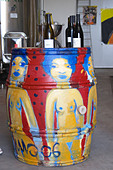 To influence the upcoming climate conference inn Copenhagen Greenpeace France and Spencer Tunick organised a demonstration / installation / work of art in a vineyard in Burgundy: 700 naked people in the vineyard. The purpose was to draw attention to the effects that climate change will have on agriculture, and specifically wine growing, in France. You can now watch the video from the happening, 700 nude people in the vineyard: http://www.greenpeace.fr/tunick/ and www.treehugger.com (But one assumes that at least at that occasion all participants appreciated the unseasonably warm weather.)
Tuesday, October 27, 2009
Bordeaux 2007
 The Union des Grands Crus (UGC) in Bordeaux recently presented the 2007 vintage in Paris. the UGC includes not only the 1855 Grands Crus Classés but also some excellent producers inn Pomerol, Graves, Médoc and Saint Emilion. It can be quite a chore to taste a large number of young Bordeaux wines but this time it was quite pleasant. 2007 is a year with soft tanning and many of the wines are virtually ready to drink already today. The summer was cool with quite a lot of rain but the vintage was ‘saved’ by a nice autumn and harvest season. However, you had to be careful with the extraction, or risk getting too much green and bitter notes in the wine. Most producers choose to make a wine playing on the fruit. The best have done careful extractions and have avoided too much new oak. The result is a very good wine, approachable and with a very nice fruit dominated by blackcurrant notes and a touch of mint.
2007 is a vintage that restaurateurs will love. Ready to drink young, not needing long cellaring. This, no doubt, will benefit the consumer too in offering less expensive wines accessible now. “It’s good to have a vintage like 2007 every once in a while”, says Caroline Poniatowski at Château Lafon-Rochet in Saint Estèphe. Gonzague Lurton at Château Durfort-Vivens in Margaux thinks that they can age for 10 to 12 years: “2007 is not a vintage to lay down for very long”, he says. A “vin de plaisir” is how Eric d’Aramon at Château de Figeac describes it, to drink before the 2005s and 2006s: "What’s important for the 2007s is to keep the fruit and the freshness”, he says. Tristan Kressmann at Chateau Latour Martillac in Pessac-Léognan sees it as an ‘in-between’ year: Cabernet sauvignon was successful thanks to good weather in October but the merlots suffered from the humidity earlier in the season. That’s why we use two thirds cabernet in the blend which is more than what we normally have. But it gives us both elegance and fruit”. Château Lagrange in Saint Julien is another winery that used more cabernet than normally and in their case it has given the wines a good structure and, thanks to soft extractions, a fresh fruit. The wine is nice, soft and agreeable.
 Antonio Flores, chef de culture at Château Malescasse in Haut-Medoc, is quite satisfied with the result. “But”, he says, “it was difficult to get sufficient ripening of the grapes. We had to do a lot of work in the vineyard and a strict sorting of the grapes when they arrived at the chai before the fermentation”.
Many chateaux choose to use less new oak than habitually in 2007. Frédéric Le Clerc at Château La Tour de By in northern Médoc used only 10%. “You had to be careful not to mask the fruit”, he says.
Some other of my favourites: Cos Laboury, Saint Estèphe, with hints of aniseed, blackcurrants and a round and soft body; Grand Puy Ducasse in Pauillac, complex with a bit of astringency, needing a few more years of bottle age; Haut-Batailly and Lynch Moussas, both in Pauillac and both with lots of finesse and a fabulous fruit.
If 2007 was a non-exceptional year for the reds it was, on the contrary, a fantastic year for the whites from Pessac-Léognans (the region which was on tasting). The white Château Latour-Martillac had exceptional balance between the aromatic side of the sauvignon blanc and sémillon’s “fat”. “We don’t use more than 1/3 now oak. There should be just a hint of oak”, says Tristan Kressmann. Some other very good whites I tasted came from La Louvière, Larrivet-Haut-Brion, Ch La France, Carbonnieux and Pape-Clément (the latter with quite a lot of new oak though!).
Monday, October 26, 2009
BKWine Pick: Domaine Grand Lauze, Ferrals de Corbières
Domaine Grand Lauze, Ferrals de Corbières
 This is a 22 ha big estate in Boutenac, one of the best areas in the Corbières. The vines are old. Some carignans and grenaches are over 100 years old. 80% of production is AOC and the remainder is Vin de Pays. Xavier Ledogar is the winemaker. He has a passionate interest in the soil and in his vines. You feel right away that this will be individualistic wines full of character. Which indeed they are when you taste them. Together with his younger brother Xavier, he makes white and red wines with a very distinct Languedoc stamp on them, as well as having depth and complexity. Taste for instance the La Compagnon 2007, a Corbières made from 50% mourvèdre and the rest a mix of carignan, syrah and grenache. A very nice wine with flavours of the local herbs, good fruit and freshness and lots of personality. “I try and make something special”, says Xavier, “I adapt to what nature gives me”. With excellent results.
Click here for address and more recommendations.
This is a 22 ha big estate in Boutenac, one of the best areas in the Corbières. The vines are old. Some carignans and grenaches are over 100 years old. 80% of production is AOC and the remainder is Vin de Pays. Xavier Ledogar is the winemaker. He has a passionate interest in the soil and in his vines. You feel right away that this will be individualistic wines full of character. Which indeed they are when you taste them. Together with his younger brother Xavier, he makes white and red wines with a very distinct Languedoc stamp on them, as well as having depth and complexity. Taste for instance the La Compagnon 2007, a Corbières made from 50% mourvèdre and the rest a mix of carignan, syrah and grenache. A very nice wine with flavours of the local herbs, good fruit and freshness and lots of personality. “I try and make something special”, says Xavier, “I adapt to what nature gives me”. With excellent results.Click here for address and more recommendations.
BKWine Pick: Domaine Grand Guilhem, Fitou
Domaine Grand Guilhem, Fitou
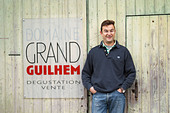 In the mountainous part of Fitou, in the small village of Cascastel, on the border to Corbières, that’s where we find Gilles Contrepois (an exiled Parisian) at Domaine Grand Guilhem. He and his wife completely changed their lifestyle a few years back when they settled here among the vines and the aromatic garrigue shrub. They have 12 ha of vineyards in four different appellations: Fitou, Corbières, Rivesaltes and Muscat de Rivesaltes. The grow the vines organically and try and emphasise the terroir expression in the wines. Taste for example his Fitou 2007, fermented with natural yeast, made from 47% carignan grapes, and you will get a wonderfully garrigue-herbs wine, fruity, with good acidity and structure. A Fitou when it is as it should be.
Click here for address and more recommendations.
In the mountainous part of Fitou, in the small village of Cascastel, on the border to Corbières, that’s where we find Gilles Contrepois (an exiled Parisian) at Domaine Grand Guilhem. He and his wife completely changed their lifestyle a few years back when they settled here among the vines and the aromatic garrigue shrub. They have 12 ha of vineyards in four different appellations: Fitou, Corbières, Rivesaltes and Muscat de Rivesaltes. The grow the vines organically and try and emphasise the terroir expression in the wines. Taste for example his Fitou 2007, fermented with natural yeast, made from 47% carignan grapes, and you will get a wonderfully garrigue-herbs wine, fruity, with good acidity and structure. A Fitou when it is as it should be.Click here for address and more recommendations.
Welcome to the BKWine Brief nr 75, October 2009
The big thing for us right now is that our new book is finished. Really finished. We will have it in our hands in just a few weeks! We’re really excited.
The book tells the story of how a wine is made. It’s aimed at the wine enthusiast but can also be used as a wine course book. It’s quite unusual in that it goes into details of vine growing and winemaking – but with a text aimed at the wine lover.
 The story in the book evolves around two themes: First, our innumerable conversations with winemakers, interviews, vineyard visits (we visit some 200-300 vineyards each year), wine shows etc. They are to a great extent the ones who tell the story in the book, explaining what they do and why. Secondly, we show that there are rarely any absolute truths. There are always different sides to an argument. If one winemaker says that you should absolutely have stainless steel fermentation tanks to make good wines, his neighbour will be convinced concrete is the best. The same goes for closures, oak, filtering, planting density etc etc. And both are generally right and make good wines. The interesting thing then is why you do this or that. And we explain, or let them explain, that in the book.
The book has two sections: The first half is dedicated to the vineyard: planting, vines and grape varieties, training and pruning methods, soil, climate, illnesses, manual vs. mechanical harvest etc. We also try and get to grips with this thing “terroir”. The vineyard section ends with an explanation of organic wine growing and biodynamic wines (issues that are often misunderstood!). We try and explain it in a practical, down to earth way.
The second half talks about the work in the wine cellar: The importance of sorting (and how you do it), crushing, pressing, fermentation is looked at in detail, as is the ‘upbringing’ of the wine (élevage) and the aging, the influence of oak, assemblage (blending), fining and filtering (should you or should you not?) etc. We look at what various substances you can add in the winemaking to control and influence the result. Closures have a chapter of their own (another subject that is often misunderstood): natural cork, plastic cork, screw caps, etc, as does ‘special' vinifications: sweet wine and sparkling wines. Finally we look at defects and problems, e.g. corked wine and reduction, and what types of wine you should cellar and age.
Everything is illustrated over 300 pages with many, many colour photographs (you wouldn’t expect anything else from us, would you?).
It will be hot off the presses (not the wine ones) by mid November.
Sounds interesting?
Well, hrrm, it’s published in Swedish (but the pictures are nice). We’d love to find a publisher for an English or French edition. Any suggestions?
Apart from that, the travel season is starting to calm down now. We’ve been to quite a few of Europe’s wine districts this autumn, and most have been very positive about the harvest, and some have been positively jubilant. At least for the quality. Many are suffering from smaller harvests than usual.
But what remains is the European Wine Bloggers conference next week (at least for some of us – Britt stays in Paris), something that I’m sure we’ll have reasons to come back to.
In this issue you also get a special report on the 2007 wines from Bordeaux. We recently tasted most of the Grands Crus Classés plus some others (the ones that are part of the Union des Grands Crus). In summary the reds from 2007 are delicious, accessible, with a nice fruit dominated by blackcurrant and some mint. Not an extraordinary vintage – instead they’re quite nice to drink already today! But the whites on the other hand …. are fabulous. Unfortunately, white Bordeaux seems not to be much appreciated by the consumers. Production has shrunk to only 10% of the total in Bordeaux. Let’s hope that the superb 2007s can change that.
Britt & Per
PS: Recommend to your friends to read the Brief or forward it to them !
More on wine:


Read all of the BKWine Brief here!
The book tells the story of how a wine is made. It’s aimed at the wine enthusiast but can also be used as a wine course book. It’s quite unusual in that it goes into details of vine growing and winemaking – but with a text aimed at the wine lover.
The story in the book evolves around two themes: First, our innumerable conversations with winemakers, interviews, vineyard visits (we visit some 200-300 vineyards each year), wine shows etc. They are to a great extent the ones who tell the story in the book, explaining what they do and why. Secondly, we show that there are rarely any absolute truths. There are always different sides to an argument. If one winemaker says that you should absolutely have stainless steel fermentation tanks to make good wines, his neighbour will be convinced concrete is the best. The same goes for closures, oak, filtering, planting density etc etc. And both are generally right and make good wines. The interesting thing then is why you do this or that. And we explain, or let them explain, that in the book.The book has two sections: The first half is dedicated to the vineyard: planting, vines and grape varieties, training and pruning methods, soil, climate, illnesses, manual vs. mechanical harvest etc. We also try and get to grips with this thing “terroir”. The vineyard section ends with an explanation of organic wine growing and biodynamic wines (issues that are often misunderstood!). We try and explain it in a practical, down to earth way.
The second half talks about the work in the wine cellar: The importance of sorting (and how you do it), crushing, pressing, fermentation is looked at in detail, as is the ‘upbringing’ of the wine (élevage) and the aging, the influence of oak, assemblage (blending), fining and filtering (should you or should you not?) etc. We look at what various substances you can add in the winemaking to control and influence the result. Closures have a chapter of their own (another subject that is often misunderstood): natural cork, plastic cork, screw caps, etc, as does ‘special' vinifications: sweet wine and sparkling wines. Finally we look at defects and problems, e.g. corked wine and reduction, and what types of wine you should cellar and age.
Everything is illustrated over 300 pages with many, many colour photographs (you wouldn’t expect anything else from us, would you?).
It will be hot off the presses (not the wine ones) by mid November.
Sounds interesting?
Well, hrrm, it’s published in Swedish (but the pictures are nice). We’d love to find a publisher for an English or French edition. Any suggestions?
Apart from that, the travel season is starting to calm down now. We’ve been to quite a few of Europe’s wine districts this autumn, and most have been very positive about the harvest, and some have been positively jubilant. At least for the quality. Many are suffering from smaller harvests than usual.
But what remains is the European Wine Bloggers conference next week (at least for some of us – Britt stays in Paris), something that I’m sure we’ll have reasons to come back to.
In this issue you also get a special report on the 2007 wines from Bordeaux. We recently tasted most of the Grands Crus Classés plus some others (the ones that are part of the Union des Grands Crus). In summary the reds from 2007 are delicious, accessible, with a nice fruit dominated by blackcurrant and some mint. Not an extraordinary vintage – instead they’re quite nice to drink already today! But the whites on the other hand …. are fabulous. Unfortunately, white Bordeaux seems not to be much appreciated by the consumers. Production has shrunk to only 10% of the total in Bordeaux. Let’s hope that the superb 2007s can change that.
Britt & Per
PS: Recommend to your friends to read the Brief or forward it to them !
More on wine:
Read all of the BKWine Brief here!
Monday, October 19, 2009
Bordeaux exports drop
Exports of Bordeaux wine fell with 16% over the 12 months up to June 2009 to reach only 1.62 M hectolitre. Measured in value the drop was 14% to reach 1.43 M euro. According to CIVB/Vitisphere.
Wine festivals in Zagreb
In the last Brief we wrote a piece on a wine event in Zagreb. It turns out that what we wrote may have led to some confusion. So here we try and be a little clearer:
- On November 27-28 there will be ”The Fourth International Zagreb Festival of Wine & Culinary Art”, more info here: www.vino.com.hr
- On February 12-13, 2010 there will be the ”Zagreb Wine Gourmet Festival” at the Arts & Crafts Museum in Zagreb. More information here: zagrebwinegourmet.com
We apologise for any misunderstanding or confusion due to our earlier post. So, if you happen to pass by Zagreb, either in November or in February, there are some fun things to do!
- On November 27-28 there will be ”The Fourth International Zagreb Festival of Wine & Culinary Art”, more info here: www.vino.com.hr
- On February 12-13, 2010 there will be the ”Zagreb Wine Gourmet Festival” at the Arts & Crafts Museum in Zagreb. More information here: zagrebwinegourmet.com
We apologise for any misunderstanding or confusion due to our earlier post. So, if you happen to pass by Zagreb, either in November or in February, there are some fun things to do!
Saturday, October 17, 2009
Three entertaining wine videos
It’s quite some while since we had the time to update BKWine TV, so here are three other entertaining wine videos:
1 - Don't go to the gym! Come and pull weed in my vineyard instead!, says Pierre Caslot at Domaine de la Chevalerie in the Loire
2 - Can you tell the difference between a 1500 euro wine and a 15 euro wine? Not evident, not even for these wine tasting experts: With English subtitles, or simply in French
3 - What does the average Frenchman think about screw caps on wine?
1 - Don't go to the gym! Come and pull weed in my vineyard instead!, says Pierre Caslot at Domaine de la Chevalerie in the Loire
2 - Can you tell the difference between a 1500 euro wine and a 15 euro wine? Not evident, not even for these wine tasting experts: With English subtitles, or simply in French
3 - What does the average Frenchman think about screw caps on wine?
Friday, October 16, 2009
Excellent harvest in the Roussillon
 In the Roussillon the harvest is essentially finished. As in many other regions, it is estimated to be a very good vintage. The winter and spring saw a reasonable rainfall (after some dry years) and summer was dry and hot. In August they had, just like in Spain, exceptional heat and it was feared that it might block the maturation of the grapes. Not too much damage was caused though, albeit different parcels have ripened very differently. Provided the wine grower have adapted harvest dates accordingly this has not been a problem. Over all it is expected to be an excellent vintage.
Pirate wine
Many countries across Europe are pondering anti-piracy laws. In France we have a proposal (likely to go through) called Hadopi that woul make it easy for authorities to cut the interenet connection for people suspected of downloading pirated music and films. Domaine Bérénas has launched a protest wine called Cuvée Hadopi (admittedly, not a very elegant name). It exists in both red and white. Exactly how it supports the anti-hadopi case we are not sure. Perhaps the profit from the sales goes to a defence fund for pirates? blog.vinospherus.fr
Thursday, October 15, 2009
Languedoc reading
 We have, as you might know, a certain weakness for the Languedoc-Roussillon. A few years back we wrote a book about the wines from the region (so far only published in Swedish unfortunately). Therefore it is with great pleasure that we recently discovered a new blog about Languedoc wines. It is written by the well known British wine book author Rosemary George, who happens to have a summer house in the region. Recommended reading here: Taste Languedoc http://tastelanguedoc.blogspot.com/ (And when we're talking about the Languedoc we also must mention our own book on the wines from that very dynamic region: The Languedoc Book)
New wine magazine launched #2: Palate Press
An interesting initiative: Palate Press. It is an entirely internet based “magazine” that works like a collaborative project. The articles are written by a group of wine bloggers. “By harnessing the power of the internet […] we are able to have an ‘on the scene reporter’ at every wine-related event on the globe” they say in their introduction, not without a certain (unintended?) hyperbole. What their business model is is not quite clear. Advertising revenue perhaps? And on the other side paying fees to the journalists? Read it here: http://palatepress.com/
Wednesday, October 14, 2009
New wine magazine launched #1: Terre de Vins
It’s not every day, with the implosion of the advertising market, that a new wine magazine is launched. To be fair, Terre de Vins has existed for quite a few years, but as a magazine solely dedicated to the wines of the Languedoc-Roussillon. With backing from the Sud-Ouest publishing group they have reshaped the magazine and made it into a national wine mag, with even international scope. So now we will be able to read about wines from all of France as well as some “foreign” wines in Terres de Vins. It uses very good quality photographic material and the articles are generally well written and easy to read. http://www.terredevins.com/
Eight new Masters of Wine
The total has now reached 280 with the addition of eight new Masters of Wine (MW) in the latest round of diploma attribution. MW is a much coveted British diploma that shows that you know quite a few things about wine. Here are the eight new MWs:
- Susie Barrie MW, a freelance journalist, author, television and radio presenter from Winchester, UK;
- Michael Collier MW, a wine consultant based in Surrey, UK;
- Roman Horvath MW, managing director of Domäne Wachau, Austria;
- Isabelle Legeron MW, a French-born educator, event organiser and television broadcaster, living in London, UK;
- Tim Marson MW, a wine buyer for Bibendum in London, UK;
- Tuomas Meriluoto MW, managing director of WineState, an importer in Finland;
- Frank Roeder MW, founder and chief executive of VIT, a wine distribution company based in Saar, Germany;
- Mai Tjemsland MW, owner of GastroConsult, a restaurant, catering and wine club group in Oslo, Norway.
More info: www.mastersofwine.org
- Susie Barrie MW, a freelance journalist, author, television and radio presenter from Winchester, UK;
- Michael Collier MW, a wine consultant based in Surrey, UK;
- Roman Horvath MW, managing director of Domäne Wachau, Austria;
- Isabelle Legeron MW, a French-born educator, event organiser and television broadcaster, living in London, UK;
- Tim Marson MW, a wine buyer for Bibendum in London, UK;
- Tuomas Meriluoto MW, managing director of WineState, an importer in Finland;
- Frank Roeder MW, founder and chief executive of VIT, a wine distribution company based in Saar, Germany;
- Mai Tjemsland MW, owner of GastroConsult, a restaurant, catering and wine club group in Oslo, Norway.
More info: www.mastersofwine.org
Tuesday, October 13, 2009
Argentinean exports of malbec up
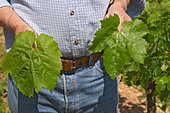 The exports from Argentina of malbec wines grew with 28% in value and 29% in volume for the first six months 2009. Nice with positivie numbers for a change these days! The biggest export markets are:
- USA, 52 % of exports
- Canada, 10 %
- United Kingdom, 5%
- Brazil, 5%
- Netherlands, Switzerland, Mexico, Sweden, Denmark and Germany, all 2 % each
Source: WineSur
New sherry bodega launched: Urium
 It is probably quite some time since someone launched a new sherry bodega. But now it has happened. The Spanish Ruiz family, headed by Alonso Ruiz has just launched Bodegas Urium. Undoubtedly a very ambitious and challenging project in times when, unfortunately, sherry is not very easy to sell on the international market. We wish them good luck and success! More info www.diariodejerez.es and jerezwine.com
Monday, October 12, 2009
Wine buying preferences charted by Twenga
The price comparison search engine Twenga has analysed how their visitors search for wine in different countries. Here are some statistics:
- France: 86% of searches are for French wine
- Italy: 52% are for Italian wine, 43% for French
- Spain: 50% are for Spanish wines, 24% for French and 13% for Italian
- Germany: 40% are for French wine, 27% for Italian, and only 11% for German
- Great Britain: 64% French, 20% Italian
Some more details by country:
Top ten searches in the UK:
- Bordeaux
- Bourgogne (French Burgundy)
- Champagne
- Vallée du Rhône
- Loire
- Languedoc Roussillon
- Spanish Rioja
- French sparkling wine
- Italian Barolo
- Pinot Grigio Italy
Top ten searches in France:
- Bordeaux
- Bourgogne (French Burgundy)
- Champagne
- Vallee du Rhône
- Loire
- French sparkling wine
- Languedoc Roussillon
- Alsace
- Provence
- Jura
Top ten searches in Italy for Italian wines:
- Barolo
- Pinot Grigio
- Chianti Classico
- Amarone
- Nero d'Avola
- Syrah
- Gavi
- Marsala
- Prosecco di Valdobbiadene
- Montepulciano d'Abruzzo
Top ten in Spain for Spanish wines:
- Rioja
- Albarino
- Cava
- Crianza
- Jerez
- Rueda
- Ribeira sacra
- Ribera del duero
- Penedes
- Tempranillo
Top six in Germany for German wines:
- spatburgunder
- deutscher riesling
- dornfelder
- grauburgunder
- scheurebe
- weissburgunder
Evidently French don’t drink much else than French wine, Italians and Spanish are a little more adventurous, Germans don’t seem to particularly like German wines, and English wine drinkers are very conservative. More info on the Twenga blog
- France: 86% of searches are for French wine
- Italy: 52% are for Italian wine, 43% for French
- Spain: 50% are for Spanish wines, 24% for French and 13% for Italian
- Germany: 40% are for French wine, 27% for Italian, and only 11% for German
- Great Britain: 64% French, 20% Italian
Some more details by country:
Top ten searches in the UK:
- Bordeaux
- Bourgogne (French Burgundy)
- Champagne
- Vallée du Rhône
- Loire
- Languedoc Roussillon
- Spanish Rioja
- French sparkling wine
- Italian Barolo
- Pinot Grigio Italy
Top ten searches in France:
- Bordeaux
- Bourgogne (French Burgundy)
- Champagne
- Vallee du Rhône
- Loire
- French sparkling wine
- Languedoc Roussillon
- Alsace
- Provence
- Jura
Top ten searches in Italy for Italian wines:
- Barolo
- Pinot Grigio
- Chianti Classico
- Amarone
- Nero d'Avola
- Syrah
- Gavi
- Marsala
- Prosecco di Valdobbiadene
- Montepulciano d'Abruzzo
Top ten in Spain for Spanish wines:
- Rioja
- Albarino
- Cava
- Crianza
- Jerez
- Rueda
- Ribeira sacra
- Ribera del duero
- Penedes
- Tempranillo
Top six in Germany for German wines:
- spatburgunder
- deutscher riesling
- dornfelder
- grauburgunder
- scheurebe
- weissburgunder
Evidently French don’t drink much else than French wine, Italians and Spanish are a little more adventurous, Germans don’t seem to particularly like German wines, and English wine drinkers are very conservative. More info on the Twenga blog
Organic wine: Millesime Bio on January 25-27
 Millesime Bio is a wine show that focuses on wine producers who work organically or with biodynamic principles. It has grown substantially over recent years and is now probably the biggest event for organic wine. the next Millesime Bio will take place in Montpellier in the Languedoc on January 25-27 2010.More info: www.millesime-bio.com
Chablis celebration on February 6-7
Saint Vincent Tournante is two days of wine tasting, good food and festivities in Chablis. This time the event takes place on the weekend of February 6-7. More info here: www.saint-vincent-milly-chablis.com
Tuesday, October 06, 2009
How much (or how little) wine in Champagne?
 There have been lots of discussions in champagne this year on how much the growers will be permitted to harvest. Curiously, the limit is not set until the beginning of September. Wit the crash in champagne sales the big houses wanted to limit the yield to 7500 kg/ha, compared to 13 000 kg/ha last year. Almost halving harvest volume. They fear a glut of champagne, falling prices, loss of the exclusive aura around the bubbly etc. Smaller producers were keener on keeping the yield higher, perhaps more concerned about this year’s revenue. The result was a compromise: the maximum yield was set to 9700 kg/ha. But as often is the case, this is not the whole story. On top of that, there is an allowance for 4300 kg/ha to be set aside for the “reserve” wine, theoretically used to even out years with lower yields. So, in total we then have a yield of 14,000 kg/ha. Why do they count in kg/ha instead of hectolitres/ha as everyone else in France? Don’t know. If you make the calculation 9700 kg/ha is the same as 62 hl/ha and 14,000 kg/ha represents a hefty yield of almost 100 hl/ha. Perhaps that’s why? Read more: business.timesonline.co.uk or Decanter.com. One cannot help being amazed by this blatant price fixing. It is not to improve the quality that the yields are restricted (although that might actually be a good idea). Rather, it is simply in order to artificially inflate the prices so that the champagne becomes more expensive to the consumers and wine lovers than what it would need to be. It would perhaps be a nice case for the EU competition and open market authorities to put their teeth in?
Rich and famous and winemakers
 ”How do you make a small fortune from wine? – You start with a big fortune.” So goes the story. Many rich people (though not always famous) like the thought of owning a vineyard. Apparently. Chateau Latour, as an example, is owned by François Pinault, one of France’s richest person who also own a telecom operator, TV channels, construction companies etc. More well known (at least in wine circles) is Bernard Arnault who (part-)owns Chateau Cheval Blanc and Yquem. Challenges, a French business magazine (obvious from it’s name, isn’t it?), recently listed the top French fortunes cum - “winemakers”. Read the details on the blog of Cesar Compadre/Sud-Ouest
Monday, October 05, 2009
The difference between winemaking in Bordeaux and Burgundy
 There are very few vignerons who own vineyards both in Bordeaux and in Burgundy. One of the happy few is Eduard Labruyère who owns Domaine Jacques Pieur in Burgundy and Chateau Rouget in Pomerol. Jane Anson has interviewed him on his experiences from the two regions. ”Burgundy is more about feeling that you should do things a certain way, while in Bordeaux you know that you have to do it because the university researchers have told you.” The whole article is very interesting and can be found on Jane Anson's blog The New Bordeaux
PS: What is the point with this photo? Any idea?
A wine cinematographer disappears: Vininews
At least figuratively speaking. Vininews was a site that published video interviews and reportage from vineyards and wine regions on their site Vininews. But the latest message from them said that they are closing down the site. A great pity. One wonders why. Too ambitious? Anyway, one can find some consolation in the (rather more amateurish) wine videos on BKWine TV.
Photographing wine bottles
While researching some other things I stumbled over an old post by Spittoon.biz: How To Photograph Wine Bottles - 10 tips. Considering the quality of the bottle shots you sometimes see in blogs this is definitely a post that some bloggers could benefit from reading.