Click here for address and more recommendations.
The BKWine Brief is a newsletter on wine, food, and travel. Subscribe to it on email or read it here.
We also organise wine tours for wine lovers and professionals.
Monday, May 31, 2010
BKWine Pick: Restaurant Gabriel, Bordeaux
Restaurant Gabriel, Bordeaux
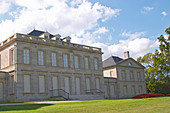
Place de la Bourse is one of the gems of architecture in Bordeaux. As if it needed added attractions there is now, since a year back, a restaurant called Gabriel (after the architect of La Place) that adds one more reason to go there. Located in the most beautiful of the buildings on La Place it is split in three levels. On the ground floor there’s a bar with outside seating (lovely). One floor up there’s the bistro and on the second floor there’s the gourmet restaurant that already, after only 8 months, has been given one star by the Michelin guide. In the bar, called Les Dix, you can also have a sandwich or a salad. In the bistro you can get a three course menu for 28 euro – must be one of the best value for money in Bordeaux, so go there before prices go up! The starter can be for example foie gras (duck’s liver), carpaccio of daurade (sea bream) or a very tasty leek in vinaigrette (a classic French bistro starter) and parmesan. For main course we’ve tried the filet de bar (sea bass) with saffron rice and almonds, a grilled steak with red wine sauce, or a leg of chicken with green peas and lemon. And to finish of perhaps a tiramisu, a strawberry soup, or a grape fruit gratin? All is excellent! We have not yet tried the second floor but we don’t doubt that it will be excellent. Don’t forget to book in advance!
Click here for address and more recommendations.
Sunday, May 30, 2010
BKWine Pick: Big Easy Restaurant & Wine Bar, Stellenbosch
Big Easy Restaurant & Wine Bar, Stellenbosch
The Big Easy is owned by Ernie Els, golf player and wine producer. It opened in 2008 in an old Cape Dutch style house in central Stellenbosch, actually on the second oldest street in South Africa, according to what is said. It is elegant, relaxed and cozy, almost a bit clubby. There are several different rooms with different styles so you can choose something that goes with your mood. The food is excellent, a bit French inspired, but with classic South African raw material. Excellent wine list, as should be expected.
Click here for address and more recommendations.
The Big Easy is owned by Ernie Els, golf player and wine producer. It opened in 2008 in an old Cape Dutch style house in central Stellenbosch, actually on the second oldest street in South Africa, according to what is said. It is elegant, relaxed and cozy, almost a bit clubby. There are several different rooms with different styles so you can choose something that goes with your mood. The food is excellent, a bit French inspired, but with classic South African raw material. Excellent wine list, as should be expected.
Click here for address and more recommendations.
Saturday, May 29, 2010
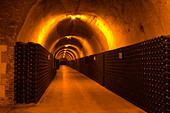
BKWine Pick: Champagne Eric Rodez, Ambonnay
Click here for address and more recommendations.
Friday, May 28, 2010
BKWine pick: Château Tournefeuille, Lalande de Pomerol
Even though the vineyard is in one single plot the soil is very varied, Eric explains. There is clay that gives wines with intense colour and power with pronounced tannins, there is gravel that gives more elegance and lighter colour and tannins. There is 70% merlot and the rest is cabernet franc.
Rosalcy 2008, Lalande de Pomerol, is a delicious wine very much on the fruit, with both raspberries and cherries, elegant and round tannins (approx 9-12 euro). Chateau Tournefeuille 2006 has been aged in oak barrels for 12 months, a third of which were new. The bouquet has complexity and already some maturity characters (secondary aromas), mushrooms and truffles. It’s a classic Bordeaux/Pomerol style which is exactly what Emeric is aiming for (~15-23 euro). In 2004 the Petit family bought three hectares in Pomerol. the result is a wine they call L’Ecuyer. The 2005 is made from 90% merlot and is starting to develop some maturity and has a lot of elegance. “Delicate, as a Pomerol should be”, says Emeric.
Click here for address and more recommendations.
Thursday, May 27, 2010
The new issue of the BKWine Brief is out, #82, May 2010
Welcome to the BKWine Brief nr 82, May 2010
It’s been a busy spring for us – if finally spring has really arrived, and even summer it seems. We have been travelling quite a lot. We haven’t counted the air (and rail & road) miles but it would add up to quite a few.
Our first destination was South Africa, the very first wine tour we have organised to this interesting wine country (that also is the biggest supplier of wines to Sweden!). For those who wanted there was an option to combine the tour with a safari (we wanted!). Very interesting wines to discover in this young-old wine country (they celebrated 350 years of winemaking last year!). Very interesting animals too! The tour was a big success and we are already planning the South Africa Wine Tour 2.0 for next March.
After that we headed off on one of our “three classics” tours. Spring was still not showing its nice face so we had a few cold days in the vineyards. But since we spent most of the time in the wine cellars it wasn’t all that bad. First to Champagne, where we tasted a lot of well chilled wines (thank you, absent spring). One of the persons we met was a bio-dynamic wine grower who presented an extensive tasting of his wines in his winery, and in particular an interesting overview of some of his “base wines”, i.e. the still wines before the second fermentation that gives the bubbles (more about that further down). We continued to Chablis where we enjoyed a nice dinner in a Michelin starred restaurant (and many wines in the wine cellars of course), to finish the tour in Beaune in the heart of Burgundy. Finally the sun showed up, just in time to enjoy some aperitifs on the outside terraces.
Bordeaux was the next destination where we all enjoyed a lunch served with sauternes all through the meal, plus numerous vineyard visits of course. The day the Bordeaux trip started with a bang. Literary. It was they same day the volcano on Iceland erupted. Luckily everyone had arrived OK in Bordeaux, but the more the trip went on, and the more the volcano continued its dirty business, the more we became worried. In the end it turned out good though. Almost everyone on the trip had come by car, and that’s never happened on one of our trips before! The one couple who were flying managed to arrange a car-swap deal with someone travelling in the other direction!
We went home by train to Paris, still worried about the volcano. The following week we were scheduled to fly to Palermo (Sicily) to take part in the jury at the Concours Mondial wine competition (we were the only Swedes in the 250-headed panel). What was going to happen? Just a few days before we were to travel we still did not know if the competition was going to be cancelled or not. And the volcano was still spewing its ash. In the end, the competition went ahead (big gamble from the organisers!) and we got on a flight to Italy the very first day the air traffic was (relatively) normal. We combined the wine judging with a few extra days travelling around the island to discover its various wine regions. We travelled some 1200 km over 3 days. On Sicilian roads… Sicilian roads are not like any other roads, I can assure you! But it was worth it. A very fascinating wine region, with steely wines from Etna (a volcano that thankfully kept quiet) to sweet marsala, and innumerable Greek temples on the way. You will read more about Sicily in coming Briefs!
After that Per headed to Tuscany. A wine tasting and cooking class tour (has anyone who was there tried to make home made pasta again?). All the winegrowers we met were very concerned about the sun, or rather the lack thereof. But I am sure that will sort itself out over summer. But again! The ash cloud! The last day of the trip, a new ash cloud appeared and closed airports on Ireland and… in northern Italy. But just in time for departure, around midday on Sunday, the airports opened again and everyone managed to get on a flight home. A bit of chaos at the airport but better that than no flight.
At the same time Britt headed to Chile and Argentina. There were no ash clouds in that part of the world but the first day there they had an after shock of the big earthquake earlier this year. “Only” around 4 on the Richter scale though. But Britt seemed more worried about having to go horseback riding around the vineyards…
That’s all for the time being. Well not quite, Britt heads to Stockholm tomorrow, for meetings and tastings.
And perhaps this makes you long for a wine tour? (And we’re not expecting any more ash clouds or earth quakes in the wine regions at the moment.) Think of us if you do.
Britt & Per
Read the whole newsletter here: BKWine Brief!
PS: Recommend to your friends to read the Brief or forward it to them ! More on wine:
Guest writers on BKWine.com
Wine videos: BKWine TV
Wine photography
Find us on:
It’s been a busy spring for us – if finally spring has really arrived, and even summer it seems. We have been travelling quite a lot. We haven’t counted the air (and rail & road) miles but it would add up to quite a few.
Our first destination was South Africa, the very first wine tour we have organised to this interesting wine country (that also is the biggest supplier of wines to Sweden!). For those who wanted there was an option to combine the tour with a safari (we wanted!). Very interesting wines to discover in this young-old wine country (they celebrated 350 years of winemaking last year!). Very interesting animals too! The tour was a big success and we are already planning the South Africa Wine Tour 2.0 for next March.
After that we headed off on one of our “three classics” tours. Spring was still not showing its nice face so we had a few cold days in the vineyards. But since we spent most of the time in the wine cellars it wasn’t all that bad. First to Champagne, where we tasted a lot of well chilled wines (thank you, absent spring). One of the persons we met was a bio-dynamic wine grower who presented an extensive tasting of his wines in his winery, and in particular an interesting overview of some of his “base wines”, i.e. the still wines before the second fermentation that gives the bubbles (more about that further down). We continued to Chablis where we enjoyed a nice dinner in a Michelin starred restaurant (and many wines in the wine cellars of course), to finish the tour in Beaune in the heart of Burgundy. Finally the sun showed up, just in time to enjoy some aperitifs on the outside terraces.
Bordeaux was the next destination where we all enjoyed a lunch served with sauternes all through the meal, plus numerous vineyard visits of course. The day the Bordeaux trip started with a bang. Literary. It was they same day the volcano on Iceland erupted. Luckily everyone had arrived OK in Bordeaux, but the more the trip went on, and the more the volcano continued its dirty business, the more we became worried. In the end it turned out good though. Almost everyone on the trip had come by car, and that’s never happened on one of our trips before! The one couple who were flying managed to arrange a car-swap deal with someone travelling in the other direction!
We went home by train to Paris, still worried about the volcano. The following week we were scheduled to fly to Palermo (Sicily) to take part in the jury at the Concours Mondial wine competition (we were the only Swedes in the 250-headed panel). What was going to happen? Just a few days before we were to travel we still did not know if the competition was going to be cancelled or not. And the volcano was still spewing its ash. In the end, the competition went ahead (big gamble from the organisers!) and we got on a flight to Italy the very first day the air traffic was (relatively) normal. We combined the wine judging with a few extra days travelling around the island to discover its various wine regions. We travelled some 1200 km over 3 days. On Sicilian roads… Sicilian roads are not like any other roads, I can assure you! But it was worth it. A very fascinating wine region, with steely wines from Etna (a volcano that thankfully kept quiet) to sweet marsala, and innumerable Greek temples on the way. You will read more about Sicily in coming Briefs!
After that Per headed to Tuscany. A wine tasting and cooking class tour (has anyone who was there tried to make home made pasta again?). All the winegrowers we met were very concerned about the sun, or rather the lack thereof. But I am sure that will sort itself out over summer. But again! The ash cloud! The last day of the trip, a new ash cloud appeared and closed airports on Ireland and… in northern Italy. But just in time for departure, around midday on Sunday, the airports opened again and everyone managed to get on a flight home. A bit of chaos at the airport but better that than no flight.
At the same time Britt headed to Chile and Argentina. There were no ash clouds in that part of the world but the first day there they had an after shock of the big earthquake earlier this year. “Only” around 4 on the Richter scale though. But Britt seemed more worried about having to go horseback riding around the vineyards…
That’s all for the time being. Well not quite, Britt heads to Stockholm tomorrow, for meetings and tastings.
And perhaps this makes you long for a wine tour? (And we’re not expecting any more ash clouds or earth quakes in the wine regions at the moment.) Think of us if you do.
Britt & Per
Read the whole newsletter here: BKWine Brief!
PS: Recommend to your friends to read the Brief or forward it to them ! More on wine:
Guest writers on BKWine.com
Wine videos: BKWine TV
Wine photography Find us on:
Sunday, May 16, 2010
Wine as an investment - good or bad?
1. Wine is such a small market so there is not really any substance to compare it with other asset classes (e.g. bonds or shares) to see if it is better or worse.
2. Analysis of wine as an investment rarely takes account of the costs in trading or investing in wine, e.g. transaction costs or storage cost. Taking these into account would change the picture, says Salmon.
3. The sample that is the basis for the analysis is not representative (it has “survivorship bias”). The sample is a post-facto selection of wines that have been “investment grade” over the period. Others, which might have failed, are not included. With a neutral sample the result might have been quite different.
4. Wine is not just any old asset. It has a limited life span and a peak. In the long run, and if the market for investment wine was bigger, this would make it risky.
Read Salmon’s (quite short) article in full here: blogs.reuters.com. and don’t miss the comments where Masset & Weisskopf responds.
Saturday, May 15, 2010
South African wine sales over-takes France's in the UK
Friday, May 14, 2010
Chateau Montrose buys 22 ha in St Estèphe from Phelan Ségur for 900,000 euro
Thursday, May 13, 2010
Bag-in-box inventor dies
Sometimes in the 60s Tom Angove came home with a strange construction: a card-board box containing a plastic bag that he had filled with wine. The family thought he was nuts. But it was his prototype for what was to become one of the most revolutionary packaging innovations for wine, the bag-in-box, sometimes called cask wines. Angove was Australian and died recently at 92. We don’t know if he ever came to Sweden, the country that has the world’s biggest market share for wine in a plastic bag (exceeding 50%). More info www.heraldsun.com.au
Wednesday, May 12, 2010
Springtime at Château l’Engarran
This spring there will be numerous events at the Château l’Engarran in Languedoc, close to Montpellier. The week-end of April 24-25 there is the ”Fête du terroir de Saint Georges d’Orques” with, among other things, tastings of the wines from the property. The week-end of June 5-6 there will be guided visits to the park that is otherwise not open to the public. Every Wednesday in June they will have guided tours of the château and, of course, tastings of the wines. And on Fridays, Saturdays and Sundays, between 10 AM and 1 PM, and between 3 PM and 7 PM the wines and some local specialities with be for tasting in the caveau. More info: http://www.chateau-engarran.com/
Tuesday, May 11, 2010
The World’s Best Chardonnay
- Chardonnay Morillon Trocken 2008, Weingut Johann Schneeberger
- Ktima Tselepos Marmarias Chardonnay 2007, Ktima Tselepos & Co
- Champagne Premier Cru Blanche de Castille Blanc de Blancs Brut, Champagne Colin
- Vin de Pays du Val de Loire - Domaine la Morinière 2009 Gaec de la Ragotière
- Lourensford Winemaker's Selection Chardonnay 2009 Lourensford t/a Cape Wine Brands
- Penedès do Chardonnay Col-leccio 2008, Albet i Noya Sat
- Champagne Paul Goerg Premier Cru Blanc de Blancs Brut, Coop. la Goutte d’Or / Champagne Paul Goerg
- Chardonnay Beerenauslese 2008, Weinzergenossenschaft Auggen eG
- Chardonnay Icewine 2007, Kalala Organic Estate Winery
- Vin de Pays d'Oc Domaine de Cibadiès - Cuvée Tradition 2009 Scea des Vignobles JM Bonfils
Chardonnay Beerenauslese!? More info www.chardonnay-du-monde.com
New book on Barolo
Perhaps one should start early? On the photo it looks as if the author is hardly over 30, but he introduces the book as his memoir. Or perhaps the picture is out of date. In any case Matthew Gavin Frank has recently come out with a book where he tells the story of his life as illegal immigrant in Barolo. However, Frank is a wine and food writer so the book is more about that part of Piemontese life, we assume. More info www.nebraskapress.unl.edu
Monday, May 10, 2010
BKWine judges Coup de Coeur des Femmes Journalistes 2010
Winners of Coup de coeur
White: Beauvignac Viognier, IGP Pays d’Oc blanc 2009, Cave de Pomerols, Pomerols (Hérault). A summer wine, flowry and aromatic with a nice citrus finish.
Red: Vallée des Arômes Merlot, IGP Haute Vallée de l’Orb rouge 2009, Cave les Coteaux de Capimont, Herepian (Hérault). Harmonious and complex. Aromas of ripe wild berries. Will go excellently with a luncheon salad or perhaps a grilled duck’s breast.
Rosé: Pop Frutti Syrah/Grenache, VDP des Côtes des Catalanes rosé 2009, Cave Les Vignerons des Terres Romanes, Vinca (Pyrénées Orientales). The name is very youthful but the wine is full-grown with nice flavours of strawberries and some body. Excellent as aperitif or to a barbecue.
Vin Doux Naturel: Dom Brial, AOC Muscat de Rivesaltes 2009, Cave Les Vignobles Dom Brial, Baixas (Pyrénées Orientales). Distinct flavours from the muscat grape and with good concentration. Drink it well chilled as aperitif or with tapas. And: Le Grenat de Terrassous, AOC Rivesaltes grenat 2007, Les Vignobles de Constance et du Terrassous Terrats (Pyrénées Orientales). Soft and sweet aromas of ripe fruits and dried figs. Will go well with home-made ice-cream with fresh berries.
More info (and pictures): http://www.vignerons.com/actualites/coupdecoeur2010.htm
Bordeaux faces dramatic drop in exports. China comes to the rescue?
Wednesday, May 05, 2010
More champagne!
Total shipments: In 1950 shipments reached 33 million bottles. 2008 the number was almost ten times as much: 322 million. Shipments to the UK grew from 3 million to 36 million.
Yields: the harvest yields are always an interesting subject of discussion when looking at wine regions. In Champagne it is measured in kg/ha. Around 50 years ago the average smoothed yearly yield was 3-4000 kg/ha. Today it has reached 15,000 kg/ha. That is equivalent to approximately 100 hl/ha. (Source CIVC/the Drinks Business)
Who drinks the most champagne?
- UK: 36 M bottles
- USA: 17 M
- Germany: 12 M
- Belgium: 10 M
- Italy: 9 M
- Japan: 8 M
- Switzerland: 5 M
- Spain: 4 M
- Australia: 3,7 M
- The Netherlands: 3,5 M
- Sweden: 2 M
- Canada: 1,5 M
- UAE: 1,4 M
- Russia: 1,3 M
- Singapore: 1,2 M
- China: 0,9 M
- Brazil: 0,7 M
- India: 0,2 M
But who consumes the most per capita? We’ve not done the numbers. Could it be the Swiss? Or is it the French (who are not on the export stats)?
Vodka drinkers world-wide
- Russia: 269 million cases
- USA: 55 M
- Ukraine: 41 M
- Poland: 33 M
- Kazakhstan: 10 M
- Belarus: 9 M
- UK: 8 M
- Germany: 7 M
- Uzbekistan: 6 M
- Brazil: 5 M
A few interesting vodka products?: Bakon Vodka, with a flavour of, yes, bacon; Thunder Vodka, with a flavour of (are you sitting down?) toffee, “taste the storm” they say (internally?); of Lex Vodka with this information in their marketing ”6 months maturation and crystal purity … unique aging technology … sophisticated process gives us untold harmony and crystalline product purity … a sublime taste that defies description … 11 filtration stages (including silver and platinuma filters) … artesian water from … natural composition is thus maintained” etc.
The ten biggest vodka brands:
- Smirnoff 25 M cases and a market share of 4.8%
- Green Mark 12 M
- Absolut 11 M
- Nemiroff 8 M
- Khortystsa 8 M
- Pyat Ozer 6 M
- Putinka 6 M
- SV 4 M
- Myagkov 4 M
- Absolwent 4 M
Tuesday, May 04, 2010
Prize winning Graves wines
- Château Langlet 2007, Vignobles Kressmann (red)
- Château Pont de Brion 2007, Pascal Molinari (white)
- Château Léhoul 2007, Eric Fonta (sweet)
New Austrian wine region: Eisenberg DAC
- Weinviertel DAC
- Mittelburgenland DAC
- Traisental DAC
- Kremstal DAC
- Kamptal DAC
- Leithaberg DAC
- Eisenberg DAC
www.winesfromaustria.com
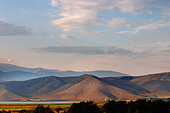
(No, the photo is not really from Austria!)
World wine consumption and wine production down in 2009
The world wide wine consumption continues to decline somewhat according to the latest statistics for 2009 from OIV (Organisation Internationale de la Vigne et du Vin). Consumption decreased with almost 3% to reach 237 million hl. Wine production declined too and reached 265 Mhl.
Monday, May 03, 2010
Austrian wine export surges
Austrian wine export for 2009 went much better than expected in 2009. Export sales was up by 5.3% in volume and 16% in value compared to 2008. Total exports reached 70 million litres, worth 119 M euro. The biggest export markets were Germany (+15% in volume, +9% in value), and Switzerland/Lichtenstein (+27% / +6%). Other important export market successes were the Netherlands (+30% / +27%), Sweden (+51% / +38% !), and Japan (+33 % / +10 %). The numbers are all the more impressive as total exports from Austria declined with 20%. www.winesfromaustria.com (Illustration: AWMB)
Art and wine: Mouton-Rothschild and Taittinger
100 wine videos on BKWine TV
We have published our 100th wine video on BKWine TV. We celebrated that with a press release that explains what it is and a bit about the background. Here it is:
“BKWine recently published its one hundredth wine vide on BKWine TV. BKWine TV is a YouTube video channel with interviews with winemakers and reportage from wineries and vineyards across the world. The latest video is an interview with South Africa’s first black woman winemaker. All videos are available here: http://www.youtube.com/bkwine
BKWine TV is the video channel of BKWine, the Paris based wine journalism, wine travel and wine photography organisation run by the originally Swedish couple Britt and Per Karlsson.
All videos are recorded and produced by Per Karlsson, BKWine co-founder, who explains the background: “It all started as a fun experiment 2 years ago. We travel around quite a lot for our wine tour business and for our journalism – we visit more than 200 wineries every year – and a friend said to us: ‘Why don’t you do some videos with the winemakers and from the vineyards?’ So I borrowed a video camera and started to do some videos. It has proved to be tremendously popular with more than a hundred thousand online views.” The technology is very simple: just one person with a camera and a microphone talking to the interviewees.
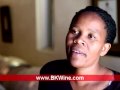
Most videos are winemaker interviews, explaining their way of making wine, or reportage from vineyards and wine regions. The latest video is an interview with South Africa’s first black woman winemaker, Ntsiki Biyela of the Stellekaya winery in Stellenbosch made recently on a BKWine tour of South Africa. Other recent videos include an interview with Jon Bowen, an English winemaker in the south of France, Charles Metcalfe, a well known British wine writer who talks about modern trends in Portugal, the marketing director for Amorim, Carlos de Jesus, who explains why natural cork is the best bottle closure, and a mini-series with winemakers from the Douro valley. Other notable videos include the chief winemaker at Château d’Yquem, the president and vice-president of CIVB (the Bordeaux producers’ organisation), and a presentation of the new champagne closure “Maestro” that has since been forbidden. But the most popular video is on how to make a wine barrel! Most videos are in English (marked [E]) but some are in French or Swedish (marked [F] or [S]).
Per explains about the purpose with the videos: “It’s a way of sharing our experiences and our travel with wine enthusiasts across the world. We really want to let the winemakers talk, to explain what they try to do and why – it’s not us talking about what we drink. We want to give people an insight into what the real wine people do and think and share with the online social networking community for wine. We’re not really trying to make a slick professional style programming; we don’t have the resources for that. Rather, we try to tell an interesting story. It seems to work quite well. BKWine TV has more than 150,000 video views. We’re also proud that we have more ‘channel views’ than the Wine Spectator, but they have of course more ‘upload views’. But we’re not competing in any way; the more people who do wine videos the better it is for the wine lovers of the world.”
BKWine TV is regularly updated with new contents. There is for example a series of more South African video interviews coming, following BKWine’s recent wine tour of the country. All videos are available on YouTube on http://www.youtube.com/bkwine, and are also published on the BKWine blog: http://bkwineblog.blogspot.com/.
“BKWine recently published its one hundredth wine vide on BKWine TV. BKWine TV is a YouTube video channel with interviews with winemakers and reportage from wineries and vineyards across the world. The latest video is an interview with South Africa’s first black woman winemaker. All videos are available here: http://www.youtube.com/bkwine
BKWine TV is the video channel of BKWine, the Paris based wine journalism, wine travel and wine photography organisation run by the originally Swedish couple Britt and Per Karlsson.
All videos are recorded and produced by Per Karlsson, BKWine co-founder, who explains the background: “It all started as a fun experiment 2 years ago. We travel around quite a lot for our wine tour business and for our journalism – we visit more than 200 wineries every year – and a friend said to us: ‘Why don’t you do some videos with the winemakers and from the vineyards?’ So I borrowed a video camera and started to do some videos. It has proved to be tremendously popular with more than a hundred thousand online views.” The technology is very simple: just one person with a camera and a microphone talking to the interviewees.
Most videos are winemaker interviews, explaining their way of making wine, or reportage from vineyards and wine regions. The latest video is an interview with South Africa’s first black woman winemaker, Ntsiki Biyela of the Stellekaya winery in Stellenbosch made recently on a BKWine tour of South Africa. Other recent videos include an interview with Jon Bowen, an English winemaker in the south of France, Charles Metcalfe, a well known British wine writer who talks about modern trends in Portugal, the marketing director for Amorim, Carlos de Jesus, who explains why natural cork is the best bottle closure, and a mini-series with winemakers from the Douro valley. Other notable videos include the chief winemaker at Château d’Yquem, the president and vice-president of CIVB (the Bordeaux producers’ organisation), and a presentation of the new champagne closure “Maestro” that has since been forbidden. But the most popular video is on how to make a wine barrel! Most videos are in English (marked [E]) but some are in French or Swedish (marked [F] or [S]).
Per explains about the purpose with the videos: “It’s a way of sharing our experiences and our travel with wine enthusiasts across the world. We really want to let the winemakers talk, to explain what they try to do and why – it’s not us talking about what we drink. We want to give people an insight into what the real wine people do and think and share with the online social networking community for wine. We’re not really trying to make a slick professional style programming; we don’t have the resources for that. Rather, we try to tell an interesting story. It seems to work quite well. BKWine TV has more than 150,000 video views. We’re also proud that we have more ‘channel views’ than the Wine Spectator, but they have of course more ‘upload views’. But we’re not competing in any way; the more people who do wine videos the better it is for the wine lovers of the world.”BKWine TV is regularly updated with new contents. There is for example a series of more South African video interviews coming, following BKWine’s recent wine tour of the country. All videos are available on YouTube on http://www.youtube.com/bkwine, and are also published on the BKWine blog: http://bkwineblog.blogspot.com/.
Sunday, May 02, 2010
Wine of the Month - turned to vinegar!!
This month’s ….balsamic vinegar by Åsa:
”Extravecchio” from Villa San Donnino, Modena, Emilia Romagna
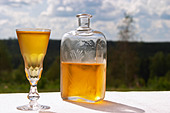
It is hard to believe that so much taste can come from a single small drop. The balsamic vinegar from Villa San Donnino is syrupy and it has been aged for more than 25 years. It would almost be sufficient with half a drop to fill the mouth with warm, full flavours and the refreshing acidity on the finish that makes the taste linger for a long time. It is dark brown with some red tinges. the price is high, if you only look at the price tag. But if you look at the work that’s gone into creating it, and the taste of the result, it’s worth every cent. This is a real taste experience and if you are look for aromas the balsamic vinegar from Villa San Donnino is a hot tip. A suggestion is to put a drop on a matured chunk of parmesan cheese or on a grilled piece of meat just before serving. Can also be used for deserts – ice-cream or strawberries for example. Price for 100 ml: 80 euro. www.villasandonnino.it
”Extravecchio” from Villa San Donnino, Modena, Emilia Romagna
BKWine Pick: Domaine du Vissoux, Beaujolais
Domaine du Vissoux, Beaujolais
Preconceived ideas are not uncommon when people talk about Beaujolais. Those who automatically think of beaujolais as a ‘petit vin’ they should try Pierre-Marie Chermette’s wines from Domaine du Vissoux. Pierre-Marie has 30 ha, 10 of which are Beaujolais “cru” (from one of the top villages). He is based in the southern part of the appellation but his vineyards are a bit everywhere. This means that he has several different soil types, which he points out when you talk to him (and he can also show you different types of stones to prove the point). Terroir is important for Pierre-Marie. His wines definitely taste like Beaujolais but there is nothing of the banana-flavours that you can find in some of the wines. Instead you have fresh fruit with raspberries and a high and refreshing acidity. His Fleurie has a touch of flowers and minerality, the Moulin-à-Vent has more of lingon-berries (airelles), blueberries and cranberry. One of our great favourites in the Beaujolais.
Click here for address and more recommendations.
-
Bourgogne Beaujolais Domaine Vissoux Chermette - stock photo samples - Images by Per Karlsson
Click here for address and more recommendations.
-
Bourgogne Beaujolais Domaine Vissoux Chermette - stock photo samples - Images by Per Karlsson
BKWine Pick: Domaine des Amouriers, Vacqueyras
Domaine des Amouriers, Vacqueyras
There are several interesting producer in Vacqueyras in the southern Rhône Valley. One of them is Domaine des Amouriers. Patrick Gras and Igor Chudzikiewicz work on 25 ha of vineyards. 10 ha is in the Vacqueyras appelation, one ha is Côtes du Rhône and the rest is Vin de Pays (or now IGP). But even the humble vin de pays is ambitious, they keep the yields down to a very reasonable 50 to 55 hl/ha. “Our 25 ha are spread out over 34 different plots, which gives us more work but also more complexity in the wines”, explains Igor. They cultivate the vineyards more or less according to organic principles, “we use almost exclusively copper and sulphur”, says Patrick. Harvest is manual and they do very little to the must in the cellar. The result is some very well made, fruity wines with a good acidity, a personal style and frequently a touch of ‘garrigue’ (the wild herbs growing in the region). Our favourites are Vacqueyras Signature and Vacqueyras Genestes.
Click here for address and more recommendations.
Welcome to the BKWine Brief nr 81, April 2010
If everything goes as planned we will be sitting on the plane to Sicily (or already have arrived) when you read this. The latest reports are saying that the flights will leave as normal tomorrow. We are participating in the jury panel in the Concours Mondial that this year takes place in Palermo. The Concours Mondial is one of the world’s biggest wine competition with some 5000 wines competing for medals. (By the way, the two of us are the only jurors coming from Sweden.) Since we’re going to Sicily, we will also take the occasion to spend a few days exploring the wine regions and wine producers of the island (send us an email or an sms if you have any good suggestions for winery visits!). We seldom have the occasion to taste Sicilian wines so it will be interesting. We’ve certainly tasted a few interesting examples. So in time you will read more about it here. but perhaps we should feel a bit apprehensive. Sicily too, is well known for its volcanic activity…
This time of the year there is always a lot of buzz around Bordeaux. It’s “primeur season”, not only for the asparagus. At the beginning of April all the Big chateaux in Bordeaux present last year’s wines to buyers and to journalists – the so called “primeurs circus” – when thousands of people descend on Bordeaux to taste the new (only half-finished) wines. (There has also been some other buzz around Bordeaux recently: when last year’s sales figures were published they showed a dramatic drop in sales for most markets, only partially dampened by a huge increase in Chinese wine drinkers. Read more about that below.)
So this is the season when the merits of the Bordeaux 2009s are discussed. Actually, it’s a discussion with only a limited interest. 2009 was a very good year, or a fantastic year, so the wines will be very good, unless you have tried very hard to make bad wine. We can only confirm that (as can the small group of wine enthusiasts that we showed around Bordeaux last week) after having tasted a few of the wines from last year.
What will be more interesting is what will happen next. The next major step is when the chateaux “show their hands” and announce the release prices, i.e. how much money they want for the wines. With a back-drop of financial crisis and market demand that have fallen with 15-40% (depending on the market) it will be interesting to see where the prices land. Sharp drops in prices, due to falling demand? Or stiff price increases thanks to the very good quality? Or something else? One producer we talked to said “we have to be very reasonable and moderate; I think there will be a price increase of around 10-15%”. In most industries they would probably consider themselves very fortunate if they could say that an annual price increase of 10-15% was moderate and reasonable… It will be interesting to follow.
Britt & Per
PS: Recommend to your friends to read the Brief or forward it to them ! More on wine:
Guest writers on BKWine.com
Wine videos: BKWine TV
Wine photography
Read all of the new Brief here!
This time of the year there is always a lot of buzz around Bordeaux. It’s “primeur season”, not only for the asparagus. At the beginning of April all the Big chateaux in Bordeaux present last year’s wines to buyers and to journalists – the so called “primeurs circus” – when thousands of people descend on Bordeaux to taste the new (only half-finished) wines. (There has also been some other buzz around Bordeaux recently: when last year’s sales figures were published they showed a dramatic drop in sales for most markets, only partially dampened by a huge increase in Chinese wine drinkers. Read more about that below.)
So this is the season when the merits of the Bordeaux 2009s are discussed. Actually, it’s a discussion with only a limited interest. 2009 was a very good year, or a fantastic year, so the wines will be very good, unless you have tried very hard to make bad wine. We can only confirm that (as can the small group of wine enthusiasts that we showed around Bordeaux last week) after having tasted a few of the wines from last year.
What will be more interesting is what will happen next. The next major step is when the chateaux “show their hands” and announce the release prices, i.e. how much money they want for the wines. With a back-drop of financial crisis and market demand that have fallen with 15-40% (depending on the market) it will be interesting to see where the prices land. Sharp drops in prices, due to falling demand? Or stiff price increases thanks to the very good quality? Or something else? One producer we talked to said “we have to be very reasonable and moderate; I think there will be a price increase of around 10-15%”. In most industries they would probably consider themselves very fortunate if they could say that an annual price increase of 10-15% was moderate and reasonable… It will be interesting to follow.
Britt & Per
PS: Recommend to your friends to read the Brief or forward it to them ! More on wine:
Guest writers on BKWine.com
Wine videos: BKWine TV
Wine photography Read all of the new Brief here!