Monday, November 30, 2009
BKWine TV: [E] European Wine Bloggers Conference 09. How was it for you? (Full version)
Interviews with a handful of participants at the European Wine Bloggers Conference ( #EWBC ) that took place in Lisbon, Portugal, in October/November 2009.
What did you think about the conference? How was it for you?:
Featuring:
Miss Vicky Wine (Anne-Victoire Monrozier): http://www.missvickywine.blogspot.com/
Justin Roberts on sherry: http://jerezwine.com/
Maria da Assuncao Foy: http://terruswine.blogspot.com/
Julia Sevenich: http://www.julia7ich.com/
Daniele del Gesso http://www.wineontherocks.com/
aka Finkus Bripp: http://www.finkusbripp.com/
Brett Jones: http://thewinemaestro.co.uk/
Gwendolyn Alley: http://artpredator.wordpress.com/
and also http://winepredator.wordpress.com/
(Sonadora: http://wannabewino.com/, who could not come)
Emidio Santos: http://www.adegga.com/
Rachel Black: http://rachelblack.ca/
and http://twitter.com/Nebbiolata
João Rico: http://www.pumadas.blogspot.com/
Nico James: http://iamvino.com/
and http://www.nicojames.es/
and http://www.vinomotion.com/
More on the EWBC here: http://winebloggersconference.org/europe, the European meeting place for wine bloggers and anyone interested in blogging, wine, social media, networking, twitter, facebook, etc etc.
By BKWine, http://www.bkwine.com
See all our wine videos on our BKWine TV channel: http://www.youtube.com/bkwine
BKWine TV: [E] (Short) European Wine Bloggers Conference 09. How was it for you?
Interviews with a handful of participants at the European Wine Bloggers Conference ( #EWBC ) that took place in Lisbon, Portugal, in October/November 2009.
What did you think about the conference? How was it for you?:
THIS IS JUST THE INTRO. WATCH THE FULL VIDEO IF YOU'RE CURIOUS ABOUT THE #EWBC. (coming soon)
More on the EWBC here: http://winebloggersconference.org/europe, the European meeting place for wine bloggers and anyone interested in blogging, wine, social media, networking, twitter, facebook, etc etc.
By BKWine, http://www.bkwine.com
See all our wine videos on our BKWine TV channel: http://www.youtube.com/bkwine
Rosé port
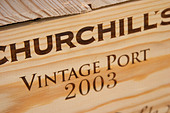 There’s a new category of port wine: rosé. The Port Wine Institute (IDVP) has approved rosé port as a denomination. Already last year Croft launched a rosé port: Croft Pink. Formally, it has been considered a very lightly coloured ruby but now it has its own category. Apart from Croft’s there has not been many rosé ports available, except an own label brand in some British super markets. The rosé must by made by the saignée method, i.e. a short maceration on the skins before the lightly coloured grape juice is separated from the skinks. In other words, it is not allowed to make it by blending red and white, as is allowed in Champagne but in few other European wine districts. We have not tasted it but reports indicate that we have not missed a great deal
Antinori makes wine in Romania
“[Romaina] has all the right ingredients to produce great wines: perfect climate, very good exposure, great terroirs.” Piero Antinori says to Decanter. He has just launched his first Romanian wine, Cantus Primus 2007, made in a joint venture with British wine importer Halewood International. The wine will retail for around €8-9. The vineyards will in time cover 106 ha. More info: www.decanter.com
Wednesday, November 25, 2009
Parsed wine
 Are you looking for a nice gift to give to your enemy? Perhaps one of the strange decanters made by the artist Etienne Meneau can fit the bill? The shape of the decanters is reminiscent of the root system of a vine (or an upside down tree). Each can contain one normal bottle of wine. The price is a little bit over 2000 euro. On the site there is an instruction on how to use them: “after a short training you can perfectly pour wine in a glass without any drop anywhere”. To your enemy? Can you imagine washing it! http://the-strange-decanter.blogspot.com/
Tuesday, November 24, 2009
Box bar?
 Can you make BiBs trendy? The first “pop up bar” is what they call it. The wine importer Philipson Söderberg has launched a wine bar dedicated to the “celebration of bag-in-box wines” in the centre of Stockholm. They will mainly (only?) be serving Fleur du Cap wine from plastic bags in cartons. It sounds about as inspired as if you launched a restaurant proclaiming to use only frozen raw materials – nothing fresh – in the cooking. Or if you organised a concert and only provided a transistor radio as a loudspeaker. Bizarre. Some kind of inverted snobbism? http://boxbar.se/ (Trivia: more than 50% of all wine sold in the monopoly wine shops in Sweden is sold in bag-in-box.)
White wine is dangerous for your teeth
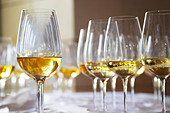 The high acidity found in most white wines can damage your teeth, according to a report in Nutrition Research. The acidity in the wine attacks the calcium and erodes the enamel. If you eat e.g. cheese with the wine the effect may be lessened. This is perhaps not big news. Have you ever been to a tasting of a large number of Alsace wines or Champagnes you may have noticed the unpleasant feeling in the teeth afterwards. To avoid sever damages one should avoid brushing the teeth after drinking or tasting the wines, it is suggested. Good advice, we think, that our dentist agrees with. Last time we were there she recommended a new type of tooth paste (called Pro-émail) that supposedly helps rebuild the enamel. news.bbc.co.uk
Monday, November 23, 2009
Mechanical harvest at Isole e Olena, Tuscany
http://www.bkwine.com/wine_tours/wine_tours.htm --- Harvest at Isole e Olena winery in Chianti, Tuscany. Harvesting the grapes with a tractor - mechanical harvest machine.
You can see the ripe grape bunches in the vineyard before harvest and the naked grape stems that remain after the harvester has passed.
In the vineyard in Chianti, Tuscany, Italy.
-
Machine a vendanger pour les vendanges chez le vignoble Isole e Olena a Toscane en Italie.
-
By BKWine, http://www.bkwine.com
See all our wine videos on our BKWine TV channel: http://www.youtube.com/bkwine
Amazon.com closes down it’s wine shop
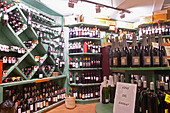 It was big new in ecommerce when Amazon.com decided to launch a wine shop. but even before the shop has started they have decided to close down the wine sale project at Amazon. We haven’t seen an official explanation for it, but industry observers think that it has to do with logistical and regulatory difficulties. In the USA it is very complicated to sell wines from one state to another. There are many rules and regulations (and different ones in each state) that stipulates how it must be done, sometimes requiring impossible logistics or other restrictive requirements. Unfortunately, since this severely restricts the choice of wine for consumers in many states. The system was created after the prohibition and remains largely in place. It is of course defended by many of the established players, whose positions are protected by it. www.winebusiness.com
Tuesday, November 17, 2009
The (new) ultimate wine site for everything? Findawine.com
There are a surprising amount of people who think that there is money to be made from online wine sites. Some are wine lovers, some of business people, and some try and be both. FindAWine.com probably falls into the latter category.
Founded by two young French business school graduates, it’s been in the works for almost three years. Finally, it’s now launched. And you can try it here: FindAWine.com.
If you want to find where to buy a wine you can use Findawine (just like Twenga, PriceRunner, Kelkoo, or Wine-Searcher). If you want to store your tasting notes and manage your cellar, you can do it (just like Snooth or Adegga for example). If you want to find the best wine and food match the have an artificial intelligence engine to help you. If you want to read up on wine knowledge, they have 1000+ pages with wine articles. If you want to read comments and tasting notes on a wine you can do it, Parker’s, Tanzer’s and other “authorities” (but it is unclear what kind of copyright rights they have to publish those notes though), or other community members. If you want to partake in a wine community you can do it (just like at Wine 2.0 or OWC for example).
And this points perhaps to the concern I have about FindAWine. It’s trying to be all things to everyone about wine. It’s as if there could be one site that answers all your questions about wine and does all you could ever want to do. And generally, that’s not how things work today on internet. Often, the specialists have an edge over the generalists.
Is this a sign of the Frenchs’ belief that there can be one true (and centrally managed) source of information (like the plans they had for a humanly managed search engine to compete with Google)?
The only way to find out if it makes sense is to try it and see if it’s useful to you. And that you can do here: FindAWine.com. Oh, and the money? Well, they intend to make the money on commissions from the online wine shops. Each time you go from a recommendation on FindAWine to a wine shop and buy a bottle they get a cut.
Oh, and in spite of the name the site is in French.
Founded by two young French business school graduates, it’s been in the works for almost three years. Finally, it’s now launched. And you can try it here: FindAWine.com.
If you want to find where to buy a wine you can use Findawine (just like Twenga, PriceRunner, Kelkoo, or Wine-Searcher). If you want to store your tasting notes and manage your cellar, you can do it (just like Snooth or Adegga for example). If you want to find the best wine and food match the have an artificial intelligence engine to help you. If you want to read up on wine knowledge, they have 1000+ pages with wine articles. If you want to read comments and tasting notes on a wine you can do it, Parker’s, Tanzer’s and other “authorities” (but it is unclear what kind of copyright rights they have to publish those notes though), or other community members. If you want to partake in a wine community you can do it (just like at Wine 2.0 or OWC for example).
And this points perhaps to the concern I have about FindAWine. It’s trying to be all things to everyone about wine. It’s as if there could be one site that answers all your questions about wine and does all you could ever want to do. And generally, that’s not how things work today on internet. Often, the specialists have an edge over the generalists.
Is this a sign of the Frenchs’ belief that there can be one true (and centrally managed) source of information (like the plans they had for a humanly managed search engine to compete with Google)?
The only way to find out if it makes sense is to try it and see if it’s useful to you. And that you can do here: FindAWine.com. Oh, and the money? Well, they intend to make the money on commissions from the online wine shops. Each time you go from a recommendation on FindAWine to a wine shop and buy a bottle they get a cut.
Oh, and in spite of the name the site is in French.
Wine of the Month
Criteria: an interesting wine (not too cheap) and one that you can enjoy with dinner or friends (not too expensive). And very good!
Åsa’s wine of the month:
Rosé du Coteau from the agricultural institute in Aosta – cheap rose with class
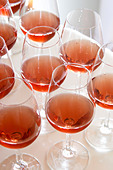 This month’s wine comes from Valle d’Aosta in northern Italy. The Rosé d’Aosta is made by the Institut Agricole Régional. They frequently experiment with various techniques in the vineyards. It is an easy-drinking rosé made from the gamay grape. The vines are planted in a vineyard at 800 m altitude on a steep slope. It goes well with starters or simpler main courses that are not too fat or heavy and not too strong flavours. It is very fresh with a hint of bitterness in the finish that avoids that it gets boring. The colour is light with some beautiful hints of brownish yellow. Excellent value for money. Approx 5 euro. www.iaraosta.it
Jack's wine of the month:
A Amarone 2006 from Alpha Zeta
It is a dark November evening, just a plain weekday, and you need some red to go with your parmesan that you just picked up at the cheese shop. The scenario requires quite a substantial red wine and the solution is at hand: Try a A Amarone 2006 from Alpha Zeta (~10€ for a half bottle). It gives you lots of fruity flavours, good concentration, quite dense, with a good long finish. It survives even the stronger cheeses. In spite of the high alcohol (15%) the wine is balanced and gives you a lot of character for a relatively modest price. You can also keep it in your cellar for a few years but it’s delicious to cheese this November!
Åsa’s wine of the month:
Rosé du Coteau from the agricultural institute in Aosta – cheap rose with class
This month’s wine comes from Valle d’Aosta in northern Italy. The Rosé d’Aosta is made by the Institut Agricole Régional. They frequently experiment with various techniques in the vineyards. It is an easy-drinking rosé made from the gamay grape. The vines are planted in a vineyard at 800 m altitude on a steep slope. It goes well with starters or simpler main courses that are not too fat or heavy and not too strong flavours. It is very fresh with a hint of bitterness in the finish that avoids that it gets boring. The colour is light with some beautiful hints of brownish yellow. Excellent value for money. Approx 5 euro. www.iaraosta.itJack's wine of the month:
A Amarone 2006 from Alpha Zeta
It is a dark November evening, just a plain weekday, and you need some red to go with your parmesan that you just picked up at the cheese shop. The scenario requires quite a substantial red wine and the solution is at hand: Try a A Amarone 2006 from Alpha Zeta (~10€ for a half bottle). It gives you lots of fruity flavours, good concentration, quite dense, with a good long finish. It survives even the stronger cheeses. In spite of the high alcohol (15%) the wine is balanced and gives you a lot of character for a relatively modest price. You can also keep it in your cellar for a few years but it’s delicious to cheese this November!
BKWine Pick: Au Vieux Comptoir, Bar à vins – Restaurant, Paris 1
Au Vieux Comptoir, Bar à vins – Restaurant, Paris 1
A popular restaurant on a side street to the busy rue Rivoli. Nice atmosphere and very friendly and helpful staff (well worth underlining!). At lunch time you can have Today’s Special for 14€, traditional French cooking, e.g. a ‘hachis parmentier’ (a gratin of mashed potatoes with minced meat), excellent to try in winter when you need to warm up. If you like beef you should try their tempting côtes de boeuf, a giant ‘beef chop’ from cows of the Maine Anjou race (but you should be two persons sharing – it weighs in at 1.4 kilos!) with sauce béarnaise. Or try the excellent charcuteries from Alsace, the Jura of the Basque countries, the veal from Corrèze or the scallops. All is made from prime raw material. They have an interesting wine list with, unusually, many wines served by the glass. A bistro one will come back to!
Click here for address and more recommendations.
A popular restaurant on a side street to the busy rue Rivoli. Nice atmosphere and very friendly and helpful staff (well worth underlining!). At lunch time you can have Today’s Special for 14€, traditional French cooking, e.g. a ‘hachis parmentier’ (a gratin of mashed potatoes with minced meat), excellent to try in winter when you need to warm up. If you like beef you should try their tempting côtes de boeuf, a giant ‘beef chop’ from cows of the Maine Anjou race (but you should be two persons sharing – it weighs in at 1.4 kilos!) with sauce béarnaise. Or try the excellent charcuteries from Alsace, the Jura of the Basque countries, the veal from Corrèze or the scallops. All is made from prime raw material. They have an interesting wine list with, unusually, many wines served by the glass. A bistro one will come back to!
Click here for address and more recommendations.
Monday, November 16, 2009
BKWine Pick: Restaurant Cap Sud, Tours
Restaurant Cap Sud, Tours
A charming little restaurant in the heart of Tours in the Loire valley, located between the Cathedral and the Vieux Tours. Open Tuesdays to Saturdays. In short: very high ambitions and moderate prices! It’s an innovative cuisine, with inspired presentations of the dishes. The emphasis is on southern French raw materials and products, lots of shell fish and vegetables. At lunch time you can get a three course menu for around 15 euro, in the evening they have a “small” menu (not on Sat) for just under 20€, and one for 38€. The wine list offers a range of wines from all over France, starting at 20€. They have several interesting Vouvrays on the list.
Click here for address and more recommendations.
A charming little restaurant in the heart of Tours in the Loire valley, located between the Cathedral and the Vieux Tours. Open Tuesdays to Saturdays. In short: very high ambitions and moderate prices! It’s an innovative cuisine, with inspired presentations of the dishes. The emphasis is on southern French raw materials and products, lots of shell fish and vegetables. At lunch time you can get a three course menu for around 15 euro, in the evening they have a “small” menu (not on Sat) for just under 20€, and one for 38€. The wine list offers a range of wines from all over France, starting at 20€. They have several interesting Vouvrays on the list.
Click here for address and more recommendations.
BKWine Pick: Domaine Marronniers, Chablis
Domaine Marronniers, Chablis
 We find Domaine Marronniers in the small village of Préhy, a short drive from Chablis itself. There Bernard Legland and his wife welcome you for a wine tasting of a range of Chablis wines. The domaine has some 20 ha of vineyards: petit Chablis, Chablis, and Chablis premier cru. Bernard is fond of the crispy, clean style of Chablis so none of his wines are aged in oak. “Why would we want to hide what we get from our soil?” he asks. In his view, Chablis has a unique soil, that makes Chablis a true vin de terroir, with a steeliness and minerality that resembles no other. If you don’t believe him, try his very drinkable, crispy Petit Chablis 2008 (6.5€ at the cellar door) or the Chablis 2007 with very refreshing aromas of citrus fruit and a nice minerality. Very good. If you are looking for something a bit more complex you can try the 1er Cru Montmains 2007 (11.50€), still a bit reserved but with very good development potential. Or a Chablis Vieilles Vignes 2005 (9€) already with a bit of maturity and a nice, honeyed character.
Click here for address and more recommendations.
We find Domaine Marronniers in the small village of Préhy, a short drive from Chablis itself. There Bernard Legland and his wife welcome you for a wine tasting of a range of Chablis wines. The domaine has some 20 ha of vineyards: petit Chablis, Chablis, and Chablis premier cru. Bernard is fond of the crispy, clean style of Chablis so none of his wines are aged in oak. “Why would we want to hide what we get from our soil?” he asks. In his view, Chablis has a unique soil, that makes Chablis a true vin de terroir, with a steeliness and minerality that resembles no other. If you don’t believe him, try his very drinkable, crispy Petit Chablis 2008 (6.5€ at the cellar door) or the Chablis 2007 with very refreshing aromas of citrus fruit and a nice minerality. Very good. If you are looking for something a bit more complex you can try the 1er Cru Montmains 2007 (11.50€), still a bit reserved but with very good development potential. Or a Chablis Vieilles Vignes 2005 (9€) already with a bit of maturity and a nice, honeyed character.Click here for address and more recommendations.
BKWine Pick: Domaine Monplezy, Pezenas, Languedoc
Domaine Monplezy, Pezenas, Languedoc
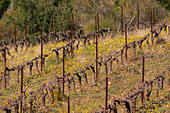 They make Vin de Pays des Cotes de Thongue, one of the better known vin de pays denominations in the Languedoc. Grapes are mainly syrah, grenache, carignan, cinsault, merlot, roussanne and marsanne. They have 22 ha of vineyards with not very fertile soil (which is of course good for the quality of the wine). It is beautifully located, surrounded by the typical Languedoc garrigue with it aromatic herbs. The Languedoc flag flutters in the wind in the yard and the wines have a very definite Languedoc character. Good fruit and generous wines. Try for instance the cuvée Felicité that they harvest by hand, made from carignan, grenache and syrah. It gets a short aging in oak barrels. Spicy aromas mixed with some liquorice and freshly roast coffee. Perfect with a roast leg of lamb or grilled lamb chops!
Click here for address and more recommendations.
They make Vin de Pays des Cotes de Thongue, one of the better known vin de pays denominations in the Languedoc. Grapes are mainly syrah, grenache, carignan, cinsault, merlot, roussanne and marsanne. They have 22 ha of vineyards with not very fertile soil (which is of course good for the quality of the wine). It is beautifully located, surrounded by the typical Languedoc garrigue with it aromatic herbs. The Languedoc flag flutters in the wind in the yard and the wines have a very definite Languedoc character. Good fruit and generous wines. Try for instance the cuvée Felicité that they harvest by hand, made from carignan, grenache and syrah. It gets a short aging in oak barrels. Spicy aromas mixed with some liquorice and freshly roast coffee. Perfect with a roast leg of lamb or grilled lamb chops!Click here for address and more recommendations.
Sunday, November 15, 2009
BKWine Brief #76 is out!
 It’s done. The book is on its way from the printer’s. We haven’t seen it yet but will soon. We’re very excited. On Thursday November 19 we will have a launch event in Stockholm, so if you happen to be there you are of course welcome: Restaurant Fellini, Riddargatan 21, 16.00-18.30. (A copy of the invitation can be found here.) And if you can’t free up your time so early in the evening we will be at the Prime Wine Bar on Östermalmstorg from 19.30.
The book tells the story of how a wine is made. It’s aimed at the wine enthusiast but can also be used as a wine course book. It’s quite unusual in that it goes into details of vine growing and winemaking – but with a text aimed at the wine lover.
The story in the book evolves around two themes: First, our innumerable conversations with winemakers, interviews, vineyard visits (we visit some 200-300 vineyards each year), wine shows etc. They are to a great extent the ones who tell the story in the book, explaining what they do and why. Secondly, we show that there are rarely any absolute truths. There are always different sides to an argument. If one winemaker says that you should absolutely have stainless steel fermentation tanks to make good wines, his neighbour will be convinced concrete is the best. The same goes for closures, oak, filtering, planting density etc etc. And both are generally right and make good wines. The interesting thing then is why you do this or that. And we explain, or let them explain, that in the book.
The book has two sections: The first half is dedicated to the vineyard: planting, vines and grape varieties, training and pruning methods, soil, climate, illnesses, manual vs. mechanical harvest etc. We also try and get to grips with this thing “terroir”. The vineyard section ends with an explanation of organic wine growing and biodynamic wines (issues that are often misunderstood!). We try and explain it in a practical, down to earth way.
The second half talks about the work in the wine cellar: The importance of sorting (and how you do it), crushing, pressing, fermentation is looked at in detail, as is the ‘upbringing’ of the wine (élevage) and the aging, the influence of oak, assemblage (blending), fining and filtering (should you or should you not?) etc. We look at what various substances you can add in the winemaking to control and influence the result. Closures have a chapter of their own (another subject that is often misunderstood): natural cork, plastic cork, screw caps, etc, as does ‘special’ vinifications: sweet wine and sparkling wines. Finally we look at defects and problems, e.g. corked wine and reduction, and what types of wine you should cellar and age.
One day we hope to have it published in English! (Currently it is in Swedish only.)
There’s been an some interesting discussions on the internet recently about drinking.
One has been with a Swedish food writer who wrote a blog post about the charms of getting drunk. We find it a bit difficult to understand that attitude. If even adults, presumable responsible people, think that the primary reason to drink wine (or other alcoholic beverages) is because you get drunk or more or less inebriated, then how can you expect youngsters to develop an intelligent and responsible attitude to drinking? We voiced our opinions in a comment to her blog post but it seems we did not get much support for our views. (If you read Swedish you can read more here)
Another discussion on the internet has been about children and wine, primarily from an American perspective. Some writers have compared the American attitude to the “wise” European view that making wine a taboo subject for children is not the best way of giving them a sense of what it is and a sense of responsibility. Perhaps it is better to let the children wet their finger in the wine and taste it, and learn what it is about (part of the gastronomy around the family dinner table) rather than hiding the issues of alcohol behind a wall and making it into a so-much-more-desirable forbidden fruit? It seems the authors of the blog post have not understood how things work in Sweden (or in the UK?), or perhaps those countries are not considered part of Europe. Read more below.
And also, the latest publicity campaign from the Swedish retail monopoly underlines that Swedes are only half a step away from when we were savages and rampaging and pillaging Vikings. They have taken out double spread ads in the main daily paper proclaiming “We invented the World’s smartest way of selling alcohol”! Who said Swedes were a humble and self-effacing people? Read more below.
Wine bloggers
We’re just back from the European Wine Bloggers Conference (#EWBC in twitter-speak). It was a great event and very interesting. Wine bloggers comes in all flavours, shapes and sizes! It was an unlikely mix of people. But whatever kind of people they are they are terribly nice fellas! the conference agenda covered lots of things: wine tourism, 1-0-1- of wine blogging, how to video blog, how to monetise blogging (BKWine was on the panel of that one) and much much, more. But more important than the sessions were all the people you met, talked with and discussed with. And there were an awful lot of excellent Portuguese wines to taste too! Something to put on your agenda for next year if you are a wine blogger!
Samples and freebies
Another big discussion on the interent (and originally on the European Wine Bloggers Conference, #EWBC) was on wine samples and freebies. Should wine bloggers accept free samples from importers or wine producers? Is it acceptable to take samples? Should one always specify in the blog articles that the reviewed wines have been received as samples? Interesting questions. But not necessarily limited to wine bloggers. Read more about it further down.
Britt & Per
PS: Recommend to your friends to read the Brief or forward it to them !
More on wine:
Read all of the BKWine Brief here!


Saturday, November 14, 2009
”The world’s smartest way to sell alcohol”
 Usually, this is a story that would only appear in the Swedish edition of the BKWine Brief but this is so outrageous so we have to share it with everyone.
In a recent issue of one of the biggest daily paper the Swedish monopoly retailer of wine and spirits, Systembolaget, run a two page as. No, it was not to sell some good wines. It was to proclaim that they are the world’s best retailer and that the Swedish people should be happy that they have a monopoly market. Because otherwise we would all be alcoholics. So this is a monopoly (Systembolaget, a state owned company) that spends about 2.5 million euro each year, according to their previous CEO, on “marketing”. And marketing in their view is to tell people
a) Systembolaget is the world’s best retailer,
b) Sweden has one of the world’s best selections of wines and spirits (a bit short of 2000 items;. Berry Brothers, alone, in London has some 4000 items. Can you follow the logic? No, we neither. Some years ago they hired Jancis Robinson to do a study of their range. No, I don't know what Jancis' conclusion was. The report is secret and classified information and the monopoly has declined to share it with us),
c) without the monopoly all Swedes would drown in misery, we would have 1,600 more deaths each year, 14,000 more wife beatings and 16 million more sick leave days.
We’re not joking.

This is exactly what they say in the ad. That’s based on what they call a “scientific research report”. That report is the creation of a dozen or so alcohol and drug researchers, led by Harold Holder of Berkley, California, who sat down around a table and started guessing: “So how much do we think that alcohol consumption will increase if they start selling it in grocery stores. Oh, I’d say perhaps 30% more or so… What do you think?” Scientific report, yes indeed.
They also claim that John D Rockefeller sponsored a major study to see what model for alcohol sales was best and that it concluded that “the Swedish model” was the best. That when prohibition was over many US states introduced alcohol monopolies and most of those are still in existence (that’s very typical for the deceitful facts they use: “many states” introduced monopolies and “most of those” still exist).
Some years ago there was a study that considered that it was a peril to democracy when government agencies (or government controlled companies such as the Systembolaget monopoly) took on the role of propagandists.
It is the role of the people to decide the polices and for the state to execute them. Not the other way around. The Systembolaget ignores it of course. In Sweden the Systembolaget alcohol monopoly spends 2.5 million euros a year on forming public opinion. No wonder people think they’re great.
What do you think?
If you read Swedish, here's a bit more information:
"Utvecklingen av alkohol- och tobaksbruk i Sverige"
"Vi är bäst i världen! Hurra vad vi är bra!" - Systembolaget
"Systembolaget vinner pris för varumärkeskampanj"
And we might add that the ambition of the Swedish monopoly and the Swedish anti-alcohol lobby is to lobby the EU administration to introduce more "Swedish style" regulations across Europe, as can be seen by e.g. their international Dear Mr Barroso campaign, albeit most of their lobbing is done behind the scenes.
Free samples and free tastings - this thing with disclosure
One of the discussions that came up on the recent European Wine Bloggers Conference (#EWBC) was about free wine samples: should bloggers accept free tasting samples from importers or wine producers? It was debated in all directions. Some said that wine bloggers should not accept samples. Others meant that it was OK to accept samples provided you made ‘full disclosure’ (“this wine tastes excellent, and btw I’ve had it as a free sample”…). We don’t agree.
For us, this is rather simple:
1) wine bloggers (and we considers ourselves as such) are no different than others who write about wine in e.g. printed media,
2) it is impossible to write professionally (or on a certain level, even if not professionally) about wine without accepting various kinds of freebies,
3) what counts is the writer’s ethics and personal integrity and stringency.
Conclusion: wine bloggers (like other writers) can, or should, accept free samples and there is no need to ‘disclose’ that certain wines have been received as free samples.
 If you write positively about a wine just because you have received it as a sample (perhaps in the hope of getting more?) you will with time loose your credibility as a critic and commentator.
To have a disclosure policy or at every occasion specify that this is based on a free sample is futile. What is the reader supposed to think? “Ah, this comment is based on a free sample so I don’t think it’s quite neutral and not as accurate as this critic’s usual comments”?
Either you have a good writer’s ethic and then disclosure does not make any difference, or you are a weak soul and corrupt (unduly kind to samples) and then it won’t make any difference to do ‘disclosure’ either.
Compare it to e.g. sports journalists or music critics who write in papers – should they specify in their articles that “I have had a free ticket to this event”? No, we don’t think so. Everyone takes it for granted. (In the US the FTC, Federal Trade Commission, recently published a recommendation that bloggers should be obliged to give disclosure for samples, and other freebies. The strange thing with this is that the FTC does not require the same kind of disclosure from the printed press. Incomprehensible.)
In other words: dear wine producers and wine importers, do send us samples, or invite us to tastings and other such things! In reality, with full disclosure, we receive very few wine samples (but a bit more often go to press lunches or tastings). If we like the wine we taste we will write a good review. If we don’t like it we will not review it or perhaps write something a bit critical.
Does this mean that we may be influenced by marketing efforts? Yes, of course but there’s nothing negative in that. If we do get a sample we are more likely to taste the wine and write about it (if we like it) than if we don’t receive a sample, which means we’re influenced by the marketing. Is it a problem? No, we don’t think so, as long as we are honest with our writing and don’t write up things positively just because we’ve had a freebie.
Actually, I very much doubt that any serious wine writer (or other journalist) can honestly claim to have a “no freebies” policy. One who never accepts samples. Never goes to free wine tastings. Never accept lunch invitations. Never travel to vineyards on paid expenses or accepts tasting samples at wineries, etc. I don’t think such a writer exists.
Read on:
So, what do you think? Vote or write a comment!
For us, this is rather simple:
1) wine bloggers (and we considers ourselves as such) are no different than others who write about wine in e.g. printed media,
2) it is impossible to write professionally (or on a certain level, even if not professionally) about wine without accepting various kinds of freebies,
3) what counts is the writer’s ethics and personal integrity and stringency.
Conclusion: wine bloggers (like other writers) can, or should, accept free samples and there is no need to ‘disclose’ that certain wines have been received as free samples.
If you write positively about a wine just because you have received it as a sample (perhaps in the hope of getting more?) you will with time loose your credibility as a critic and commentator.To have a disclosure policy or at every occasion specify that this is based on a free sample is futile. What is the reader supposed to think? “Ah, this comment is based on a free sample so I don’t think it’s quite neutral and not as accurate as this critic’s usual comments”?
Either you have a good writer’s ethic and then disclosure does not make any difference, or you are a weak soul and corrupt (unduly kind to samples) and then it won’t make any difference to do ‘disclosure’ either.
Compare it to e.g. sports journalists or music critics who write in papers – should they specify in their articles that “I have had a free ticket to this event”? No, we don’t think so. Everyone takes it for granted. (In the US the FTC, Federal Trade Commission, recently published a recommendation that bloggers should be obliged to give disclosure for samples, and other freebies. The strange thing with this is that the FTC does not require the same kind of disclosure from the printed press. Incomprehensible.)
In other words: dear wine producers and wine importers, do send us samples, or invite us to tastings and other such things! In reality, with full disclosure, we receive very few wine samples (but a bit more often go to press lunches or tastings). If we like the wine we taste we will write a good review. If we don’t like it we will not review it or perhaps write something a bit critical.
Does this mean that we may be influenced by marketing efforts? Yes, of course but there’s nothing negative in that. If we do get a sample we are more likely to taste the wine and write about it (if we like it) than if we don’t receive a sample, which means we’re influenced by the marketing. Is it a problem? No, we don’t think so, as long as we are honest with our writing and don’t write up things positively just because we’ve had a freebie.
Actually, I very much doubt that any serious wine writer (or other journalist) can honestly claim to have a “no freebies” policy. One who never accepts samples. Never goes to free wine tastings. Never accept lunch invitations. Never travel to vineyards on paid expenses or accepts tasting samples at wineries, etc. I don’t think such a writer exists.
Read on:
- 3 days in Lisbon and all I did was piss off a bull and
- Dear FTC: I take samples (W Blake Gray), and
- Julia Sevenich My Policy on "Freebies"
- or a view from a non-wine person David Sanger Photographer
So, what do you think? Vote or write a comment!
”Let the children taste wine”
 In many places this is a controversial statement, not least in Sweden, our country of origin. But there’s recently been quite some discussion on that theme on the internet. It started with Dr Vino (Tyler Colman) who wrote about his six year old son coming home from school with a pamphlet bunching beer, wine, Marijuana, crack etc together as dangerous drugs. The post has (today) 54 comments.
That sparked Gabriella Opaz (Catavino) to write a post where she argues for the reintroduction of the word “experimentation” into the American dictionary (Gabriella has many talents, one of which is to write strange headlines). She criticises the American attitude of forbidding things (e.g. anyone under 18/20/21, depending on state, tasting wine) and compares it to how children are brought up in Europe, where, she says, there’s nothing secret or forbidden about wine. Instead the children learn about wine at the dinner table, and taste wine at an early age together with the family. This “European” attitude doesn’t create the aura around wine as something forbidden, dangerous and therefore exciting, as is the case in the USA, that leads to many alcohol related problems. According to Gabriella. There are quite a few interesting comments on Gabriella’s article too.
As a follow up to that, Finkus Bripp (a pseudonym for a Canadian sommelier living in Germany) wrote about his experience growing up in an Italian family in Canada, where at every dinner there was wine on the table, wine that he was given a taste of already at a young age. When he grew older, at the age when youngsters start ‘partying’ he was didn’t understand the attitude of his friends at school when they wanted to raid the wine or liquor cabinet and get ‘drunk’ for the party. For him, wine was just something you had with dinner and there wasn’t any particular fun involved in the ‘drunk’ part of it for him.
This is hardly an argumentation that goes down well in many countries today, certainly not in Sweden or England. The Swedish anti-alcohol propaganda makes it clear that if anyone under 18 (the legal drinking age, but you have to be 20 to shop in the state owned wine stores) is given a taste of alcohol they will be only a small step away from alcoholism and social misery. The information also makes it quite clear that the main purpose of drinking is getting drunk.
I think that I need to explain to Gabriella that Sweden, and probably England too, are not part of Europe. At least not her Europe.
What's your opinion? Vote or post a comment!
Thursday, November 12, 2009
Book review: Wine Brands
Wine Brands
By Evelyne Resnick
Publisher: Palgrave Macmillan
 This is an interesting book that we certainly recommend to those who are interested in the wine business and internet marketing. Evelyne Resnick is French and has a PhD from the Sorbonne. She has also taught at UCLA so has extensive American experience and is now working as a web marketing consultant with her company Resmo. The book starts off with a few chapters that try and map the traditional wine consumer and how younger generations (Generation X, Millenials etc) are, or may be, changing the scene. It also includes some very broad brush descriptions of the wine markets in different continents. Resnick then moves on to the marketing section of the book talking about how marketing is different in a world where the internet is a dominant communications media. She then looks at the evolution of web marketing since “Web 1.0” to Web 2.0 and even spending a few words on social networking. The final chapter talks about wine and branding. Overall, it is a book that a business person involved in wine should enjoy reading and we recommend it as such. However, it is also a book that leaves me confused as to the aim and ambition of the book, and wanting for more on some of the subjects that were particularly relevant but too brief to be useful. So let’s look at some of my concerns: First, the title – the book is not really much about “wine brands”. It’s more of a broad brush sketch of the world wine market and wine marketing on the internet history, so why call it Wine Brands? Another thing is that almost all of the subjects touched on in the book leave you wanting for more – or wishing they had been excluded to leave more room for the important stuff. For example, it does not really go much into detail on how to use the web for marketing wine today, which appears to be the books main aim. Would it not have been better to spend more space on that rather than include too-general-to-be-practical market characterisations of all the world’s wine markets as well as a too brief (as it is) “history of wine on the internet”? I also get the feeling that the author has accepted some of the stories from the wineries, some of which are her consulting clients, too much at face value to sound credible (e.g. is it really so that Yellow Tail easily could sell their wines at $10 but choose deliberately to sell them at $6.99?). Perhaps my criticism is due to that I have a business and marketing management as well as internet background and from that perspective find it “leaving me still hungry” (as the French would say). Perhaps not. In any case, the book is worth reading for the ideas it may spark and for some of the entertaining stories it contains.
Click here for more book reviews on my site. You will also find links to on-line book shops on that page.
By Evelyne Resnick
Publisher: Palgrave Macmillan
This is an interesting book that we certainly recommend to those who are interested in the wine business and internet marketing. Evelyne Resnick is French and has a PhD from the Sorbonne. She has also taught at UCLA so has extensive American experience and is now working as a web marketing consultant with her company Resmo. The book starts off with a few chapters that try and map the traditional wine consumer and how younger generations (Generation X, Millenials etc) are, or may be, changing the scene. It also includes some very broad brush descriptions of the wine markets in different continents. Resnick then moves on to the marketing section of the book talking about how marketing is different in a world where the internet is a dominant communications media. She then looks at the evolution of web marketing since “Web 1.0” to Web 2.0 and even spending a few words on social networking. The final chapter talks about wine and branding. Overall, it is a book that a business person involved in wine should enjoy reading and we recommend it as such. However, it is also a book that leaves me confused as to the aim and ambition of the book, and wanting for more on some of the subjects that were particularly relevant but too brief to be useful. So let’s look at some of my concerns: First, the title – the book is not really much about “wine brands”. It’s more of a broad brush sketch of the world wine market and wine marketing on the internet history, so why call it Wine Brands? Another thing is that almost all of the subjects touched on in the book leave you wanting for more – or wishing they had been excluded to leave more room for the important stuff. For example, it does not really go much into detail on how to use the web for marketing wine today, which appears to be the books main aim. Would it not have been better to spend more space on that rather than include too-general-to-be-practical market characterisations of all the world’s wine markets as well as a too brief (as it is) “history of wine on the internet”? I also get the feeling that the author has accepted some of the stories from the wineries, some of which are her consulting clients, too much at face value to sound credible (e.g. is it really so that Yellow Tail easily could sell their wines at $10 but choose deliberately to sell them at $6.99?). Perhaps my criticism is due to that I have a business and marketing management as well as internet background and from that perspective find it “leaving me still hungry” (as the French would say). Perhaps not. In any case, the book is worth reading for the ideas it may spark and for some of the entertaining stories it contains. Click here for more book reviews on my site. You will also find links to on-line book shops on that page.
Wednesday, November 11, 2009
Are all winemakers wrong when they macerate grapes to extract ”good” tannins?
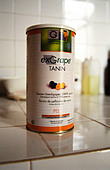 Everyone knows that the tannins in the grape skins are “good”: softer, riper, more harmonious. The grape pip (seed) tannins are “bad”: more aggressive, harsher, and more difficult to integrate in the wine. That is, at least, what all winemakers tend to think. Are they all wrong? At a recent meeting at the American Society for Enology and Viticulture (ASEV) some participants argued that yes they are all wrong, and seed tannins are not bad but good. Seed tannins are, for example, shorter molecules compared to skin tannins, which is generally considered better. So perhaps the world’s winemakers need to review the way the work with tannins and the way the macerate and extract their wines? Read more in Wines and Vines
Organic wine growing up 35% in Catalonia
According to the latest statistics (up to August) from Catalonia the total surface area of vineyards farmed organically has increased by 35% over the first eight months this year. Organic vineyard farming has now reached 3031 ha. This increase, for only eight months, is more than the total increase for 2008. More info: vitisphere.com
Tuesday, November 10, 2009
Laroche winery sold to Jeanjean
 The well known wine producer Laroche has now been sold to Jeanjean. Michel Laroche thereby concludes his efforts to sell the company that he has created. Laroche has vineyards and négociant activities in Chablis (100 ha of vineyards), in the Languedoc (Mas la Chevalière, 40 ha), Chile (Vino Punto Alto, 23 ha), and in south Africa (l’Avenir, 75 ha). Michel Laroche has been very successful in building his business, not least internationally, but has recently suffered some difficulties. For the latest accounting year (’08-’09) the turnover reached 27.3 M€, down by 17%, with a net loss of -1.6 M€. The previous year the loss was -0.6 M€. With this acquisition Jeanjean takes a substantial step up the quality ladder. Jeanjean is also a family business, base in the Languedoc region, but more focused on lower priced wines. The merged business will include 1450 ha of vines and is estimated to reach a turnover of 200 M€. It will operate under a new name (neither Jeanjean nor Laroche). Michel Laroche will remain in charge of the operations in Chablis for two years. According to Decanter the deal is valued at 52 M€ (24 M€ cash and 28 M€ in assumed debts). It is also said that Laroche will own 12.7% of the merged business. More info vitisphere.com and decanter.com
Is this Europe’s revenge for the American wine louse?
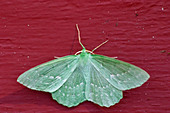 At the end of the 19th century the vine louse (phylloxera vastatrix) arrived in Europe from North America. It had lived peacefully in symbiosis with the American vines but arriving in Europe, with different vines (vitis vinifera), it killed all vines across the continent over a few decades. A bit over a century later, today, the European Grapevine Moth (lobesia botrana) has been discovered in vineyards in California. Larvae from the moth have been identified recently in Napa Valley, raising concerns that Californian vineyards will be devastated. The moth eats both the flowers and the fruit of the vine. It can cause sever damage, e.g. rot in the vineyard. It is as yet unclear exactly how great a risk there is for a serious attack. More info www.pressdemocrat.com (the insect on the photo is not the grapevine moth)
Monday, November 09, 2009
Wokingham Wine Festival
Another charity event: the Wokingham Wine Festival on December 5 and 6. It is for the benefit of the Multiple Sclerosis Society of the Thames Valley. Wine lovers can come and taste and buy interesting and unusual wines supplied by members of the Association of Small Direct Wine Merchants. More information on www.wokinghamwinefestival.co.uk
Naked Absolut – Absolut irony
We read in the newsletter WoW News (no, it's not about computer games!) that Absolut Vodka is launching a new marketing campaign: Naked Absolut: ” In An Absolut World, There Are No Labels” with e.g. the catch phrase Absolute Anticipation. They have launched a special bottle on the theme, without any label. WoW quotes Kristina Hagbard, Global PR Manager: “For the first time we dare meeting the world completely naked. We are launching a bottle without label and logo, to show that it is less important what’s on the outside. It’s what’s inside that count”. It is certainly a laudable initiative to want to promote diversity and fight prejudices against sexual preferences (which is their aim it appears). However, can it be more ironic? What would be left of Absolute if it didn’t have the very distinctive packaging (the special bottle shape included) and the sophisticated marketing? The label is, after all, just one aspect of the “outside”. Does anyone really think that Absolut has become one of the world’s best selling spirits purely because the contents is so much better? www.wownews.se
Difficult times in Bordeaux – Let’s increase production!
 AOC Bordeaux and Bordeaux Supérieur are one of several regions that have a difficult time. 2008 was a small harvest and some areas were seriously hit by hail in 2009. Export and demand in general is down. Prices are falling. So what is the response from AC Bx & Bx Sup? Increase production. Next year they will introduce an “individual complementary volume” (Volume complémentaire Individuel, VCI) which means that the wine producers can increase their production above the usual limits. In principle to compensate for unforeseen climate effects (unforeseen? Has it never hailed before?). Doesn’t it seem odd to counter-act falling prices and lack of demand by increasing production? That, one would expect, will lead to even lower prices and more surplus. They also hope that the (understandably) much contested new designation Bordeaux 1er Cru will help creating demand. (Hands up all who think that consumers might be mislead into thinking that “Bordeaux 1er Cru” is similar to/same as “Bordeaux Grand Cru Classé”!) More info www.vitisphere.com
Sunday, November 08, 2009
Revue des Vins de France (finally) launches a web site
About time. The leading French wine magazine La Revue des Vins de France (RVF) has launched a web site. They intend to publish their library of tasting notes (65 0000 wines), wine producer profiles and much more. The RVF journalists will write blogs on the site and they will have a reader forum. Some of the information is free but to have full access you have to pay a subscription. What we don’t like is that even if you subscribe to the magazine you have to pay for online access. In their launch information they underline their long history: 80 years of wine journalism (the world’s first wine magazine?). That’s of course very good, but not having had a web site until 2009 gives the impression more of living on past glories than in the present. Hopefully that will change. www.larvf.com
Buy a potential vineyard in Pomerol
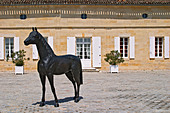 Pomerol is a small appellation in Bordeaux with only 780 ha of vineyards. There is also a horse racing course. But they only have four races per year and they have now decided to close it and sell the land – so they are looking for buyers. The interesting thing about it is that the 13 ha, a substantial plot in the appellation, could be planted with vines and transformed into a vineyard (Chateau du Cheval?). If it is possible to do is another question. For example, the buyers would need to have planting rights (cf the piece on the AREV in this Brief), which they don’t have. As a vineyard the land would be worth between 1 and 3 million euros. Per hectare. As a race course, or agricultural land, much, much less. More info newbordeaux.blog.co.uk
Saturday, November 07, 2009
American wine consumption continues to grow
The forecast from the US Wine Market: Impact Databank Review and Forecast 2009 Edition shows that wine consumption in the US will continue to increase in 2009, albeit with only 0.6%. It will then be the 16th consecutive year that consumption is up. It is nevertheless affected by the recession: there’s a shift towards lower priced wines and thus towards bigger volume branded wines. And Americans tend more and more to drink American wines; imported wines have suffered, partially due to the weak dollar of course. Read more www.winespectator.com
What is the worlds best classical symphony? The world’s best car? The best pub in London? The world’s best champagne?
 Well, that would depend on what one is looking for and one’s taste you may think. But not so for wine perhaps? Many people have some kind of belief that there is an absolute scale of quality for wine. The magazine Fine Champagne has decided on what is “the world’s best champagne” in a recent ranking. They have tasted 1000 champagne and selected the best. The world’s tenth best champagne is, apparently, Chartogne-Taillet non-vintage.
French wine consumption reaches record low
According to estimations by the French customs (who keep track of it) the French will drink less wine in the current 12 month period ’08-’09 (“la campagne 08-09”) than ever before: only 30 million hl, down by 9% since the previous year. Wines with appellation controllée do better, decreasing with “only” 7%, whereas all others shrunk by 11%. www.vitisphere.com
Friday, November 06, 2009
Chile and France bestselling wine countries in Denmark
 Some wine statistics:
According to the Wine and Spirit Organisation in Denmark, and Vinavisen.dk Chile is the top wine supplier to Denmark with a market share of 17%, followed closely by France with 16%. Italy has increased its share significantly, as has South Africa. Australia and Great Britain (!) are the big losers with respectively falls of -5% and -4%.
Total imports shrunk with almost 13% to reach 87 million litres. Numbers are for the first six months of 2009, compared with 2008. It’s interesting to note how different this is from neighbouring Sweden's preferences. The full list:
1. Chile 17.2% (+1.4%)
2. France 16.5% (+1.2%)
3. Italy 14.7% (+2.9%)
4. Spain 11.8% (+1.8%)
5. South Africa 10% (+2.8%)
6. Australia 9.3% (-5.2%)
7. Germany 8.3% (+0.9%)
8. USA 3.3% (+0.1%)
9. Argentina 3.2% (-0.9%)
10. Great Britain 2.8% (-4.6%)
11. Portugal 1.2% (+0.2%)
12. New Zeeland 0.6% (+0.2%)
13. Greece 0.2% (+0.1%)
14. Others 0.9% (-0.2%)
Thursday, November 05, 2009
Rhone vineyard next location for American ’reality show’
According to a press release from Vignobles Investissement they have been tasked by the Film Commission of Luberon Vaucluse to find a suitable winery location to record a series of reality shows. It is the American producer PBS that is producing the series. Apparently, the programs have already been shot, during the 2009 harvest. When can we hope to see the result? http://thewinemakers.tv/
Just like hand sewn shoes?
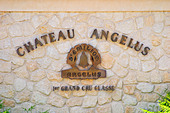 Chateau Angélus in Saint Emilion, Bordeaux, is not making hand sewn shoes but something of the sort – haute couture. They destem their grapes by hand. When you make red wine in nine cases out of ten (or more) you destem the grape bunches. Using a destemmer, you feed it with grape bunches and out comes at one end the separated grapes and at the other end the stems. Voilà. After that the grapes are (usually) crushed and the fermentation begins. At Chateau Angelus they think this is too brutal a treatment for the grapes so they recruited some 50 persons (we estimate) to do the destemming by hand, separating the berries from the stems… Does it make any difference? It is difficult to believe it does, but we have not made a comparative tasting. Watch the video here: www.chateau-angelus.com
Wednesday, November 04, 2009
Rollan de By in Bordeaux launches single-variety collection
 Domaines Rollan de By, best known for the Château Rollan de By in the Médoc, has launched a four bottle case with single variety wines. Each bottle contains wine from just a single grape variety. The four bottles are made from cabernet sauvignon, merlot, cabernet franc, and petit verdot (no doubt they did not have any malbec or carmenère in the vineyards). It gives you the possibility to taste each variety in its pure state. and you can play the game “make your own blend (assemblage)”, mixing the wines to see which proportions you prefer. But it is a rather expensive game. The four bottles retail for 400€! Can be found at La Cave de Joël Robuchon in Paris. We also wonder how it works with the AOC on the wines (that according to our info is Medoc). Normally, a wine should be “typical” to get the right to an appellation controllée, and single variety wines are extremely unusual (nonexistent) in Bordeaux. But is it definitely a fun initiative.
Austrian wine exports up
For the first six months 2009 Austrian wine exports were up 10% in volume and only marginally down in value (-1.8%). Austria needs be cautious in the longer run though, since the general price level has fallen and an increasing portion of the exports are in bulk rather than in bottle (especially to Germany). "For the Austrian wine industry overall, the export figures - considering the economic climate - are very positive," states Willi Klinger, general manager of Austrian Wine Marketing Board. www.austrianwine.com It is indeed much more positive numbers than in many other places.