Three other reports (working papers) have recently been published by the American Association of Wine Economists, all of the interesting, if a bit specialised. All are available for free on the AAWE site:
- Message on the bottel: Colours and shapes of wine labels
- Non-conventional viticulture as a viable system: A case study in Italy
- The value of designations of origin in Emilia-Romagna
Tuesday, September 29, 2009
Can you trust wine competition medals?
 Is it a sign of quality if a wine has been give a medal in a wine competition? That’s the question that Robert T Hodgson asked himself, and decided to investigate. His analysis, based on 4000 wines entered in 13 different Californian wine competitions, showed that, no, it’s not a reliable sign. His conclusion is based on that if a wine wins a medal in one competition it is not a reliable indication of that it is likely to wine in another competition. So, the medals seem to be given without much consistency between wine competitions. if you want to know more you can read the full article published by the American Association of Wine Economists: An Analysis of the Concordance Among 13 U.S. Wine Competitions. But the study is, we would say, based on the wrong assumption - that there is a neutral and general "scale" for the "quality" of wine. But that is not the case. Wine is a matter of taste and very subjective. On the other hand, what one can say is that if a wine has won a medal in a competition, at least someone has liked it.
Thursday, September 24, 2009
Wine of the Month: Chianti Rufina DOCG 2006 Fattoria Cerreto Libri
This month’s wine by Åsa: Chianti Rufina DOCG 2006 Fattoria Cerreto Libri
A spicy wine with long after-taste. On the palate you have distinct notes of violet, warm and ripe black currants and a touch of vanilla. The colour is deep red, with flashes of ruby if the light is right. It has an astonishing long after taste. It’s made from 90% sangiovese and 10% canaiolo. It is macerated in concrete vats. Only natural yeasts are used. It is aged for 18 months in barrel and four months in bottle before release. The producer is a small bio-dynamic winery not far from the village Rufina, just north of Florence. They make some 8000 bottles of this wine. Approximate price: 13 euro. www.cerretolibri.it
A spicy wine with long after-taste. On the palate you have distinct notes of violet, warm and ripe black currants and a touch of vanilla. The colour is deep red, with flashes of ruby if the light is right. It has an astonishing long after taste. It’s made from 90% sangiovese and 10% canaiolo. It is macerated in concrete vats. Only natural yeasts are used. It is aged for 18 months in barrel and four months in bottle before release. The producer is a small bio-dynamic winery not far from the village Rufina, just north of Florence. They make some 8000 bottles of this wine. Approximate price: 13 euro. www.cerretolibri.it
BKWine Pick: Domaine l’Oustal Blanc, La Livinière, Minervois, Languedoc
Domaine l’Oustal Blanc, La Livinière, Minervois, Languedoc
 We’ve stopped counting all the exciting wineries we discover in the Languedoc. But among the interesting ones there are some that stick in memory and stand out. L’Oustal Blanc in Minervois is one of those. The owner is called Claude Fonquerle. He is a very skilled winemaker and often quite unorthodox. Several of his wines are made without the AOC Minervois because he doesn’t agree with the appellation rules. “K”, for example, is made from 100% carignan and is a Vin de Table (so it can’t say carignan on the label at the moment – but rules are changing). It’s made from 35 year old vines, so there’s nothing simple about this wine. The wines Claude make have both elegance and finesse. And tasting them one cannot help feeling a certain resemblance to (or inspiration from) other wine regions. And quite correctly so – Claude worked for ten years in Châteauneuf-du-Pape and is fascinated by Burgundy. His different cuvees, all with names inspired my musical words, are excellent. His light and elegant Naïck for example, or the very well structured Giocoso. And of course the full-bodied and well balanced Prima Donna.
Click here for address and more recommendations.
We’ve stopped counting all the exciting wineries we discover in the Languedoc. But among the interesting ones there are some that stick in memory and stand out. L’Oustal Blanc in Minervois is one of those. The owner is called Claude Fonquerle. He is a very skilled winemaker and often quite unorthodox. Several of his wines are made without the AOC Minervois because he doesn’t agree with the appellation rules. “K”, for example, is made from 100% carignan and is a Vin de Table (so it can’t say carignan on the label at the moment – but rules are changing). It’s made from 35 year old vines, so there’s nothing simple about this wine. The wines Claude make have both elegance and finesse. And tasting them one cannot help feeling a certain resemblance to (or inspiration from) other wine regions. And quite correctly so – Claude worked for ten years in Châteauneuf-du-Pape and is fascinated by Burgundy. His different cuvees, all with names inspired my musical words, are excellent. His light and elegant Naïck for example, or the very well structured Giocoso. And of course the full-bodied and well balanced Prima Donna.Click here for address and more recommendations.
Wednesday, September 23, 2009
BKWine Pick: Château Villars, Fronsac, Bordeaux
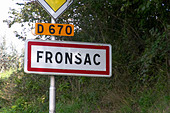 Fronsac is not as famous as its illustrious neighbour Pomerol. But it would deserve to be. It is pretty rolling hills landscape, much nicer than the flat land in Pomerol. And the wines from the best chateaux are excellent classic clarets in style. In addition to the quality the have the great advantage of being affordable. Fifteen of the more dynamic properties have created an association that they call Expression Fronsac. Their idea is to market the Fronsac wines internationally with a joint effort. One of the participating chateaux is Château Villars where the charming Thierry Gaudie makes elegant wines. He uses more cabernet franc than what is the norm; a grape that he says is needed and necessary to balance the merlot and to make the wines more interesting. He wants to enhance the expression of terroir in his wines and does not use much new oak. Chateau Villars 2005 has a very good structure with soft tannins. “2005 resembles the legendary 1961” says Thierry. His other cuvée, Charmes de Villars, is easy drinking – the first vintage was 2006. Interestingly he uses American oak for Charmes.
Calling all wine bloggers: soon time for the European Wine Bloggers Conference
 The European Wine Bloggers Conference takes place on the last weekend of October. It is a unique occasion to meet wine bloggers from all over Europe, and even beyond. More than a dozen countries will be represented and the organisers are expecting upwards to a hundred participants. Apart from networking participants can learn about blogging techniques and technology, marketing, video, monetization and much more. Plus, of course, many occasions to taste excellent wines and visit wineries, either during the conference or at the pre- and post-conference events with visits to wine regions in Portugal. More information here: http://winebloggersconference.org/europe/. An event not to miss for the dedicated wine blogger – plus it would be nice to meet some of you in real life in Portugal! You can get a taste of how it will be in our Wine Bloggers Conference teaser slide show.
Tuesday, September 22, 2009
Welcome to the BKWine Brief nr 74, September 2009
The reports we’ve had from various vineyards are generally positive to very positive to outright jubilant. The growing season has mostly been excellent with good weather. Not much disease or other problems (even if there’s been some). So, in short, everything promises very well:
Philippe Bernard, Clos Saint Louis in Côtes de Nuits: “Our harvest started on September 12, a bit earlier than normal. The year has been overall good. Good winter, good spring, good summer, even if we’ve had a few problems with diseases. August was very sunny and warm and the grapes are very healthy. 2009 will be an excellent year for us.”
Champagne Duval-Leroy is also busy harvesting at the moment. Carol Duval-Leroy criss-crosses around champagne to visit the 120 (!) different presses they use. She confirms that the grapes are of very good quality: “I am very satisfied with this year’s harvest, we have healthy grapes with good sugar levels”.
Chablis is also in the middle of the harvest even if some growers have not yet started. Domaine Jean-Claude Courtault in Lignorelles was just about to start when we visited and Stéphanie Courtault confirms that it looks very promising.
Languedoc: “excellent quality, a bit less quantity than normal, perfect weather” says Domaine Rives Blanques, Limoux.
In the Rioja, reporting just before the harvest: promises very well but a very hot August blocked the phenolic ripeness. There’s a risk for some imbalances from that but if it is kept under control it will be a very good year.
Alentejo, southern Portugal: “overall good quality, some parcels will produce outstanding quality grapes” says Paolo Soares at Herdade da Malhadinha Nova.
Sud-Ouest: “Outstanding. Perfect. On par with 2005 in the whole region”, confirms Fabrice Durou at Château de Gaudou in Cahors.
We’ve now finished reading the final proofs of our new book. It’s been a very exciting project and hopefully we have now adjusted the last comma in the manuscript. It’s been particularly interesting since it is a wine book of a kind that is really missing, we think. There is really not much like it at all on the wine book market today. But I guess we’ll hear from reviewers and readers if they agree on that. If all goes according to plan it will be launched sometimes in mid November. What it’s about? Well, well keep that a secret until the launch has been decided.
This time of year is busy-busy with trips all round. Last week we’ve been to Champagne, Chablis and Burgundy. This week it’ll be Languedoc, cognac (!), and the Rhône Valley/Provence. Next week is Bordeaux and Alsace. But we’re two to share the things.
In a few weeks time we will also announce next springs ‘public’ travel program in English. We’ve just launched our Scandinavian schedule which includes Truffles & Wine in February, South African Wine & Food in March, Three Classics (Champagne, Chablis and Burgundy) as well as Bordeaux in April, and Tuscany, it’s Wine & Food in May.
And we also do custom tours both for private parties, travel agents, and professionals (importers, win trade, educational etc).
Get in touch if you want to know more.
Britt & Per
Read the entire BKWine Brief #74 here!
PS: Recommend to your friends to read the Brief or forward it to them !
Philippe Bernard, Clos Saint Louis in Côtes de Nuits: “Our harvest started on September 12, a bit earlier than normal. The year has been overall good. Good winter, good spring, good summer, even if we’ve had a few problems with diseases. August was very sunny and warm and the grapes are very healthy. 2009 will be an excellent year for us.”
Champagne Duval-Leroy is also busy harvesting at the moment. Carol Duval-Leroy criss-crosses around champagne to visit the 120 (!) different presses they use. She confirms that the grapes are of very good quality: “I am very satisfied with this year’s harvest, we have healthy grapes with good sugar levels”.
Chablis is also in the middle of the harvest even if some growers have not yet started. Domaine Jean-Claude Courtault in Lignorelles was just about to start when we visited and Stéphanie Courtault confirms that it looks very promising.
Languedoc: “excellent quality, a bit less quantity than normal, perfect weather” says Domaine Rives Blanques, Limoux.
In the Rioja, reporting just before the harvest: promises very well but a very hot August blocked the phenolic ripeness. There’s a risk for some imbalances from that but if it is kept under control it will be a very good year.
Alentejo, southern Portugal: “overall good quality, some parcels will produce outstanding quality grapes” says Paolo Soares at Herdade da Malhadinha Nova.
Sud-Ouest: “Outstanding. Perfect. On par with 2005 in the whole region”, confirms Fabrice Durou at Château de Gaudou in Cahors.
We’ve now finished reading the final proofs of our new book. It’s been a very exciting project and hopefully we have now adjusted the last comma in the manuscript. It’s been particularly interesting since it is a wine book of a kind that is really missing, we think. There is really not much like it at all on the wine book market today. But I guess we’ll hear from reviewers and readers if they agree on that. If all goes according to plan it will be launched sometimes in mid November. What it’s about? Well, well keep that a secret until the launch has been decided.
This time of year is busy-busy with trips all round. Last week we’ve been to Champagne, Chablis and Burgundy. This week it’ll be Languedoc, cognac (!), and the Rhône Valley/Provence. Next week is Bordeaux and Alsace. But we’re two to share the things.
In a few weeks time we will also announce next springs ‘public’ travel program in English. We’ve just launched our Scandinavian schedule which includes Truffles & Wine in February, South African Wine & Food in March, Three Classics (Champagne, Chablis and Burgundy) as well as Bordeaux in April, and Tuscany, it’s Wine & Food in May.
And we also do custom tours both for private parties, travel agents, and professionals (importers, win trade, educational etc).
Get in touch if you want to know more.
Britt & Per
Read the entire BKWine Brief #74 here!
PS: Recommend to your friends to read the Brief or forward it to them !
Thursday, September 10, 2009
Nitrogen and sulphur makes for more aromatic wines
If you spray the vines with a mix of nitrogen and sulphur the resulting wines will have a more pronounced aromatic character, in particular for white aromatic varieties (e.g. sauvignon blanc). The treatment stimulates production of a substance called thiol that contributes to the aromatic characteristics. The ideal is to make two sprayings in the vineyard around véraison – when the grapes change colour in late July / early August. That the conclusion of studies made at IFV Sud-Ouest (Thierry Dufourcq), IFV Tours and by Florian Lacroux at Enita Bordeaux.
Wednesday, September 09, 2009
What with Cru Bourgeois?
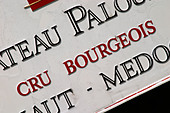 A few years ago (2003) Cru Bourgeois classification had the same unpleasant experience as the Saint Emilion one: a revised classification was challenged in court as being unfair and unjust. The plaintiffs won and the Cru Bourgeois classification was annulled. Since then there is no Cru Bourgeois classification, albeit it continues to be used in many circumstances… Instead of trying to make a new (and fairer) classification, as will be the case in Saint Emilion, the Médocains are trying to resuscitate Cru Bourgeois not as a classification but as a kind of quality label. Instead of a classification it will be called “Alliance” Cru Bourgeois. The principle is that the chateau would sign a quality charter and the wines be subject to tasting by an independent jury. Any chateau could sign the charter and adhere to the rules. They would then be subject to controls and audits by an independent organisation. If all is well according to the controls they would get the right to use the Alliance Cru Bourgeois label (but, as mentioned, it would not be considered to be a classification). One glitch: we read in La RVF that Bureau Veritas, the independent audit and control organisation originally in the picture, has declined the project since it is “politically and humanely unmanageable”.
Tuesday, September 08, 2009
Swedish wine bar opens in China
 Rolf Olofsson was one of the founders of the Barrique Wine Bar in Gothenburg in Sweden some years back. He has left his homeland (and Gothenburg) a couple of years ago to settle in China. His new creation, Barrique Wine Bar (in China) opened in Guangzhou on July 16, two days after the building works finished… Guangzhou is today a (partially) modern city that, according to some estimates, has some 18 million inhabitants. And according to other reports it has very few good restaurants. So the Barrique team has good hope for the future. We wish them the best of luck in their venture.
The harvest approaches
According to estimates by Vignerons Idependents this years wine harvest will start early August for the Côtes de Provence, August 23 in Chateauneuf-du-Pape, around August 28 in Bandol and Coteaux Varois, September 15 in Anjou and Sancerre and then Bordeaux.
Monday, September 07, 2009
Fastes growing wine brands
The fastes growing wine brands on the market in Great Britain are (source: OLN, Nielsen, MAT):
- Yellow Tail, +190%
- FirstCape, 135%
- Ogio, 118%
- Viña Maipo, 86%
- Arniston Bay, 42%
- Lindemans, 33%
- McGuigan, 32%
- Isla Negra, 32%
- Berberana, 18%
- Echo Falls, 27%
- Oyster Bay, 25%
- Yellow Tail, +190%
- FirstCape, 135%
- Ogio, 118%
- Viña Maipo, 86%
- Arniston Bay, 42%
- Lindemans, 33%
- McGuigan, 32%
- Isla Negra, 32%
- Berberana, 18%
- Echo Falls, 27%
- Oyster Bay, 25%
French barrel producers create wood appellations
 The French barrel making federation (Tonneliers de France) have created a “charter”, which, like an appellation controlée for wine, defines the origin of the wood used to making the barrel. The charter states that if a barrel is labelled as “French” then 100% of the wood has to be of French origin, whereas if a more precise designation is used only 70% of the wood needs to have that origin. For example, a Limousin barrique must contain 70% wood from the Limousin region, the rest coming from other forests in France. The charter also wants to suppress the designations Nevèrs and Tronçais. “There are no forests in Nevèrs” explains François Peltreaux-Villeneuve, CEO of the barrel maker Seguin Moreau Napa. The approved geographic origins for the wood are: Le Centre, Limousin, L’Est, and Le Nord. Some coopers have already moved to classifying their barrels according to the tightness of the grain instead of by geographic origin (cf. for instance our piece on Radoux in the last Brief). All 43 members of Tonnelier de France are said to have signed up to the charter. They represent some 90% of French production. winesandvines.com
Friday, September 04, 2009
Virus resistant vines
Vines can be attacked by many different diseases and other evils, e.g. the wine louse, mildew, rot, and many other things. One dreaded disease is “fanleaf degeneration” (or grapevine fanleaf virus) that is caused by, yes, a virus. There are chemical treatments available to fight the virus but they are not always effective. Researchers in Aachen have developed a vine with a “built in” defence against the virus, up to 100% effective. With genetic engineering they have introduced anti-bodies from a soil bacterium into the vine so that it produces substances that protect it from the virus. A remaining obstacle is, of course, that genetically modified grapes are not permitted in Europe. sciencedaily.com
Laroche in Chablis for sale
 Domaine Laroche, the big Chablis producer, is in discussions with Jeanjean, a negociant in the Languedoc, about a sale of the domaine. Laroche is one of the biggest producers in Chablis. They also have properties in the Languedoc, Chile, and South Africa. It is headed by Michel Laroche who is the person behind its greatness and its recent expansion. Nothing has been said about the reasons for the sale. Michel Laroche comments in La Revue du Vin de France that it is a plan that he has been working on for a couple of years to find a buyer to his wine empire but that has found more urgency due to the current financial crisis. vitisphere.com
True ice wine? Vineyard plantings in Siberia
An experimental vineyard of 3 hectares will be planted in Siberia, as an experiment to develop winemaking in northern climates. The vineyard is in the Russian republic of Altai, in southern Siberia, not far from China, Mongolia and Kazakhstan. The vines come from Franche-Comté, and mountainous wine region in France. vitisphere.com
Buy a satuernes: 68 M euro
 But then you’ll get the entire chateau. According to reports in Decanter the (relatively) famous Chateau de Malle in Sauternes is on sale for € 68M. An anonymous ad first appeared in the Financial Times but it has since transpired that the property in question is the Ch de Malle. Industry observers seem to think that the price is high in view of the current climate. decanter.com
 (The chateau in question is not pictured on the photo.)
Thursday, September 03, 2009
Starbucks wine bars?
Starbucks is the world’s largest chain of coffee bars, best known for its selection of odd coffee-based concoctions with odd names. But also for its excellent espresso. They have now launched three experimental shops/bars in Seattle where they also will offer a selection of wines and beers. If it goes well we can expect to see Starbucks Wine Bars in more locations. One assumes that they will favour oak aged wines in barrels with French roast. www.bizjournals.com
Charity auction in the Loire to benefit research on autism
Research about autism, that’s what the profit from the auction will go to. For the third time the Chateau Rivau in the Loire Valley organises a charity auction with some excellent wines from the Loire. The guest of honour this year is Italy and many Italian wines will also be on auction. The auction takes place on September 20. More info: http://www.chateaudurivau.com
The '40%' of Champagne
 40% seems to be a magic, or rather cursed, number for Champagne at the moment, according to what we read in The Drinks Business. The latest numbers from the CIVC show a drip in shipments to Great Britain with 40% for the first four months of this year, and Rémy Cointreau reports a drop in sales with 40%. But all is not so dark. Not quite. Moet shipped 35% less during the first three months and global sales at Laurent Perrier fell with 25%. They also mention that prices are going down and that it is not excessively difficult to get discounts when buying. In view of the price increases in recent years it is perhaps not so surprising.
Wednesday, September 02, 2009
France loses ground in England
 Down with 6.5% in a year. In third place, after Australia and USA (i.e. California). Chased by Italy (+14.9%) and South Africa (+34.9%!).
France and French wines do not have an easy time on the UK market, judging from an interesting article by Charles Metcalfe in The Telegraph: "Zut alors! French wine sales go down the drain".
Charles hypothesises on what may be the cause for the demise of French wines. For example tax hikes. That’s perhaps not so likely, since it hits all imports equally. Other ideas: The commonly quoted (but dubious) difficulties with French names and labels. What’s so very much more understandable with "Penfold's Yattarna Chardonnay Victoria" than "Louis Jadot Chevalier Montrachet Les Demoiselles Grand Cru"? (really, it’s not very likely that you don’t know that it’s a Burgundy if you’re even only close to thinking of buying the latter) – if you don’t know how a Burgundy tastes the chances are hardly bigger that you’ll know what chardonnay tastes like? But the big issue with this, though, is that you don’t have much of a clue just from the grape variety – there aren’t many similarities between, well, a Yattarna Chardonnay and a chablis. Or between a pinot noir from Patagonia and one from Sancerre. No, the grape variety can be helpful sometimes (and the French have started to understand that) but it is hardly the truth behind lost market shares.
Another hypothesis in the article is that the French classification system needs reviewing, so that what is sold as Bordeaux or Sancerre really deserves the appellation. Quality improvement is of course commendable but it is hardly because of the superior quality that Australia and the US are ahead of France on the UK market.
There are probably several other factors that are equally (or more) important, much that has to do with the changing structure of the market. For example: More and more wine consumers are not in the wine producing countries. In those countries it is more important with brands compared to in the “old” wine consuming countries (e.g. in France, where they (we) drink less and less wine). And France is not very good at wine brands. In those countries it is also more common to drink wine as a “social” drink instead of with a meal. And French wines are above all food wines.
But perhaps the most important aspect (and this is just a hypothesis we have) is that more and more of all wine is sold by big retail chains in the UK: Tesco, Asda, Sainsbury’s etc (just like in many other countries, France included). It is easier for the wine buyers at the supermarket chains to buy from big producers, those who can deliver sufficient quantities to make it rational from an economic and logistic perspective. The issue then is that the French wine industry is terribly fragmented. There is an enormous amount of small wine producers and very few big ones (but that is of course the charm of French wines for many of us). Compare it for instance with South Africa where the whole country has about the same number of wine producers as the tiny Bordeaux appellation of Pomerol. Then it is easier to sell to companies like Tesco. (Or, for that matter, our Swedish monopoly Systembolaget, where the situation is even more pronounced – France in 5th or 6th place.)
The question then is – what should France do to survive the international competition? We’ll have to save that for another time. But if you have any ideas, do let us know! Read the article here: www.telegraph.co.uk
Zagreb Wine Gourmet Festival November 27-28
If you happen to be in or near Croatia in November it is an excellent opportunity to make a visit to Zagreb. Croatia has an amazingly beautiful coast line but it also has some very good wine and food. On November 27-28 they organise the Zagreb Wine Gourmet Festival in the capital. Guest of honour is France so there will no doubt be some French delicacies too. More info http://www.vino.com.hr/
The wonderful world of search engines – Austrian wines and revengeful elephants
What’s the link between angry elephants and wines from Austria? Search engines (and primarily Google) influence much of what we do these days. But sometimes one wonders how it all works. If you watch a video on YouTube you will get a few recommendations, generated by the search engine, for other related videos you might want to watch. If you watch our interview with Weingut Emmerich Knoll in Wachau in Austria you get a list of related videos with various other wine videos and … one called Revenge of the Elephants about wild elephants, wilder than usual, who intentionally murders rhinoceros (the recommendations vary with when and where you are so you might not get the same). What’s the link? We have no idea.
Tuesday, September 01, 2009
Three golden rules for drinking alcohol in Sweden
Sophe la Girafe is a young French woman exiled in Sweden. For some reason, we don’t know which, she has chosen to settle in Stockholm It does take some time to get to grips with Swedish society and customs – to make sure you behave, well, appropriately. But after some time (and practice) you get the hang of it. It seems. Sophie la Girafe summarizes her findings on the Swedish way to drink in an excellent blog post. It starts like this: ”When it comes to alcohol in Sweden, things are… quite special… Let me tell you how it works out here :) “. And then she reveals the three golden rules on how not to embarrass yourself when drinking in Sweden. Don’t miss the rest. Read it here: sophilagiraf.wordpress.com
A Rose is a (new) Rose – or, a renovated wine site and musings on wine competitions
 Anthony Rose is a highly respected British wine writer. He has recently launched a renovated version of his web site and blog with lots of information, well worth visiting. One of the articles on the site is “What’s your poison?”. It’s a story about the seminar organised by the Australians for a group of 20 wine writers (including some very famous names) in the UK to show how Australian wine judges are trained and selected. The tastings included the ability to identify wine defects and the reliability (or perhaps rather, the consistency) of scores. The tasters were given (without them being aware of it) the same wine to taste twice during the day. Ideally, the same score should be given to the wine both times. But that was not always the case… The article is very interesting and entertaining, especially for those who think that wine scoring is close to a science and absolute. Take the time to read the numbers at the end of the article! If we understand it right, none of the 20 participants were quite appropriate (in terms of consistency) to be an Australian wine judge. The basic idea is definitely a good one: reasonably, one should give relatively similar scores to one and the same wine when tasted at two different occasions within a few hours of each other. It is a much more reasonable idea than the one that is often heard – that different wine critics should consistently evaluate/score a wine similarly (illustrated e.g. by the spat some time ago when Jancis Robinson and Robert Parker did not agree on Chateau Pavie). That isn’t quite the case. Read that article and many others on Anthony Rose’s new site: http://www.anthonyrosewine.com