 CrushPad started a few years ago in California. It’s a (relatively) inexpensive way to make your own wine. They collaborate with wine producers and as a member / customer you get the possibility to (almost) make your own wine. Grapes are supplied by selected vineyard partners and you get expert advice and assistance to make your own microcuvée at a winery. In California the model seems to have reaped some success and now the Crushpad model comes to Europe. They have started a cooperation with Chateau Teyssier in Bordeaux, run by Jonathan Malthus, where the wines will be made. And then you only need to bring the bottles home to your bursting cellar. “Our clients can live the dream of owning a vineyard at a fraction of the cost” says Stephen Bolger, president of Crushpad France. www.crushpadwine.fr or www.crushpadwine.com
Friday, May 29, 2009
Make your own Bordeaux – live your dream?
CrushPad started a few years ago in California. It’s a (relatively) inexpensive way to make your own wine. They collaborate with wine producers and as a member / customer you get the possibility to (almost) make your own wine. Grapes are supplied by selected vineyard partners and you get expert advice and assistance to make your own microcuvée at a winery. In California the model seems to have reaped some success and now the Crushpad model comes to Europe. They have started a cooperation with Chateau Teyssier in Bordeaux, run by Jonathan Malthus, where the wines will be made. And then you only need to bring the bottles home to your bursting cellar. “Our clients can live the dream of owning a vineyard at a fraction of the cost” says Stephen Bolger, president of Crushpad France. www.crushpadwine.fr or www.crushpadwine.com
Restaurant VAT down
France will lower the VAT on restaurants to 5.5%. Currently restaurant bills are subject to “normal” VAT at 19.6%. The change will happen in January 2010, or possibly already in July this year. The intention is to dampen the downward trend that restaurants have seen in recent months. Restaurant visits have gone down with between 10% and 50%percent. restho-news.com
The Parker Effect (1)
 If anyone doubted the importance of Parker Points (ratings from the wine guru Robert Parker) the story of this year’s primeurs should dispel any doubt. Liv-ex has made a graph illustrating the price evolution of Chateau Lafite 2008. On April 29 Parker published his comments on the 2008 vintage and his rating of Lafite was very positive. The Liv-ex graph is very illustrative. Read more on the Liv-ex post here: Liv-ex
Wine producer E&J Gallo attacks grocery store in Seattle
 E&J Gallo is one of the world’s largest producers of wine, based in California. The Spanish table is a small grocery store chain in Seattle with four shops, specialised in Spanish food. Gallo is about to take the food store to court because they sell a Spanish brand of pasta, made in Spain, called, you guessed, Gallo. EJ Gallo had given The Spanish Table until April 16 to comply with their demand to remove the pasta but already on April 14 they filed in court. Are there not better things to do for a wine producer? Read more: Modesto Bee or watch the video king5.com
Thursday, May 28, 2009
France sponsors 1000 free wine and cheese parties
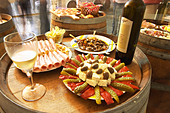 France has launched a campaign in 19 countries (USA, Canada, Spain etc) where anyone who wants can sign up to be a candidate to be sponsored for a free wine and cheese party. 1000 participants will be chosen to organise in their homes a paid-for-by-France wine and cheese cocktail party. The only condition is that they afterward report on how it turned out. The party package contains (apart from wine and cheese one assumes) a French apron and a CD with music by Carla Bruni (an Italian-born French singer who is married to Nicolas Sarkozy, the French president, who does not drink wine… Figure that one out!) They have a budget of 1.6 million euro for the parties to promote French gastronomy and wine, all coordinated by the promotion organisation Sopexa. We cannot quite figure out how this campaign fits with the various anti-wine measures and campaigns that they implement at home on the French territory. Why not launch the campaign in France too instead? Or do French authorities want us to drink more French wine but only if it is done outside of France? Wall Street Journal
Bordeaux primeurs prices falling
 Quite as expected (and demanded by many) the prices of the Bordeaux Primeurs (2008 vintage) have fallen. As we reported in the last Brief, Angélus set the tone with a release price down 40% from last year. Many other chateaux have now announced what price they demand for the latest vintage. It is decreasing prices all over with between 10% and 40% and sometimes more. Ch Yquem went down with 59%. Read more on e.g. New Bordeaux and newbordeaux.blog.co.uk. But as a wine consumer it is perhaps a bit too early to cheer too much considering the price hikes seen in recent years. Maybe we can expect prices to come down to just “expensive” from “ridiculous”. More Les Echos
Tuesday, May 26, 2009
Australia is like Bordeaux, but the other way around
 Australia has gained a reputation of being primarily a source of cheap bulk wines and Bordeaux is mostly know for producing wines that no one can afford any longer (thanks to their rocket-like price increases in recent years). Both regions suffer from these images that are not telling the whole story. Australia has many ambitious winemakers who produce top quality wine and you can find excellent value-for-money wines in Bordeaux in the price range of 8 to 18 euro. Australia’s ambitious producers have recently had some good press e.g. by Jancis Robinson in the FT or by Mike Steinberger in Slate. Now we’re only waiting for the pieces on good value Bordeaux!
Friday, May 22, 2009
BKWine on American radio
The Wine Fairy, or Wine and Dine Radio, www.winefairy.com is an internet radio station (podcast) that only talks about wine. You can also listen to it on iTunes. In a recent emission BKWine was “today’s guest” of the creator of the show, Lynn Krielow Chamberlain. You can listen to the program and the interview with BKWine and Per here or connect to the station on Live365.com or on vinvillage.com
Wednesday, May 20, 2009
Wine of the Month: Losada, Bierzo, Spain
Jack recommends
Losada, Bierzo, Spanien
 This month I’ve chosen a wine that without any inhibitions excels in ripe fruit, soft tannins and delicious vanilla ice-cream. It’s an unfiltered purple Rubens wine with a big meaty nose with aromas of plums and blackberries with a topping of aromatic herbs and, for once, a reasonably balanced barrel treatment. the wine is the 2006 Losada from Bodegas Losada Vinos de Finca (approx. €10) from Bierzo in Castilla y Léon in north western Spain (that you also could read about in the last Brief). It’s made from the recently popular grape variety mencia. A perfect match for your first session in front of the barbeque this spring with perhaps some juicy and fat pork chops.
Losada, Bierzo, Spanien
This month I’ve chosen a wine that without any inhibitions excels in ripe fruit, soft tannins and delicious vanilla ice-cream. It’s an unfiltered purple Rubens wine with a big meaty nose with aromas of plums and blackberries with a topping of aromatic herbs and, for once, a reasonably balanced barrel treatment. the wine is the 2006 Losada from Bodegas Losada Vinos de Finca (approx. €10) from Bierzo in Castilla y Léon in north western Spain (that you also could read about in the last Brief). It’s made from the recently popular grape variety mencia. A perfect match for your first session in front of the barbeque this spring with perhaps some juicy and fat pork chops.
Wine of the Month: Gini, Gini, Gini!
Åsa recommends:
Gini, Gini, Gini!
You never get bored with the wines from the Gini family winery. We’re in Veneto in north-eastern Italy. To be precise, in Monteforte d’alpone, not far from the town of Soave. It’s a difficult choice to settle for just one of the Gini wines to taste. But since days are getting longer let’s choose the Soave Classico La Froscá. This wine is made from hand-picked grapes from vines with an average age of 50 years. Fermentation is partially in stainless steel and partially in barriques. It’s a very well structured Soave (with 13% alcohol), nuanced and flowery nose (garganega can otherwise sometimes be rather neutral) and some ripe fruit in the finish. La Froscá goes well with pasta and fish but also to what the Italians call “animale da cortile” (animals from the back yard!): white meats like pork of chicken. Approximate price: 15€. www.ginivini.com
Gini, Gini, Gini!
You never get bored with the wines from the Gini family winery. We’re in Veneto in north-eastern Italy. To be precise, in Monteforte d’alpone, not far from the town of Soave. It’s a difficult choice to settle for just one of the Gini wines to taste. But since days are getting longer let’s choose the Soave Classico La Froscá. This wine is made from hand-picked grapes from vines with an average age of 50 years. Fermentation is partially in stainless steel and partially in barriques. It’s a very well structured Soave (with 13% alcohol), nuanced and flowery nose (garganega can otherwise sometimes be rather neutral) and some ripe fruit in the finish. La Froscá goes well with pasta and fish but also to what the Italians call “animale da cortile” (animals from the back yard!): white meats like pork of chicken. Approximate price: 15€. www.ginivini.com
Tuesday, May 19, 2009
BKWine Pick: Restaurang L’Olivier du Clavel, Bordeaux
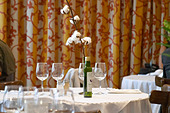 It’s just in front of the St Jean railway station in Bordeaux so it’s not exactly a charming area, but there are many other good reasons to go to L’Olivier du Clavel and not only when your catching a train. The cuisine is excellent and prices are very reasonable. You can have a two course lunch for 16 euro (or three for 19 euro), including a glass of wine (!), and in the evening they have a 29 euro three course menu. We recently had a fabulous risotto with pesto and grilled shrimps, a brochette with scallops, parmesan and green asparagus, and a duck’s breast with mango and polenta. Everything very well prepared and delicious. They also have a reasonable (not large but well chosen) selection of wines you can order by the glass.
Click here for address and more recommendations.
BKWine Pick: Domaine Philippe et Vincent Jaboulet, Mercurol
 After 30 years as responsible for the wine production at the famous Rhône producer Paul Jaboulet Aîné in Tain l’Hermitage Philippe Jaboulet, together with his son Vincent, started off on his own and created Domaine Philippe et Vincent Jaboulet in Mercurol three kilometres to the south. Vincent is a trained oenologist and has worked in Australia. He’s the fifth generation of the Jaboulet family making wine. They make a Crozes-Hermitage (both red and white), a red Hermitage and a Cornas. The wines are consistently good.
Click here for address and more recommendations.
BKWine Pick: Quinta do Mouro, Estremoz, Alentejo
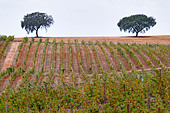 Miguel Louro, who also works as a dentist in Evora (and looks a bit like Salvador Dalí), and his sun Luis run this high quality winery owning 30 ha in Alentejo. “Our wines are hand crafted wines”, says Miguel, “all is done by hand. The secret with excellent wines is that you have ripe grapes and low yields”. The wines are classic Portuguese with some herbs and a wonderful fruit.
Click here for address and more recommendations.
BKWine Pick: Quinta da Gaivosa, Cumieira, Douro
Domingos Alva de Sousa and his son have made it their speciality to make DOC Douro wines (”table” wines as opposed to port wine) in the dramatic port wine valley. The family owns 110 hectares split over five properties. The secret of the wines magnificent quality are actually the old wines (apart from very competent wine making of course), some more than a hundred years old.
Click here for address and more recommendations.
Click here for address and more recommendations.
Monday, May 18, 2009
Welcome to the BKWine Brief nr 70, May 2009
Summer is approaching
I was recently in Veneto in northern Italy. That’s the birthplace of the famous amarone wines – a wine that has over recent years found a dedicated following amongst many wine enthusiasts, although you will easily pay 20-30€ or more for a bottle. It is interesting wines, quite peculiar character (and quite a peculiar vinification process too). I’ve been in Veneto a few times now and the fact is that it’s not the amarones that have surprised and interested me the most (yes, they can be good too). It is actually the soaves that stick in my memory. It used to be that Soave was a region that made very light wines, often anonymous on the verge of being without identity, but, wow, has that changed! Now you can find soaves that are full of character, sometimes even powerful, always with a lot of fresh fruit. Often with a hint of almond. Provided you know which producer to look for of course. Lots of new technology and quite a lot of experimenting. Some use cryo-extraction, or a light appassimento (drying of the grapes), or late harvested grapes. Or just simply competent wine making! A wine worth rediscovering if you ever have had the same misconception as us.
Some other suggestions for wines to try, when summer is changing from dream to reality, especially if we get some warm weather: red Loire wines made with cabernet franc; rosso di Montalcino, the lighter (and not so expensive) version of Brunello; a crispy, dry and elegant German wine, or why not Austrian; a white Bordeaux, an often underrated wine; a light and fruity Gaillac or Fronton;… I can go on and on and on.
Too cheap for it’s own good?
Now is certainly a time to think about one’s expenses. Kan you save a bit here or there it can be a good thing. But don’t let that zeal go too far. As for wine, it is perhaps time to try that lesser known name, rather than the world famous one? Wine too is a market subject to brands, fashions and trends so why not be counter-trendy? But above all, don’t think that you can get good wine for too little money.
I just talked to a person who is a fiscal consultant here in France. He told me about one of his clients who is a wine producer in Bordeaux. Wine producers, as many others, have a hard time at the moment. This one was fortunate, though, since he was supplying one of the big retailing chains in France with Bordeaux. The latest request he’d had from them was for a wine that they wanted to pay 90 cents for. Yes, 90 cents of a euro. But the unfortunate thing was that the buyer finally decided not to buy, so now the wine was left in the cellar. And with pest comes cholera (or what is the saying?): another potential customer had contacted the wine producer to see if he could supply wine. The budget? 50 cents per bottle. Take account of the bottle, the label and the cork and there’s virtually nothing left. Can you make and sell good wine at such prices? No. can you live on it? No.
So, do spend an extra euro (or whatever) on the wine. You’ll get a much better wine. And the wine producer might be there next year too to supply you with his next vintage.
Tomorrow we’re leaving for a boat trip on the Canal du Midi – a new wine tour we’ve launched in collaboration with Posedion Travel. We’ll float leisurely along the canal in the Languedoc and then will make a few stops and go visit some of the best producers in the region. I wonder if the gendarmes have canal-side stops to test you, like they frequently have on the roads in France these days…
Britt & Per
PS: Recommend to your friends to read the Brief or forward it to them !

http://twitter.com/bkwineper
More on wine:
I was recently in Veneto in northern Italy. That’s the birthplace of the famous amarone wines – a wine that has over recent years found a dedicated following amongst many wine enthusiasts, although you will easily pay 20-30€ or more for a bottle. It is interesting wines, quite peculiar character (and quite a peculiar vinification process too). I’ve been in Veneto a few times now and the fact is that it’s not the amarones that have surprised and interested me the most (yes, they can be good too). It is actually the soaves that stick in my memory. It used to be that Soave was a region that made very light wines, often anonymous on the verge of being without identity, but, wow, has that changed! Now you can find soaves that are full of character, sometimes even powerful, always with a lot of fresh fruit. Often with a hint of almond. Provided you know which producer to look for of course. Lots of new technology and quite a lot of experimenting. Some use cryo-extraction, or a light appassimento (drying of the grapes), or late harvested grapes. Or just simply competent wine making! A wine worth rediscovering if you ever have had the same misconception as us.
Some other suggestions for wines to try, when summer is changing from dream to reality, especially if we get some warm weather: red Loire wines made with cabernet franc; rosso di Montalcino, the lighter (and not so expensive) version of Brunello; a crispy, dry and elegant German wine, or why not Austrian; a white Bordeaux, an often underrated wine; a light and fruity Gaillac or Fronton;… I can go on and on and on.
Too cheap for it’s own good?
Now is certainly a time to think about one’s expenses. Kan you save a bit here or there it can be a good thing. But don’t let that zeal go too far. As for wine, it is perhaps time to try that lesser known name, rather than the world famous one? Wine too is a market subject to brands, fashions and trends so why not be counter-trendy? But above all, don’t think that you can get good wine for too little money.
I just talked to a person who is a fiscal consultant here in France. He told me about one of his clients who is a wine producer in Bordeaux. Wine producers, as many others, have a hard time at the moment. This one was fortunate, though, since he was supplying one of the big retailing chains in France with Bordeaux. The latest request he’d had from them was for a wine that they wanted to pay 90 cents for. Yes, 90 cents of a euro. But the unfortunate thing was that the buyer finally decided not to buy, so now the wine was left in the cellar. And with pest comes cholera (or what is the saying?): another potential customer had contacted the wine producer to see if he could supply wine. The budget? 50 cents per bottle. Take account of the bottle, the label and the cork and there’s virtually nothing left. Can you make and sell good wine at such prices? No. can you live on it? No.
So, do spend an extra euro (or whatever) on the wine. You’ll get a much better wine. And the wine producer might be there next year too to supply you with his next vintage.
Tomorrow we’re leaving for a boat trip on the Canal du Midi – a new wine tour we’ve launched in collaboration with Posedion Travel. We’ll float leisurely along the canal in the Languedoc and then will make a few stops and go visit some of the best producers in the region. I wonder if the gendarmes have canal-side stops to test you, like they frequently have on the roads in France these days…
Britt & Per
PS: Recommend to your friends to read the Brief or forward it to them !
http://twitter.com/bkwineper
More on wine:
Thursday, May 07, 2009
Livingstone-Learmont wins prize for Rhône bible
It’s a brick of a book, but then it contains just about everything you might want to know on northern Rhône wines – written by John Livingstone-Learmont. That’s his latest book but he has previously written others and many, many wine articles on Rhône wines. He has now been decorated with the Albert Golay prize 2009 for his contribution to Rhône wine fame (for the brick and the rest). More: www.vitisphere.com The prize was created to honour the memory of the best French sommelier 1976. Read more about the book on our book review page http://www.bkwine.com/vininformation/wine_books.htm
Wednesday, May 06, 2009
Better sex drive for women who drink red wine
 Researchers at the Santa Maria Annunziata Hospital in Florence have conducted a study that shows that women who drink red wine lead a more active sex life. The study included 789 women aged between 18 and 50. It showed that those who regularly drank two glasses of red wine per day we much more sexually active than those who drank nothing or only occasionally. Doses exceeding two glasses seem not to have been investigated. Santa Maria – doesn’t that sound like a monastic hospital? One wonders if a follow-up study might show that Chianti is particularly effective. Read more: www.vitisphere.com
Tuesday, May 05, 2009
World Wine Statistics: Wine exports: Spain overtakes France, the New World steams ahead
 The world’s biggest wine exporter is Italy with 17.2 Mhl (down from 18.5 Mhl in 2007). In second place we now have Spain: 16.5 Mhl (15.1 Mhl) and in third place France, with a big fall to 13.6 Mhl (compared to 15.2 in 2007). This means that Spain passes France and becomes the world’s second largest wine exporter. If you look at it in a longer perspective The New World is steaming ahead and growing its exports: in 2008 it is estimated that the “New World” accounts for 30% of world exports, compared to 60% for the EU’s Big Five (gy, Sp, Fr, It, Po). In the first half of the 80s the numbers were different: the New World 1.6% and The Big Five 76%. Keep in mind though that the pie is now much bigger, so the “demise” of the old world does not mean that they export less wine if you count in volume, only that they have lost market share on a growing market, which is often forgotten. (Source: OIV)
Monday, May 04, 2009
World Wine Statistics: USA overtakes Italy in wine consumption
The item that has probably attracted the most attention is that the USA passes Italy in wine consumption in 2008. They now drink more wine in the US than in the old country: 27.3 Mhl (up with 0.8 Mhl) in the US compared to 26 Mhl (down 0.7 Mhl). That makes the US the world’s second wine consuming market, after France where we gulp down 31.8 Mhl (down with only 0.4 Mhl in spite of various government anti-wine measures). (Source: OIV)
Friday, May 01, 2009
World Wine Statistics: Wine production stable at 269 Mhl
The total world wine production is estimated to have reached 269 Mhl in 2008. Within the EU production fell: 161.6 Mhl compared to 163.7 Mhl in 2007. Details: France -4.6 Mhl, Spain -2.2 Mhl, Italy +2.7 Mhl (!). For the rest of the world, there is a very slight increase. (Source: OIV)