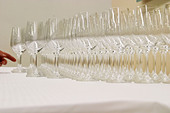
 Consumption of wine in 2008 shrunk with 2 million hl, but the world wine market is becoming increasingly global. 37% of all wine produced were exported, i.e. were drunk in another country than where it was made. That’s up from 18% in the early 80s. World wine consumption is estimated to have reached 242,.9 Mhl in 2008, which is 2 Mhl less than in 2007. Ironically, it is primarily the big wine producing countries that have seen the consumption fall. In the “EU-15” people drank 2.2 Mhl less. It’s the first time in several years that wine consumption falls. (Source: OIV)
Thursday, April 30, 2009
World Wine Statistics: World wine consumption down, but exports up
Consumption of wine in 2008 shrunk with 2 million hl, but the world wine market is becoming increasingly global. 37% of all wine produced were exported, i.e. were drunk in another country than where it was made. That’s up from 18% in the early 80s. World wine consumption is estimated to have reached 242,.9 Mhl in 2008, which is 2 Mhl less than in 2007. Ironically, it is primarily the big wine producing countries that have seen the consumption fall. In the “EU-15” people drank 2.2 Mhl less. It’s the first time in several years that wine consumption falls. (Source: OIV)
The Systembolaget profit = 833 million SEK
The net profit for 2008 for Systembolaget AB, the Swedish retail alcohol monopoly, reached 833 M SEK (76 M euro). Total turnover increased from 20.2 M SEK to 21.3 M SEK and sales measured in volume pure alcohol grew with 2.7%. The CEO, Anitra Steen, is keen to point out the benefits of having a monopoly that is not profit motivated. Not motivated? Decent enough anyway.
Wednesday, April 29, 2009
2.3 million euros for indoctrination and propaganda
 No, we're not talking about the French anti-wine campaigns. 2.3 million euro (25 M SEK to be precise) is the budget that the Swedish retail monopoly Systembolaget spends on advertising in a year, according to numbers released at their AGM recently. But don’t get it wrong, they are not making publicity for wine or spirits. The “advertising” they do is primarily telling the Swedish people how lucky they are to have the Systembolaget monopoly, how wonderful a job they do in making sure Swedes have a muuuch better wine selection than in countries without a monopoly etc etc. The CEO Anitra Steen says: “It is important to all the time talk about the mission we have because if people are to continue supporting the monopoly they have to know why we have a retail monopoly, how it works, and what the effects of it are, and that’s what we talk about in our campaigns”. Every year they make a survey to gauge the support. In the latest one they have just over 60% support for the monopoly, up from less than 50% a few years ago. Is it very remarkable when they spend 2.3 million euro each year on telling people how wonderful they are?
Are wine bloggers journalist? Do wine bloggers exist in the real world?
 Are you a journalist if you blog about wine? That’s the question that Gabriella Opaz poses. She’s member of the British Circle of Wine Writers, CWW (just like us at BKWine). The reason is that the chairman of the CWW, Julie Arkell, has said in a letter to Off License News (OLN, a UK trade paper) that the CWW do not accept memberships of bloggers, if blogging is their only published activity. Gabriella is a member of the CWW and writes only on Catavino.net, a blog, sort of. Perhaps somewhat of a storm in a tea cup – if you are a “communicator” with a certain level of professionalism then what does the medium matter? Read more on wineblogger.info (On the picture: David Sifry, CEO of Technorati)
Tuesday, April 28, 2009
Barolo and its cru all’italiana
Many Barolo producers have a tradition of indicating a specific vineyard on the bottle. In Italy this is called Cru all’Italiana or singolo vigneto. However, this is in no way regulated by laws or regulations. This is about to change if the regional committee for DOCG Barolo has its way. The intention is to delimit and define the vineyards (borders, names, etc) that can be indicated on the label. If, that is, the Italian parliament gives it green light to the plan. Then, the only thing that remains is to agree on the details locally… www.italiaatavola.net
Lafite buys vineyard in China
 Lafite (Domaines Baron Rothschild) has bought a vineyard in the Shangdong province in China, in Penglai. They will initially plant 25 hectares of vines. The investment is done in collaboration with the Chinese group CITIC. Read more: newbordeaux.blog.co.uk
New DOC in Piedmont: Alba
The regional regulators in Piedmont have approved a new DOC, adding to the 44 already present. To qualify for the new DOC Alba the wine has to contain at least 70 % nebbiolo and 15 % barbera, the remaining being made up of other local varieties. The reasons for creating yet another DOC are, it is said, commercial. The city of Alba is internationally well known and will perhaps attract new buyers… www.italiaatavola.net
Monday, April 27, 2009
The best chardonnay wines
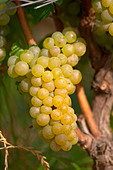 The competition Chardonnay du Monde has ranked the top chardonnay wines among the 923 competing entries from 37 countries. One wine was awarded Great Gold medal: Champagne Mandois 1er Cru Blanc de Blancs 2004, but 65 were given Gold. You can find the full results here www.chardonnay-du-monde.com
Falling Bordeaux prices?
 It is still too early to say what will happen to the Bordeaux prices. The presentation phase of the primeur campaign (wines from 2008) is now over and we are moving to the “price game”. Up? Stable? Down? We will know in the coming days and weeks. The UK market (most loudly) has clamoured for lower prices. Among the very first (perhaps the only one so far) to “release” its price for the 2008s is Chateau l’Angélus, owned by the business man Hubert de Boüard. He has launched his wine at 50 euro, compared to 85 euro for the 2007 – down by 40%. de Boüard says that his primary markets are in a crisis and that the 2008 is released at the same price as the 2004. One can then do the reverse calculation and note that between 2004 and 2007 Angélus raised their prices with 70%! So there is perhaps some margin for falling prices. Not many suppliers get a 70% price increase in three years. bordeauxwinenews.blogsudouest.com
Garage wine show in Copenhagen
Each year Dansk VinCenter organises the Garage Wine Fair in Copenhagen. This year they have announced the date to be 23 August at 11.00 to 16.00. There will be many wines to taste and good food on offer. Numerous importers and producers will be represented. More info: www.garagevin.com
Denmark’s first commercial vineyard celebrates 10 year anniversary
In 1999 a few crazy souls started Dansk VinCenter. They planted 10,000 vines and thus became the first commercial vineyard in Denmark. In 2003 they launched their first wine with the odd name Nordlund (it’s a bit like calling a wine Smith or Jones in English). So this year they celebrate their 10th anniversary. Happy birthday! More info: www.vincenter.dk
Wednesday, April 22, 2009
Which grape variety is the most planted in France?
What is your guess? Cabernet? Syrah? Ugni blanc? Or something else? No, none of those. For most of the 20th century it was carignan, but half of that acreage has been up-rooted, primarily in the Languedoc region. So, the answer is: merlot.This blog post is now available on our NEW BLOG LOCATION: France's most planted grape varieties on The NEW BKWine Blog on BKWine Magazine. Please remember to change your bookmark and RSS feed.
Here’s the latest statistics:....
Tuesday, April 21, 2009
BKWine TV: Domaine du Sang des Cailloux, Rhône
 We’ve published a new interview on BKWine TV: The winemaker Serge Férigoule at Domaine du sang des Cailloux in the southern Rhône Valley. the vineyards are in Vacqueyras, near Courthezon. He makes primarily two cuvees, a Cuvée Classique that he names after his three daughters (Doucinelle, Florette, or Azalais) and a cuvee vieilles vignes made from old vines. Watch the video with the winemaker at domaine du Sang des Cailloux on BKWine TV.
It’s spring. Can you hear the twittering?
 “Social media” is a somewhat vague term, but one has to try and understand it. “Twitter” is a web service that became well known much thanks to the American presidential election. Obama twittered. I’m not sure if Mc Cain (was that his name?) twittered. Now BKWine too twitters. To twitter is to send short messages, not more than 140 characters. A bit like SMS, or texting on the phone. The difference is that anyone (or more precisely, any follower) can read the message. So now we’re twittering to our heart’s delight… About what we’re drinking for dinner. Where we’re travelling. What we’re writing about just now. And so on. If by any chance you’d be interested in that. And perhaps one day we’ll figure out what it’s good for. If you want to listen to our twittering we’re here: http://twitter.com/bkwineper. And you do have to try and figure it out, don’t you?
Constellation unloads six wineries for $234 million
Constellation, one of the worlds biggest wine producers, has sold six vineyards and eight brands for $234 million. the buyer is a new venture capital backed company called Ascentia that is run by Peter Ekman, who has previously been with e.g. Wine.com. Ekman is of Swedish origin but has lived in California for several years. Which wineries and brands that are included is not disclosed, but we are led to believe that it is the Beam Wine Estates that was acquired by Constellation in 2007 for $885 million. Nice discount.
Over dose of wine critic
 A recent phenomenon in the (primarily) American world of wine critics is Gary Vaynerchuk. He owns and used to run a wine retailing business but has now moved on to building a brand around himself on video. His videos have become immensely popular and are watched by thousands of people… All follow the same format: Gary Vee (as he calls himself) talks to the camera and tastes a handful of wines, sometimes together with a guest taster. The clips are undeniably original and not to everyone’s taste. That they have such an immense following is somewhat of a mystery. If you have never seen one of his videos this is a good introduction, a bit like an amarone Recioto of Vaynerchuk, or an OD of wine criticism: www.boozemonkey.com Difficult not to laugh.
American Wine Bloggers’ Conference
If instead you are in North America you can attend the American Wine Bloggers’ Conference. It takes place on July 24-26 in Napa and Sonoma. More about this here: http://winebloggersconference.org/america/
European Wine Bloggers’ Conference in Lisbon in October
 For the second year in a row there will be a big meeting for all European wine bloggers, this time based in Lisbon. The conference is above all an occasion to meet many other wine bloggers: wine enthusiasts, journalists, blogging winemakers, marketers and anyone else who’s interested in wine blogging. And there will be plenty of opportunities to taste many exciting Portuguese wines. The EWBC takes place in Lisbon on October 30 to November 1. And it’s virtually free for wine bloggers! More info http://winebloggersconference.org/europe/ (And for twitterers: #EWBC )
Monday, April 20, 2009
BKWine Travel Stories: Bordeaux day 4
Chateau Grand Barrail Lamarzelle Figeac
We’ve not yet gone across the river to the right bank, Rive Droite, so this morning we make the short trip over the Dordogne up to Saint Emilion: Chateau Grand Barrail Lamarzelle Figeac, not far from Figeac itself (and in the “secteur” in Saint Emilion called Figeac). Romuald Hebrard the winemaker takes us out into the vineyard to explain about the growth of the vine at this time of spring. We look at training methods, why the vines are pruned at a certain height, buds and counter-buds (or whatever they might be called, les contre-bourgeons)... In the wine cellar they have a very unusual and interesting destalking and sorting machine, a type of egrappoir that at the same time destalks and is capable of separating riper gripes from less ripe ones. Impressive technology. Also the barrel cellar is impressive, in a similar circular design as Lafite had, albeit a bit more modest in size. And you have to take care to not be showered by the spittoon sprinklers! The winery also has a shop where you can of course by the wines from the chateau, but also from quite a few other Bordeaux chateau. Well placed on the road leading to Saint Emilion.
Chateau Moulin du Cadet
 We’re not quite yet getting hungry but lunch is approaching so we head towards our next (and lunch) appointment, Chateau Moulin du Cadet in the “Secteur Cadet” just north of the small town of St Emilion. Moulin du Cadet is run by Pierre Blois since some years back (once upon a time it was bought by his father-in-law). It is one of only a handful of properties in the whole of the Bordeaux region that is run according to biodynamic principles. (The neighbour is another one, Chateau Fonroque, run by Pierre’s brother-in-law, Alain Moueix.) Pierre Blois says that one of the effects of working biodynamically is that the wines become much more mineral. So what does ‘mineral’ mean? Well, he says, it’s a slightly salty taste, in particularly in the after-taste. He also makes some other descriptions: it’s as if you tasted a stone (mineral), or as if you had butterflies in the mouth (in the way that it has no heaviness, but much elegance and delicate flavours), or, as the French sometimes say, it’s “droit”, i.e. “straight” (this is in contrast to being round, soft of fat); sometimes also “aerien” (“airy”), in contrast to “terrien” (“earthbound”, rather than earthy). Perhaps not very easy to understand when one reads it but quite good descriptions when you have the wine in the mouth and can feel it. And there is often, when tasting bio-dynamic wines, a certain clarity and crispness in the mouth. If it is due to bio-dynamics, or if it is simply due to very good winemaking is anyone’s guess. We have the opportunity to taste Pierre’s wine over lunch, a harvest workers’ lunch (although it’s springtime) in the barrel aging cellar, both his Chateau Moulin du Cadet and his other label Chateau Cadet Fontpierre. Probably the best grilled entrecote we’ve ever had! Must remember to get the name of his butcher!
Saint Emilion
You just have to stop for a walk in Saint Emilion itself, if you’re nearby, so we do. It’s a wonderful town or village (can’t quite decide if it’s a small town or a big village) with medieval streets. A must see. (But perhaps not in peak tourism season since it’s one of the main French tourist attractions, on the Unesco list of World Heritage sites. And when you’re there you must try the ‘macarons de Saint Emilion’, small, soft and succulent almond biscuits. Delicious. And maybe buy a souvenir merlot wine that are on sale in many of the wine shops in the village?
Bordeaux city
Time to head back to Bordeaux city and have a night in town!
We’ve certainly been ‘gatés’ by all the winemakers and by the weather this time round!


We’ve not yet gone across the river to the right bank, Rive Droite, so this morning we make the short trip over the Dordogne up to Saint Emilion: Chateau Grand Barrail Lamarzelle Figeac, not far from Figeac itself (and in the “secteur” in Saint Emilion called Figeac). Romuald Hebrard the winemaker takes us out into the vineyard to explain about the growth of the vine at this time of spring. We look at training methods, why the vines are pruned at a certain height, buds and counter-buds (or whatever they might be called, les contre-bourgeons)... In the wine cellar they have a very unusual and interesting destalking and sorting machine, a type of egrappoir that at the same time destalks and is capable of separating riper gripes from less ripe ones. Impressive technology. Also the barrel cellar is impressive, in a similar circular design as Lafite had, albeit a bit more modest in size. And you have to take care to not be showered by the spittoon sprinklers! The winery also has a shop where you can of course by the wines from the chateau, but also from quite a few other Bordeaux chateau. Well placed on the road leading to Saint Emilion.
Chateau Moulin du Cadet
 We’re not quite yet getting hungry but lunch is approaching so we head towards our next (and lunch) appointment, Chateau Moulin du Cadet in the “Secteur Cadet” just north of the small town of St Emilion. Moulin du Cadet is run by Pierre Blois since some years back (once upon a time it was bought by his father-in-law). It is one of only a handful of properties in the whole of the Bordeaux region that is run according to biodynamic principles. (The neighbour is another one, Chateau Fonroque, run by Pierre’s brother-in-law, Alain Moueix.) Pierre Blois says that one of the effects of working biodynamically is that the wines become much more mineral. So what does ‘mineral’ mean? Well, he says, it’s a slightly salty taste, in particularly in the after-taste. He also makes some other descriptions: it’s as if you tasted a stone (mineral), or as if you had butterflies in the mouth (in the way that it has no heaviness, but much elegance and delicate flavours), or, as the French sometimes say, it’s “droit”, i.e. “straight” (this is in contrast to being round, soft of fat); sometimes also “aerien” (“airy”), in contrast to “terrien” (“earthbound”, rather than earthy). Perhaps not very easy to understand when one reads it but quite good descriptions when you have the wine in the mouth and can feel it. And there is often, when tasting bio-dynamic wines, a certain clarity and crispness in the mouth. If it is due to bio-dynamics, or if it is simply due to very good winemaking is anyone’s guess. We have the opportunity to taste Pierre’s wine over lunch, a harvest workers’ lunch (although it’s springtime) in the barrel aging cellar, both his Chateau Moulin du Cadet and his other label Chateau Cadet Fontpierre. Probably the best grilled entrecote we’ve ever had! Must remember to get the name of his butcher!
Saint Emilion
You just have to stop for a walk in Saint Emilion itself, if you’re nearby, so we do. It’s a wonderful town or village (can’t quite decide if it’s a small town or a big village) with medieval streets. A must see. (But perhaps not in peak tourism season since it’s one of the main French tourist attractions, on the Unesco list of World Heritage sites. And when you’re there you must try the ‘macarons de Saint Emilion’, small, soft and succulent almond biscuits. Delicious. And maybe buy a souvenir merlot wine that are on sale in many of the wine shops in the village?
Bordeaux city
Time to head back to Bordeaux city and have a night in town!
We’ve certainly been ‘gatés’ by all the winemakers and by the weather this time round!


Saturday, April 18, 2009
BKWine Travel Stories: Bordeaux day 3
Lestrille
 Starting the day (third day in Bordeaux) at Chateau Lestrille - it's a smallish property in the Entre Deux Mers run by the young and talanted vigneronne Estelle Roumage. It's a family property since a few generations. Today they make a range of wines of all colours, for example a quite substantial Bordaux Clairet, more colourful and substantial than many a red Alsace. The make a few different red cuvees, one of which they even age partially in American oak (not much though, perhaps some 10% so it's in no way a major influence on the character. Certainly a good source for moderately priced Bordeaux wines. It will be interesting to follow the development of Estelle's winemaking in the future.
La Garde

 Second stop on today's itinerary: Chateau La Garde a property in the Pessac Leognan region, not one of the best known, but one that has undeergone lots of changes recently. It was bought some years ago by Dourthe (the Bordeaux negociant) and they have made substantial renovations and investments. E.g. a large part of the vineyard has had to be replanted. The latest new planting is experimental, with an exceptionally high planting density: 13500 vines per hectare. They also make a small quantity of white that is a 50/50 blend between sauvignon blanc and sauvignon gris. (Sauvignon gris is one of those varieties that it is a pity that we don't see more of!) And to conclude the visit a splendid lunch with La Garde's second wine La Terrasse, as well as le grand vin. Cote de Boeuf from Blonde d'Aquitaine beef and other nice things...
Yquem
 Rain invades southern Bordeaux during lunch and it makes for a gloomy entrance to Chateau Yquem, if that is possible. In spite of the drizzle Sandrine Garbay, Yquems chief winemaker takes us out into the vineyards to look at the budding wines. A new discovery: at Yquem as well as many other Sauternes chateaux, they use goble pruning! Not straight forward gobelet, but a variant that is called gobelet pallisse', so, gobelet trained on a wire. Looks a bit like a chunky cordon actually. A visit to their magnificent (theatrical) cellar is followed by a tasting. As soon as the Yquem is poured in the glasses the sun emerges from behind the clouds. And not figuratively speaking but literally.
Pey Latour and Essence de Dourthe
Getting back to night camp at Pey Latour takes us through some of the pretty landscape in the Entre-deux-Mers. It's a much prettier region than Medoc, much greener, more undulating, but of course less magnificent chateau, but they do have quite a few of their own.
Dinner at Pey Latour is accompanied by a tasting of a range of the Dourte wines, and we finish with the Essence de Dourthe. It's an interesting concept that Dourthe first made in 2000: it's a blend of the very best wine from each of their chateaux. Each of the Chateau that they run (six or seven) have two of their best hectares set aside as an Essence candidate and each year they make a selection of the very best barrels from the chateaux and make a blend of it. So in a way it is the top of the top of what Dourthe can do, trying to compete with the very top wines in the world. Appellation Bordeaux of course, since it's a mix of Medoc, Graves, St Emilion etc. Certainly one of the most expensive AOC Bordeaux around, in the range of 85 euros. But indeed an outstandingly good wine.
 Starting the day (third day in Bordeaux) at Chateau Lestrille - it's a smallish property in the Entre Deux Mers run by the young and talanted vigneronne Estelle Roumage. It's a family property since a few generations. Today they make a range of wines of all colours, for example a quite substantial Bordaux Clairet, more colourful and substantial than many a red Alsace. The make a few different red cuvees, one of which they even age partially in American oak (not much though, perhaps some 10% so it's in no way a major influence on the character. Certainly a good source for moderately priced Bordeaux wines. It will be interesting to follow the development of Estelle's winemaking in the future.
La Garde

 Second stop on today's itinerary: Chateau La Garde a property in the Pessac Leognan region, not one of the best known, but one that has undeergone lots of changes recently. It was bought some years ago by Dourthe (the Bordeaux negociant) and they have made substantial renovations and investments. E.g. a large part of the vineyard has had to be replanted. The latest new planting is experimental, with an exceptionally high planting density: 13500 vines per hectare. They also make a small quantity of white that is a 50/50 blend between sauvignon blanc and sauvignon gris. (Sauvignon gris is one of those varieties that it is a pity that we don't see more of!) And to conclude the visit a splendid lunch with La Garde's second wine La Terrasse, as well as le grand vin. Cote de Boeuf from Blonde d'Aquitaine beef and other nice things...
Yquem
 Rain invades southern Bordeaux during lunch and it makes for a gloomy entrance to Chateau Yquem, if that is possible. In spite of the drizzle Sandrine Garbay, Yquems chief winemaker takes us out into the vineyards to look at the budding wines. A new discovery: at Yquem as well as many other Sauternes chateaux, they use goble pruning! Not straight forward gobelet, but a variant that is called gobelet pallisse', so, gobelet trained on a wire. Looks a bit like a chunky cordon actually. A visit to their magnificent (theatrical) cellar is followed by a tasting. As soon as the Yquem is poured in the glasses the sun emerges from behind the clouds. And not figuratively speaking but literally.
Pey Latour and Essence de Dourthe
Getting back to night camp at Pey Latour takes us through some of the pretty landscape in the Entre-deux-Mers. It's a much prettier region than Medoc, much greener, more undulating, but of course less magnificent chateau, but they do have quite a few of their own.
Dinner at Pey Latour is accompanied by a tasting of a range of the Dourte wines, and we finish with the Essence de Dourthe. It's an interesting concept that Dourthe first made in 2000: it's a blend of the very best wine from each of their chateaux. Each of the Chateau that they run (six or seven) have two of their best hectares set aside as an Essence candidate and each year they make a selection of the very best barrels from the chateaux and make a blend of it. So in a way it is the top of the top of what Dourthe can do, trying to compete with the very top wines in the world. Appellation Bordeaux of course, since it's a mix of Medoc, Graves, St Emilion etc. Certainly one of the most expensive AOC Bordeaux around, in the range of 85 euros. But indeed an outstandingly good wine.
Friday, April 17, 2009
BKWine Travel Stories: Bordeaux day 2
One that you might not have heard of: Clos des Quatre Vents in Margaux. Together with Chateau des Quatre Soeurs. It is two properties owned (and run) by Luc Thienpont (part of the famous Belgian family, various branches of which run several chateaux in Bordeaux). He used to run Chateau Labegorce Zede, but the family decided to sell it in the early 2000s. Tiny, tiny property, only two and a half hectares, but on prime Margaux territory. From the LZ era he has retained a branded wine called Z. Good wines each in its own category. Thienpont opened a wine shop in the Margaux village last year. Good source for wine if you're driving along the Route des Chateaux.
We'll soon be publishing a video interview with Luc.

 Second stop: far north: turn right at the 40 million euro Cos d'Estournel cellar renovation and you'll come to Chateau Phelan Segur. Not a classed growth but run like one. Owned by the ardinier family who used to own Lanson and Pommery in Champagne. Really excellent lunch made by the chateau chef. Well, it should be since the chef trained at the Michel two star restaurant Les Crayeres in Reims, Champagne, which is also port of the Gardinier empire. Nice tasting (good 08, quite austere ut very promising) and some really good "older" (in relative terms - but still very unusal to be treated to inn Bordeaux!) vintages for lunch. A lunch to linger over, but we could not.
 We had to rush (again, in relative terms) to our next rendez-vous: Chateau Lafite. I was particularly keen on it since I have not seen their new cellar, reputed to be spectacular. But before going there we passed through the barrel cellar where they were racking and sulphuring barrles. Stings in the nose. Good priming for the tasting in the circular Ricardo Bofill cellar... We had some respite though before tasting as we passed through the private bottle cellar with old, old vintages. We tasted a mystery vintage, no one guessed... it was Chateau Lafite 1995. Certainly still very young with lots of tanning, in spite of being double decanted at 11 in the morning.
 Next stop, Chateau Reysson, in Haut Medoc, a property that Dourthe runs for the Japanese owners since the early 00s. It has certainily improved immensly since, and is now a very ambitious Haut-Medoc. Lots of investments in vineyards (replanting...) and in the cellar. A scoop, tasting the vintage (2005 I think it was, have to check the notes) that will be released on the Swedish market in October. Very nice, well made, modern & classic (can you say that?) Bordeaux.
 But the day is not finished. Dinner is scheduled at Chateau Belgrave, also a Haut Medoc, but one that was classified Grand Cru Classe (one of the few that is not in one of the sub-appellations). Before dinner though we make a pit stop in the vineyard with the chef de culture. Passionate about vines and vine growing. Nice to have the vines explained by someone who really, really knows what he talks about. But he has 450,000 of them to take care of so he should know!
Finishing a very long day with another delicous dinner, with a few of Belgrave's own wines of course and then a long drive (by the driver) back to the bed at Chateau Pey Latour.
-P
We'll soon be publishing a video interview with Luc.

 Second stop: far north: turn right at the 40 million euro Cos d'Estournel cellar renovation and you'll come to Chateau Phelan Segur. Not a classed growth but run like one. Owned by the ardinier family who used to own Lanson and Pommery in Champagne. Really excellent lunch made by the chateau chef. Well, it should be since the chef trained at the Michel two star restaurant Les Crayeres in Reims, Champagne, which is also port of the Gardinier empire. Nice tasting (good 08, quite austere ut very promising) and some really good "older" (in relative terms - but still very unusal to be treated to inn Bordeaux!) vintages for lunch. A lunch to linger over, but we could not.
 We had to rush (again, in relative terms) to our next rendez-vous: Chateau Lafite. I was particularly keen on it since I have not seen their new cellar, reputed to be spectacular. But before going there we passed through the barrel cellar where they were racking and sulphuring barrles. Stings in the nose. Good priming for the tasting in the circular Ricardo Bofill cellar... We had some respite though before tasting as we passed through the private bottle cellar with old, old vintages. We tasted a mystery vintage, no one guessed... it was Chateau Lafite 1995. Certainly still very young with lots of tanning, in spite of being double decanted at 11 in the morning.
 Next stop, Chateau Reysson, in Haut Medoc, a property that Dourthe runs for the Japanese owners since the early 00s. It has certainily improved immensly since, and is now a very ambitious Haut-Medoc. Lots of investments in vineyards (replanting...) and in the cellar. A scoop, tasting the vintage (2005 I think it was, have to check the notes) that will be released on the Swedish market in October. Very nice, well made, modern & classic (can you say that?) Bordeaux.
 But the day is not finished. Dinner is scheduled at Chateau Belgrave, also a Haut Medoc, but one that was classified Grand Cru Classe (one of the few that is not in one of the sub-appellations). Before dinner though we make a pit stop in the vineyard with the chef de culture. Passionate about vines and vine growing. Nice to have the vines explained by someone who really, really knows what he talks about. But he has 450,000 of them to take care of so he should know!
Finishing a very long day with another delicous dinner, with a few of Belgrave's own wines of course and then a long drive (by the driver) back to the bed at Chateau Pey Latour.
-P
Wednesday, April 15, 2009
BKWine Travel Stories: Bordeaux day 1

 They promised heavy rain storm today in Bordeaux, but when we arrive skies are clearing up. We arrive just in time for lunch... A very (very) good option if you arrive by train is L'Olivier de Clavel, just next to the train station. Outstanding value for money, two courses for 16 euro, including a glass of wine (with a choice of several). We start with a Pequillo (Pyrenee belle pepper) filled with brandade de mourue, followed by a dorade on a delicious risotto with parmesan. A very good address for lunch or dinner, but don't expect charming surronding. The area around the train station in Bordeaux is not really the cutest area in the city. Go there for the restaurant, not for the view.
-

 After spending a few leisurely hours walking in the city (well deserved after handing in our new manuscript around midnight last night) we drive out the Chateau Pey La Tour in Entre-deux-Mers, where we will be staying a few days.
-

 Again we just avoid the reainstorms (5 minute margin on arrival) and instead arrive in a glorious late evening sunshine. Nice dinner at the chateau (asparagus, canette, brebis des Pyrenees...) with a few of Dourthe's wine (they own Pey Latour).
The only negative: having a serious fit of spring allergy. Very frustrating.
Good start to a few days in the region!
-P
Tuesday, April 14, 2009
This month's wine pick
Our friends' wine picks of the month.
Criteria: an interesting wine (not too cheap) and one that you can enjoy with dinner or friends (not too expensive). And very good! (Jack is BKWine’s reporter in Stockholm, following the Swedish wine market. Åsa is BKWine’s specialist on Italy, based in Florence.)
Jack’s wine pick of the month
Saint Joseph 2007, Les Vins de Vienne
 April brings with it both Easter and cool evenings, the perfect context to try some fruity, young syrah. And what better than to try something from the somewhat lesser-known district Saint Joseph, in the middle of the northern Rhône “Syrah Land”. My choice is a bottle from Les Vins de Vienne, a joint venture between three growers: Yves Cuilleron, François Villard, Pierre Gaillard and Jean-Pierre Villa (sold for around 14€ in Sweden). It gives you plenty of young and fresh fruit and the classic syrah charcuteri flavours, with a wrapping of raw meat and some oak character. Drink it now before it closes up, or save it another five to eight years. Perfect to accompany the bloody steak or hard cheeses. Or the Easter lamb.
-Jack Jakobsson
Åsa’s wine pick of the month
Le Volte, an elegant wine for every day
Ornellaia is a world famous wine and is a top “super Tuscan”. at least if you look at the price tag. Count on no less then 150 euro, if not more, so it’s not quite for every day drinking. Tenuta Ornellaia, started by Ludovico Antinori, but now owned by the American wine giant Mondavi, they also produce a baby brother wine called le Volte. Le Volte is made from 50% sangiovese, 35 % merlot and 15 % cabernet sauvignon with a barrel aging of 10 months (two year old barrels, already used for Ornellaia and Masseto). Le Volte is well balanced with a full, round taste with a refreshing acidity in the finish, which is typical for (well made) sangiovese. An affordable, yet elegant wine for around 15 euro. www.ornellaia.com
-Åsa Johansson
Criteria: an interesting wine (not too cheap) and one that you can enjoy with dinner or friends (not too expensive). And very good! (Jack is BKWine’s reporter in Stockholm, following the Swedish wine market. Åsa is BKWine’s specialist on Italy, based in Florence.)
Jack’s wine pick of the month
Saint Joseph 2007, Les Vins de Vienne
April brings with it both Easter and cool evenings, the perfect context to try some fruity, young syrah. And what better than to try something from the somewhat lesser-known district Saint Joseph, in the middle of the northern Rhône “Syrah Land”. My choice is a bottle from Les Vins de Vienne, a joint venture between three growers: Yves Cuilleron, François Villard, Pierre Gaillard and Jean-Pierre Villa (sold for around 14€ in Sweden). It gives you plenty of young and fresh fruit and the classic syrah charcuteri flavours, with a wrapping of raw meat and some oak character. Drink it now before it closes up, or save it another five to eight years. Perfect to accompany the bloody steak or hard cheeses. Or the Easter lamb.-Jack Jakobsson
Åsa’s wine pick of the month
Le Volte, an elegant wine for every day
Ornellaia is a world famous wine and is a top “super Tuscan”. at least if you look at the price tag. Count on no less then 150 euro, if not more, so it’s not quite for every day drinking. Tenuta Ornellaia, started by Ludovico Antinori, but now owned by the American wine giant Mondavi, they also produce a baby brother wine called le Volte. Le Volte is made from 50% sangiovese, 35 % merlot and 15 % cabernet sauvignon with a barrel aging of 10 months (two year old barrels, already used for Ornellaia and Masseto). Le Volte is well balanced with a full, round taste with a refreshing acidity in the finish, which is typical for (well made) sangiovese. An affordable, yet elegant wine for around 15 euro. www.ornellaia.com
-Åsa Johansson
Monday, April 13, 2009
BKWine Brief nr 69, April 2009
Castilla y Léon
Castilla y Léon? Yes, that’s right. We were recently there to take a closer look at their wines, but not, as you might think their most famous wine region the Ribera del Duero. Let’s begin with a short intro: Castilla y Léon is one of the regions in Spain. It’s the biggest one and stretches from a bit north west of Madrid up to Galicia (bordering the Atlantic). On the western side it also touches Portugal. The main city is Valladolid, a charming mid-size city with direct flights to a few other European countries. Or you can fly to Madrid and take the train (or a car).
The region has about a dozen different wine districts, but we “only” had time to cover six of them over the three and a half days we spent there: DO Cigales, DO Arribes, DO Tierra del Vino de Zamora, VCPRD Valles de Benavente, DO Bierzo, DO Tierra de Leon. Here are some short notes:
Bodegas Concejo (previously Bodegas y Vinedos Pilcar) is a familiy vineyard with high ambitions, located in the DO Cigales close to Valladolid. Enrique Concejo runs the winery since a few years back when he took over after his father. Very modern wines with lots of barrel aging. He also has an impressive hotel project in the pipe, which seems to include renovating half of an ancient village nearby. www.concejobodegas.com
La Setera is a very small winery in the remote corner called DO Arribes (the district is actually called Arribes del Duero, but the DO is just Arribes. Apparently some tricky issue with DO Ribera del Duero…). The country side looks rough, remote and grandiose. La Setera makes the red wines primarily from a local grape variety called Juan Garcia, very interesting, producing wines with lots of freshness, acidity and minerality (good structure). They also make a white from malvasia that is a steal. A pity they make so few bottles. And on top of it they make wonderful goat cheese. www.lasetera.com
Bodegas Vinas del Cenit (DO aptly named Tierra del Vino de Zamora) is much bigger and a “commercial” oriented bodega (not least thanks to its site). They make very concentrated wines with lots of very ripe fruit and extensive barrel aging. Very modern and international in style. Curios fact: they have a vineyard with old ungrafted tempranillo. www.bodegascenit.com
Bodegas Viñas Zamoranas (DO Tierra Del Vino De Zamora). You cannot avoid talkling about the hotel that is part of the property when you describe Zamoranas. A very peculiar hotel experience. It’s in what used to be a priest seminary and decorated with a lot of religious and other ancient (and not so ancient) art. But don’t get it wrong – they also have an Egyptian night club! The wines are traditional and definitely not as bizarre as the hotel. www.hotel-convento.com
Bodegas Otero (V.C.P.R.D. Valles De Benavente) is on one of the big avenues in the town of Benavente (when the bodega was built it was in the countryside). Tasted several of their wines made from primarily the unusual grape variety prieto picudo (sometimes mixed with tempranillo). Good wines with a refreshing acidity and red fruit character. With aging potential, judging from the rosé 1970 we tasted! www.bodegasotero.es
Bodegas y Vinedos Agribergidum (DO Bierzo). Bierzo is in the far north west corner. Near the city of Ponferrada there is an old roman gold mine (Las Medulas). From the top of the mountain you have a spectacular view of what looks like gigantic termite mounds, but it’s what remains of the Unesco World Heritage classified mine. The bodega make excellent wines using varying brands for the different cuvees, both red, white, rosé and sparkling, modern in style without being over-dosed on oak. Will be interesting to follow their evolution. www.agribergidum.es
Bodegas Margon (DO Tierra de Léon) is a brand new vineyard. The owners are not short of resources so all equipment and the winery is gleaming new. The wines show nicely and promise well for the future. Perhaps a bit “international” so let’s hope they will try and develop the local originality once they have reached cruising speed. they do have one big problem: the wine is called Pricum, no doubt as a roman reference, but it will hardly work well as a brand in English speaking markets. www.bodegasmargon.com
Bodegas Frutos Villar, in DO Cigales, is the DO’s biggest producer. Their main brand in Cigales is Calderona. (They also own vineyards in Ribera, Rueda and Toro). They offer a wide range of products Calderona and others. Their mid range is the most interesting from a value for money standpoint (e.g. Roble and Crinaza). www.bodegasfrutosvillar.com
In other words, lots of things to see and taste in Castilla y Léon! Wine, Serrano ham in droves (yummy!), tapas and much more. We will have reasons to come back to this in other contexts.
Bordeaux Primeurs
This year’s primeur campaign is over. It turned out better than many had feared at early this year even if attendance was a bit down from last year. Now we have to wait and see what will happen to the prices, which will start coming out over the next few weeks and months. Only one chateau has already “come out” as we write this. Read more below.
Languedoc
Languedoc too has its Primeurs Launch. It was a multi-day event earlier this spring where participants had the opportunity to taste more than 500 wines from most of the regions appellations. It is difficult to give a brief summary of the wines (there were so many and of so different character), but they all seem to have turned out better than what could have been feared last summer. Before and during the harvest weather was nice but with cool nights, which has brought a fresh acidity and more aromas to the wines. We will come back to this!
Wine travel
Don’t forget to take a look at our travel program for this autumn further down in the Brief. We’re just back from a wonderful trip to Champagne and Chablis with four days of splendid weather. No dining outside yet but many wines were tasted in the vignerons’ gardens inn the spring sunshine.
The coming autumn we have two Bordeaux trips on the public schedule. But we also do custom made trips for wine clubs, private parties, companies and others. Last year we organised and personally led some 30 wine tours: France of course, but also Italy, Portugal, Spain, Germany, Austria, Germany…
Britt & Per
PS: Recommend to your friends to read the Brief or forward it to them !
More on wine:
Read all of this issue of the Brief here!
Castilla y Léon? Yes, that’s right. We were recently there to take a closer look at their wines, but not, as you might think their most famous wine region the Ribera del Duero. Let’s begin with a short intro: Castilla y Léon is one of the regions in Spain. It’s the biggest one and stretches from a bit north west of Madrid up to Galicia (bordering the Atlantic). On the western side it also touches Portugal. The main city is Valladolid, a charming mid-size city with direct flights to a few other European countries. Or you can fly to Madrid and take the train (or a car).
The region has about a dozen different wine districts, but we “only” had time to cover six of them over the three and a half days we spent there: DO Cigales, DO Arribes, DO Tierra del Vino de Zamora, VCPRD Valles de Benavente, DO Bierzo, DO Tierra de Leon. Here are some short notes:
Bodegas Concejo (previously Bodegas y Vinedos Pilcar) is a familiy vineyard with high ambitions, located in the DO Cigales close to Valladolid. Enrique Concejo runs the winery since a few years back when he took over after his father. Very modern wines with lots of barrel aging. He also has an impressive hotel project in the pipe, which seems to include renovating half of an ancient village nearby. www.concejobodegas.com
La Setera is a very small winery in the remote corner called DO Arribes (the district is actually called Arribes del Duero, but the DO is just Arribes. Apparently some tricky issue with DO Ribera del Duero…). The country side looks rough, remote and grandiose. La Setera makes the red wines primarily from a local grape variety called Juan Garcia, very interesting, producing wines with lots of freshness, acidity and minerality (good structure). They also make a white from malvasia that is a steal. A pity they make so few bottles. And on top of it they make wonderful goat cheese. www.lasetera.com
Bodegas Vinas del Cenit (DO aptly named Tierra del Vino de Zamora) is much bigger and a “commercial” oriented bodega (not least thanks to its site). They make very concentrated wines with lots of very ripe fruit and extensive barrel aging. Very modern and international in style. Curios fact: they have a vineyard with old ungrafted tempranillo. www.bodegascenit.com
Bodegas Viñas Zamoranas (DO Tierra Del Vino De Zamora). You cannot avoid talkling about the hotel that is part of the property when you describe Zamoranas. A very peculiar hotel experience. It’s in what used to be a priest seminary and decorated with a lot of religious and other ancient (and not so ancient) art. But don’t get it wrong – they also have an Egyptian night club! The wines are traditional and definitely not as bizarre as the hotel. www.hotel-convento.com
Bodegas Otero (V.C.P.R.D. Valles De Benavente) is on one of the big avenues in the town of Benavente (when the bodega was built it was in the countryside). Tasted several of their wines made from primarily the unusual grape variety prieto picudo (sometimes mixed with tempranillo). Good wines with a refreshing acidity and red fruit character. With aging potential, judging from the rosé 1970 we tasted! www.bodegasotero.es
Bodegas y Vinedos Agribergidum (DO Bierzo). Bierzo is in the far north west corner. Near the city of Ponferrada there is an old roman gold mine (Las Medulas). From the top of the mountain you have a spectacular view of what looks like gigantic termite mounds, but it’s what remains of the Unesco World Heritage classified mine. The bodega make excellent wines using varying brands for the different cuvees, both red, white, rosé and sparkling, modern in style without being over-dosed on oak. Will be interesting to follow their evolution. www.agribergidum.es
Bodegas Margon (DO Tierra de Léon) is a brand new vineyard. The owners are not short of resources so all equipment and the winery is gleaming new. The wines show nicely and promise well for the future. Perhaps a bit “international” so let’s hope they will try and develop the local originality once they have reached cruising speed. they do have one big problem: the wine is called Pricum, no doubt as a roman reference, but it will hardly work well as a brand in English speaking markets. www.bodegasmargon.com
Bodegas Frutos Villar, in DO Cigales, is the DO’s biggest producer. Their main brand in Cigales is Calderona. (They also own vineyards in Ribera, Rueda and Toro). They offer a wide range of products Calderona and others. Their mid range is the most interesting from a value for money standpoint (e.g. Roble and Crinaza). www.bodegasfrutosvillar.com
In other words, lots of things to see and taste in Castilla y Léon! Wine, Serrano ham in droves (yummy!), tapas and much more. We will have reasons to come back to this in other contexts.
Bordeaux Primeurs
This year’s primeur campaign is over. It turned out better than many had feared at early this year even if attendance was a bit down from last year. Now we have to wait and see what will happen to the prices, which will start coming out over the next few weeks and months. Only one chateau has already “come out” as we write this. Read more below.
Languedoc
Languedoc too has its Primeurs Launch. It was a multi-day event earlier this spring where participants had the opportunity to taste more than 500 wines from most of the regions appellations. It is difficult to give a brief summary of the wines (there were so many and of so different character), but they all seem to have turned out better than what could have been feared last summer. Before and during the harvest weather was nice but with cool nights, which has brought a fresh acidity and more aromas to the wines. We will come back to this!
Wine travel
Don’t forget to take a look at our travel program for this autumn further down in the Brief. We’re just back from a wonderful trip to Champagne and Chablis with four days of splendid weather. No dining outside yet but many wines were tasted in the vignerons’ gardens inn the spring sunshine.
The coming autumn we have two Bordeaux trips on the public schedule. But we also do custom made trips for wine clubs, private parties, companies and others. Last year we organised and personally led some 30 wine tours: France of course, but also Italy, Portugal, Spain, Germany, Austria, Germany…
Britt & Per
PS: Recommend to your friends to read the Brief or forward it to them !
More on wine:
Read all of this issue of the Brief here!
Thursday, April 09, 2009
BKWine TV: Domaine du Vieux Télégraphe, Châteauneuf du Pape
 Domaine du Vieux Télégraphe is certainly one of the best known and well-respected wineries in Chateauneuf. The name comes from an old telegraph tower that is on a hill on the property. The property is owned by the Brunier family. When we visited the domaine we made a short video with Daniel Brunier, one of the owners, who talks about some of his wines and shows us around the cellar. Watch the video with Daniel Brunier at Domaine du vieux Télégraphe in Chateauneuf du Pape on BKWine TV.
Champagne exports down 5%
It’s unusual to hear negative numbers from Champagne but in 2008 exports fell with 4.8% to reach “only” 322 million bottles. Counted in value it is estimated to have added up to 4.5 bn euro. 45% of sales go on export (51% if counted in value). In spite of the decrease 2008 is one of the top three years ever in champagne. Vitisphere.com
Wednesday, April 08, 2009
BKWine TV: Domaine du Grand Tinel, Châteauneuf du Pape
 Domaine du Grand Tinel is a sizeable property in Chateauneuf with 75 hectares in the appellation and in Côtes du Rhône, plus 14 ha under the name of Clos Saint Paul. It is not so well known, perhaps because it is only relatively recently that they have started to market their wines themselves. BKWine met the oenologist, who has previously worked in Mendoza in Argentina. Watch our interview with Olivier, Domaine Grand Tinel’s oenologist in Châteauneuf on BKWine TV (in French).
French wine exports stable
Wine exports from France reach in 2008 virtually the same level as in 2007, counted in value. The total value of the exports reached 6.8 bn euro. If you look at the volume, though, exports fell with 10% and reached 13.7 bn hectolitres. winealley.com
Red + white = rosé. True!
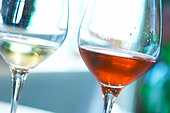 Blending red wine and rosé wine has been prohibited in most of Europe (except in Champagne where it is common). This is about to change: On January 27 the EU approved a proposal to allow the blending of red and white wine to make rosé. However, it is likely that each region will have the possibility to locally continue to prohibit this practice. Vitisphere.com
Tuesday, April 07, 2009
BKWine TV: Willy Brundelmayer, a top wine producer in Austria
 Willy Brundelmayer is one of the big wine producers in Austria. They are (in an Austrian perspective) one of the biggest producers, but, and more interestingly, they are also one of the top quality producers. A while back we met Willy Bruendelmayer, the owner and winemaker and made an interview where he talks about his wines (many) and his way of making wine. Watch the interview with Austrian winemaker Willy Brundelmayer on BKWine TV.
South Africa’s wine exports up 30%
Wine exports from South Africa grew with almost 32 % in 2008 to reach 4 million hectolitres. The biggest export market is Great Britain where volume growth was 22%. South Africa has reached fifth place among wine suppliers to the UK with a 10% market share. The other big export markets are Germany, the Netherlands, and Sweden. Vitisphere.com
Widget for wine
Natalie Maclean is a productive Canadian wine writer who also has an active life on the internet. She has just launched a new wine and food matching “widget” for social media. What it means? Well, it’s a small piece of code that one can use if one has a blog or a web page. By putting the code on one’s page one gets a little frame on the page with a food and wine matching tool to help you match the best wine with food. You can discover many things with the widget, sometimes quite amusing. For example, that if you’re serving baguette the perfect match is Monbazillac (a sweet white wine from near Bergerac) or Merlot. And if you want to finish a bottle of Bandol, you could serve grilled vegetables. Try it yourself here.
Monday, April 06, 2009
Laser detects fraud in old wine bottles
As expensive wines get dearer the problem with wine fraud increases. A team of researchers at the Centre d’études nucléaires de Bordeaux Draguignan (CENBG) has developed a method that will make life more difficult for fraudsters: Using a laser and studying how the light is reflected from the bottle they can identify when the bottle was made. The dating of the glass bottle has a precision of one or two years. So if you are going to fake a wine in the future you had better find a bottle that is as old as it claims on the label.
Chinese oak in Rioja barrels
 Toneleria Magrenan is a Spanish cooper in the Rioja. They have started a collaboration with a Chinese supplier of wood from Mongolia (quercus mongolicus oak). They are making a first batch of 40 000 barrels that should be available sometimes this year. More than 20 winemakers are involved in the initial test (40 000 barriques means a lot of wine…), amongst those Miguel Torres. According to our information, the objective is not to get cheaper barrels (they cost about the same as French ones) but to get a different taste profile compared to French or American oak.
Genetically modified vines
To continue on the subject of the environment: Genetically modified grape vines are not allowed for production within the EU, but some experimental plantings exist. There are for example some 70 vines planted in the Alsace. One can think that from an environmental perspective it is bad with genetically modified grapes, but the issue is not simple. One of the main reasons to work on GM vines is to develop plants that are more resistant to diseases (in the Alsace planting they hope to avoid “court-noué”). If this is successful it would mean that spraying in the vineyards with chemical substances could be dramatically reduced, which would be a good thing. So, what should one prefer?
Wednesday, April 01, 2009
BKWine Travel Stories: Epernay in spring. Day 1.
Lovely sunshine on the way here. A few promising days ahead, going up to 20 degrees, accoriding to forecasts.
Avenue de Champagne perfect in sunset around 20.15 with deep blue sky.
Still doing road work on the Avenue, but not too bad. In evening all the 'houses' are brilliantly lit: Moet & Chandon, Perrier-Jouet, Pol Roger, de Venoge, Boizel, de Castellane, Mercier, Vranken / Demoiselle... Big boys...
Nice dinner at Table Kobus.
[Epernay is curiously lacking in good restaurants so there's not an awful lot of chocie. A few intereseting ones, e.g. le Berceau, famous, and Table Kobus. Terrible choice of hotels but Ibis is OK, as Ibis is. Not luxury, but dependable. Odd how "the heart of champagne is a bit lacking in choice of both restaurants and hotels.]
Starting with a nice rillette de saumon with a 100% pinot meunier from Eric Castres, original and interesting. Then a confit de canard with a somewhat smoky ecrase' de pomme de terre (would have been better without the smoky tang) with a champagne from Lemaire that was a blend from the three traditionial grapes. Much deeper in colour and more mature. And finishing with a tiramisou with bisquits roses de Reims (of course). And to round off, a coffee with mignardises (delicious caramel toffee !) and a marc de champagne. With the original touch that we were sincerely and thorougly recommended by the waitor not to have the marc. You know, Sir, it really is not good! But we insisited.
A good start.
Off for some serious tasting tomorrow.
Avenue de Champagne perfect in sunset around 20.15 with deep blue sky.
Still doing road work on the Avenue, but not too bad. In evening all the 'houses' are brilliantly lit: Moet & Chandon, Perrier-Jouet, Pol Roger, de Venoge, Boizel, de Castellane, Mercier, Vranken / Demoiselle... Big boys...
Nice dinner at Table Kobus.
[Epernay is curiously lacking in good restaurants so there's not an awful lot of chocie. A few intereseting ones, e.g. le Berceau, famous, and Table Kobus. Terrible choice of hotels but Ibis is OK, as Ibis is. Not luxury, but dependable. Odd how "the heart of champagne is a bit lacking in choice of both restaurants and hotels.]
Starting with a nice rillette de saumon with a 100% pinot meunier from Eric Castres, original and interesting. Then a confit de canard with a somewhat smoky ecrase' de pomme de terre (would have been better without the smoky tang) with a champagne from Lemaire that was a blend from the three traditionial grapes. Much deeper in colour and more mature. And finishing with a tiramisou with bisquits roses de Reims (of course). And to round off, a coffee with mignardises (delicious caramel toffee !) and a marc de champagne. With the original touch that we were sincerely and thorougly recommended by the waitor not to have the marc. You know, Sir, it really is not good! But we insisited.
A good start.
Off for some serious tasting tomorrow.
Irrigation
 When on the subject of resource consumption, we were surprised to read that two thirds of the world’s fresh water is used for agricultural irrigation (not just wine) in an ad from Monsanto. (But that 60% of the world’s agricultural produce comes from non-irrigated land.) It would be interesting to know how the picture is for wine growing. There are big regional differences. In e.g. Australia and Argentina there are wine regions that would not exist without irrigation (and also in California water resources and distribution is a big issue), whereas in other regions water is used more sparingly. Even in France irrigation is now permitted (under certain conditions) in the vineyards. Monsanto also writes that one of their goals is to develop seeds that produce the same quantities but with 30% less water consumption.
>> Go on a wine tour! <<
More from BKWine:
- Watch our wine videos
- Come on a wine tour
- Wine news on your site
- Subscribe to updates to this blog
- Subscribe to our monthly newsletter
- Put a pin on our map
© Copyright BKWine (text & photo)
Water to wine
 950 litres of water. That’s what’s needed to make one litre of wine according to a new book “The World’s Water 2008-2009” by Peter Gleick. The water is needed e.g. for cleaning and cooling (perhaps they also count irrigation). 1120 litres of water is what is needed to make one litre of coffee, but only some 100 litres for tea (never knew the Brits were such closet conservationists. But on the other hand, they don’t exactly have a shortage of water). Allegedly, at the time around 0 AD the water requirements for a litre of wine was less.
>> Go on a wine tour! <<
More from BKWine:
- Watch our wine videos
- Come on a wine tour
- Wine news on your site
- Subscribe to updates to this blog
- Subscribe to our monthly newsletter
- Put a pin on our map
© Copyright BKWine (text & photo)
15% of all wine bottled with screw cap
 According to the screw cap producer Guala 15% of all the world’s wines are now sealed with screw cap, thanks to an increase of 25% for the metallic closure in 2008. According to Nomacorc, who produces plastic corks, the market for screw caps is 2.5 billion, dwarfed by the plastic cork market of 4 billion units. Amorim, who makes natural cork, estimates the screw cap market to be somewhat smaller than that. Decanter.com
>> Go on a wine tour! <<
More from BKWine:
- Watch our wine videos
- Come on a wine tour
- Wine news on your site
- Subscribe to updates to this blog
- Subscribe to our monthly newsletter
- Put a pin on our map
© Copyright BKWine (text & photo)